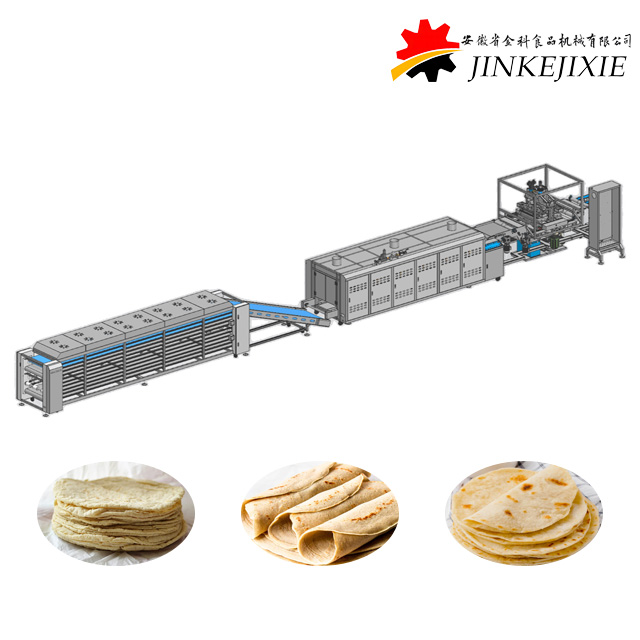
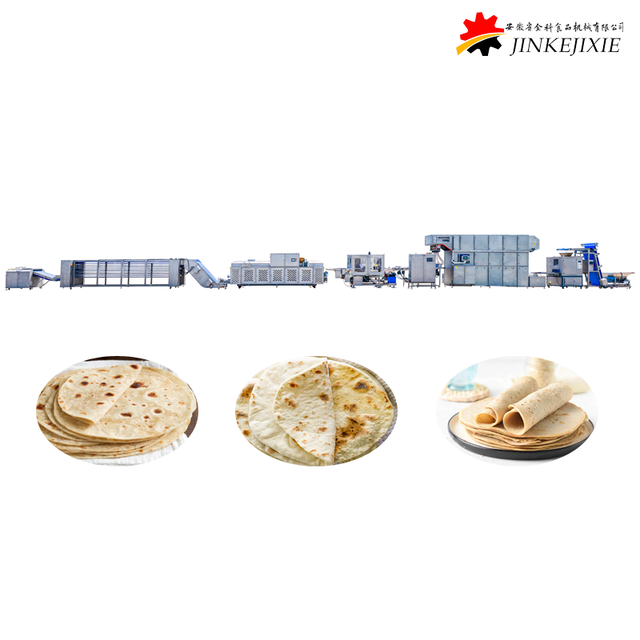
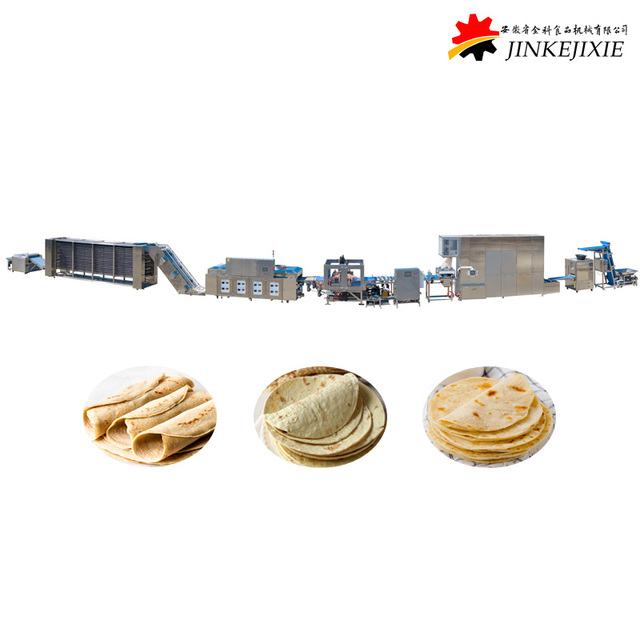
The global tortilla market will reach $92.88 billion by 2031, growing at a steady 6% compound annual growth rate. This expansion comes directly from consumer demand for convenient meals and the widespread adoption of Mexican cuisine. Retail buyers and direct-to-consumer e-commerce channels now expect diverse product SKUs. You must supply everything from 4-inch street tacos to 14-inch burrito wraps to stay competitive.
Rigid production lines create severe operational bottlenecks. Relying on inflexible equipment causes excessive downtime during product switches and limits market penetration. You must align your retail market size strategies with the technical capabilities of your production equipment. Facilities need to evaluate how machinery handles different diameters to ensure scalability, minimize dough waste, and maintain operational profitability across all product lines.
Retail success requires supporting a size matrix ranging from 4-inch (corn/street taco) to 14-inch (flour/burrito) diameters, with the 10-inch flour tortilla acting as the industry's most popular retail anchor.
Investing in an adjustable tortilla machine mitigates the risk of SKU stagnation by allowing rapid changeovers between product sizes and enabling custom e-commerce orders.
Evaluating a high capacity tortilla machine requires balancing throughput speeds against the physical footprint and heating requirements of larger tortillas.
Analyzing Retail Market Demand for Tortilla Sizes
Understanding the dimensional requirements of the retail market is the first step in configuring a successful production facility. The commercial tortilla sector operates on a highly standardized size matrix dictated by end-user applications, packaging norms, and shelf-space allocations. Navigating this matrix requires a clear understanding of which sizes drive volume and which sizes capture niche premium markets. We see facilities fail when they guess at these dimensions rather than engineering their lines around hard data.
Defining the Retail Size Matrix
The industry standardizes tortilla dimensions into three primary categories. Each serves a distinct culinary and retail purpose. The 4-inch to 6-inch category covers street tacos, sliders, and appetizer portions. These smaller sizes show immense growth due to health-conscious consumers seeking portion control. The 8-inch to 10-inch category represents the core of the market, utilized primarily for standard soft tacos, fajitas, and quesadillas. Finally, the 12-inch to 14-inch category handles large burritos, sandwich wraps, and specialized food service applications that cross over into retail channels.
Size Category
Diameter Range
Primary Retail Application
Optimal Dough Type
Small / Street
4" - 6"
Street tacos, appetizers, sliders
Corn or Thin Flour
Standard / Core
8" - 10"
Soft tacos, fajitas, quesadillas
Flour or Blended
Large / Wrap
12" - 14"
Burritos, sandwich wraps
Flour
Among these categories, the 10-inch flour tortilla stands as the undisputed anchor of the retail market. It is the high-velocity size found on standard grocery shelves. When engineering a production line or calculating baseline volume metrics, the 10-inch product serves as the universal standard. Equipment manufacturers base their maximum output claims on this specific diameter. You must ensure your production targets for the 10-inch size are met flawlessly before optimizing for peripheral sizes.
Modern retail dynamics also shift toward premium, customized, and varied-size packaging. Consumers expect diverse options, from family-pack standard sizes to specialized mini-tacos for children. Direct-to-consumer online ordering accelerates this trend. Customers expect customizable size options delivered directly to their doors. Capturing this market share requires production lines capable of pivoting quickly between these established size tiers without compromising product quality.
Corn vs. Flour Material Constraints
Market demand links directly to the physical properties of your raw materials. Corn and flour doughs exhibit vastly different structural characteristics. These traits dictate the maximum viable sizes you can produce at a commercial scale. Flour dough relies on a developed gluten network, providing high elasticity and structural integrity. This allows flour tortillas to be stretched, pressed, and baked at massive diameters. They easily scale to 14 inches or more without tearing during production.
Corn dough, or masa, lacks gluten entirely. Its structural integrity relies on the gelatinization of starches and the specific hydration levels achieved during the nixtamalization process. Because it lacks elasticity, corn dough becomes highly brittle as its surface area increases. Commercial corn tortillas rarely exceed 6 to 8 inches in diameter. Attempting to produce a 12-inch corn tortilla on a high-speed line results in severe cracking, high rejection rates, and a product that falls apart during packaging.
These material realities dictate your mechanical approach. Flour doughs require heavy mechanical pressing to overcome gluten snap-back. Corn doughs require precision die-cutting from a continuous sheet of masa. Facilities planning to offer a full spectrum of sizes must account for these material limitations when selecting their primary forming equipment.
Translating Size Requirements to Machine Specifications
Once you establish your target size matrix, the next phase is matching those dimensions to the mechanical capabilities of an Automatic Tortilla Machine. The engineering behind dough forming, pressing, and cutting determines how efficiently your facility transitions between a 6-inch taco and a 12-inch wrap. Selecting the right mechanical configuration prevents bottlenecks and ensures consistent product geometry.
Fixed-Size vs. Adjustable Configurations
Commercial facilities choose between dedicated single-size lines and flexible, multi-size systems. Dedicated fixed-size lines are engineered for relentless, high-volume production of a single SKU. These systems offer zero changeover capabilities. They are highly efficient but entirely inflexible. If you secure a massive, multi-year contract to supply only 10-inch tortillas, a fixed line maximizes uptime. However, if market demand shifts or a new retail buyer requests an 8-inch variant, you cannot fulfill the order without purchasing an entirely new line.
To capture diverse retail orders, facilities increasingly rely on an adjustable tortilla machine. Engineers design these systems to accommodate multiple product dimensions through modular components. Key features include interchangeable cutter rollers, adjustable pneumatic press plates, and sophisticated programmable logic controllers (PLCs). The PLC allows operators to select pre-programmed recipes that automatically adjust belt speeds, oven temperatures, and pressing times to match the specific requirements of the newly installed tooling.
Determining the right configuration requires analyzing your facility's SKU diversity and production schedule. If your operation requires running 6-inch products on Mondays and 12-inch products on Wednesdays, an adjustable system is mandatory. The mechanical design must facilitate rapid, tool-less changeovers. Switching sizes should not consume hours of valuable production time.
Mechanism Evaluation: Die-Cutting vs. Hot Pressing
The method used to form the tortilla heavily influences the consistency of the final size. Die-cutting is the standard mechanism for corn tortillas and very thin flour variants. This process involves extruding dough into a continuous sheet and passing it under a rotary cutter. When evaluating die-cutting mechanisms for smaller sizes, precision is paramount. The cutter must sever the dough cleanly to ensure edge consistency. Ragged margins burn in the oven. The system must also efficiently manage the web of scrap dough left behind, recirculating it seamlessly back into the extruder without altering the moisture content.
Hot pressing is the dominant mechanism for standard and large flour tortillas. Dough balls are subjected to intense pressure and heat simultaneously. When evaluating hot press systems for large 10-inch to 14-inch wraps, you must focus on specific mechanical traits:
Cylinder Force: Pneumatic or hydraulic pressure capacities must be high enough to flatten large dough balls evenly. Insufficient pressure leaves the center thick and the edges thin.
Platen Heating Uniformity: Heated plates must maintain precise temperatures across their entire surface area to instantly sear the exterior of the dough.
Dwell Time Controls: The press must hold the dough for the exact fraction of a second required to lock its shape and prevent gluten snap-back.
Quick-Release Tooling: Operators need the ability to swap top and bottom Teflon plates quickly without specialized heavy lifting equipment.
Evaluating High Capacity Production Capabilities
Scaling up to meet national retail demand requires equipment that can sustain massive output volumes without compromising dimensional accuracy. When integrating a high capacity tortilla machine, production managers must understand how varying sizes impact overall line speed, oven utilization, and daily yield targets.
Throughput Trade-offs: Speed vs. Size Variations
There is a strict inverse relationship between tortilla diameter and units-per-minute (UPM) output. As the size of the product increases, the total number of units processed in a given timeframe decreases. This is basic geometry and thermal dynamics. A standard commercial oven belt has a fixed width. If the belt is 32 inches wide, it easily accommodates four 6-inch tortillas across its width. That same belt only accommodates two 12-inch tortillas across.
High capacity systems maintain efficiency by optimizing oven belt density. Advanced PLC controls automatically adjust the spacing and staging of the dough balls entering the press. This ensures the maximum allowable surface area of the oven belt is covered regardless of the product size. Despite this optimization, total unit throughput always drops when moving to larger sizes. A machine producing 300 dozen 6-inch tortillas per hour might only produce 150 dozen 12-inch tortillas per hour. You must calculate these throughput variations carefully to ensure you meet retail volume commitments across all size categories.
When reviewing manufacturer specifications, look for baseline expectations based on size tiers. The 10-inch size is the standard benchmark for capacity claims. Use this benchmark to extrapolate the expected output for smaller and larger variants. Ensure your production scheduling accounts for the reduced unit volume of premium large wraps.
Changeover Times and Production Downtime
In a facility producing multiple sizes, changeover time destroys efficiency. Every minute spent swapping tooling is a minute of lost production. Acceptable industry standards for tooling changeovers have shortened significantly with modern engineering. Swapping a 6-inch rotary cutter for a 10-inch cutter on a well-designed line takes no more than 15 to 30 minutes.
The difference between manual adjustments and automated systems is stark. Older machines require maintenance personnel to manually unbolt press plates, recalibrate hydraulic pressures, and physically adjust belt tracking. This manual process causes hours of downtime. It requires extensive test runs to dial in the settings, resulting in wasted dough.
Modern high-capacity systems utilize recipe-driven Human-Machine Interfaces (HMIs). Once the physical tooling is swapped using quick-release mechanisms, the operator selects the new size on the touchscreen. The HMI instantly updates the press dwell time, oven temperature zones, and cooling conveyor speeds to the exact parameters required for the new size. This automation drastically reduces labor hours associated with changeovers and eliminates the trial-and-error phase of restarting the line.
Implementation Realities and Adoption Risks
Deploying equipment capable of handling a wide size matrix introduces specific facility and operational challenges. Expanding into larger diameters or rapidly switching between sizes stresses the downstream components of the production line. You must anticipate these physical and chemical realities to prevent bottlenecks from forming after the dough leaves the press.
Oven Footprint and Heating Dynamics
The baking process is highly sensitive to product size. The primary risk when producing large 12-inch to 14-inch tortillas is under-baking. Larger tortillas contain significantly more total moisture and require a greater transfer of thermal energy to cook thoroughly. If the oven tier length is too short, or if the burner BTU capacities are undersized, large tortillas exit the oven with raw, doughy centers.
To accommodate large wraps, ensure your ovens possess adequate thermal capacity. Specify longer three-tier or five-tier ovens with independently controlled temperature zones. The initial searing zone must be hot enough to create characteristic toast marks. Subsequent zones must provide sustained, even heat to bake the interior without burning the edges. Ribbon burners offer better lateral heat distribution for wide belts compared to standard pipe burners.
Cooling dynamics also change drastically with size. Facility space requirements for cooling conveyors must be carefully calculated. A 14-inch tortilla retains massive amounts of latent heat and moisture compared to a 6-inch taco. If large tortillas are packaged before they are adequately cooled, condensation forms inside the retail bag. This leads to rapid mold growth and product spoilage. Cooling conveyors for large-diameter production must be significantly longer and wider. They often utilize multi-pass overhead configurations to maximize ambient air exposure within a limited facility footprint.
Dough Consistency and Waste Management
Switching between drastically different size profiles challenges dough consistency. A 4-inch tortilla requires a very small dough ball, while a 14-inch wrap requires a massive one. Maintaining uniform dough hydration, mixing times, and resting periods is critical. If you use the exact same dough formulation and resting time for a massive wrap as you do for a small taco, you will encounter issues with elasticity and shrinkage.
Waste management is another critical factor, particularly for die-cut production. When cutting circular shapes from a continuous rectangular sheet of dough, a web of scrap is left behind. The geometry of the cut dictates the volume of scrap. Cutting small 4-inch circles generates a different scrap ratio than cutting 8-inch circles.
Efficient machines feature integrated scrap return systems that route this excess dough directly back into the primary extruder. The risk here is over-working the dough. If the scrap is continuously recycled without being properly blended with virgin dough, the structural integrity degrades. This leads to tough, brittle tortillas. Evaluate how effectively a machine manages this scrap loop across different size runs to maintain consistent product quality.
ROI Factors and Yield Metrics
Expanding a retail size matrix requires upfront capital, but the financial justification relies on long-term operational efficiency. Evaluating the return on investment involves analyzing how the equipment impacts daily operating expenses, labor requirements, and raw material utilization.
Tooling and Maintenance Costs
Producing a full 4-inch to 14-inch retail range requires purchasing multiple sets of die rollers or press plates. These precision-engineered components represent a significant upfront cost. Teflon-coated press plates for large flour tortillas and custom-machined rotary cutters for corn products must be factored into the initial facility budget.
Maintenance protocols also shift. Adjustable systems with modular parts require strict sanitation and lubrication schedules to ensure the quick-release mechanisms do not seize over time. Account for the lifecycle of these consumable parts. Teflon coatings on press plates degrade after millions of cycles and require periodic recoating to prevent dough from sticking and ruining the product geometry.
Labor Efficiency
Labor savings provide one of the fastest routes to ROI. Utilizing fully automated systems eliminates the need for manual dough handling, pressing, and transferring. The most significant labor reductions happen at the end of the line. High-velocity smaller sizes exit the cooling conveyor at blistering speeds. Manually counting and stacking hundreds of small tortillas per minute is virtually impossible and highly prone to human error.
Automated stacking and counting modules use optical sensors to precisely group the tortillas into exact batch sizes before feeding them directly into the bagging equipment. This automation allows you to reallocate multiple line workers to higher-value tasks, drastically reducing the labor cost per dozen produced.
Yield Metrics
Profitability in commercial baking is driven by yield. This is the percentage of raw dough that successfully makes it into a sellable retail package. Precise machine calibration directly impacts yield by reducing the volume of rejected products. Misshapen tortillas, unevenly cooked edges, and products that fail to meet strict retail diameter specifications must be discarded or sold as low-value animal feed.
Advanced forming equipment ensures that every dough ball is portioned to the exact gram and pressed to the exact millimeter of thickness. By minimizing weight variations and eliminating geometric defects, facilities push their yield metrics above 98%. This reduction in raw material waste directly accelerates the ROI of the equipment, ensuring maximum value is extracted from every batch of dough mixed.
Conclusion
Capturing a dominant share of the expanding retail tortilla market requires a strategic approach to production sizing. You must deploy equipment that pivots seamlessly alongside shifting consumer size preferences without sacrificing throughput or product quality. Relying on outdated, inflexible machinery limits market reach and drives up operational waste. To ensure your production line is optimized for the modern retail landscape, execute the following steps:
Audit your current and projected retail SKU requirements to determine the exact size matrix your facility must support over the next five years.
Prioritize equipment vendors based on demonstrated changeover speeds, modular tooling options, and advanced recipe-driven PLC controls.
Calculate the required oven tier lengths and cooling conveyor dimensions specifically based on the thermal requirements of your largest target tortilla size.
Request a live or video-documented test run from the manufacturer using your specific dough formulation, testing both the smallest and largest target sizes to verify edge consistency and throughput claims.
FAQ
Q: What is the standard size range an automatic machine can produce?
A: Commercial machines typically handle a range from 4 inches to 14 inches in diameter. The 10-inch tortilla remains the most popular retail standard. Producing extreme sizes outside this standard range usually requires highly specialized modular tooling or dedicated, custom-built production lines.
Q: How long does it take to change sizes on an adjustable system?
A: On modern adjustable equipment, changeovers typically take between 15 and 45 minutes. The exact timeframe depends heavily on whether the machine utilizes quick-release die rollers and automated PLC recipe adjustments, or if it requires manual recalibration of heavy press plates.
Q: Does high capacity equipment work for both corn and flour dough?
A: While some hybrid models exist, high-efficiency commercial production usually requires dedicated lines for each material. This is due to the distinct mechanical differences between die-cutting brittle corn masa and hot-pressing elastic, gluten-rich flour dough.
Q: How does tortilla size impact oven and cooling conveyor requirements?
A: Larger tortillas contain more mass and moisture. They require wider oven belts, higher BTU output for thorough, even baking, and significantly extended cooling conveyor times to ensure latent heat dissipates, preventing condensation and mold in retail packaging.
Q: Can I upgrade a fixed-size machine to produce multiple sizes later?
A: Retrofitting a fixed-size machine is generally highly limited and cost-prohibitive. If you plan for retail SKU expansion or custom e-commerce fulfillment, it is far more cost-efficient to purchase an adjustable, modular system upfront rather than attempting aftermarket modifications.