Views: 0 Author: Site Editor Publish Time: 2026-07-25 Origin: Site


Transitioning to high-volume tortilla manufacturing requires significant capital investment. The initial equipment price tag rarely reflects the full financial picture. Buyers frequently miscalculate the financial impact of facility retrofitting, utility scaling, automated packaging integration, and specialized maintenance. These oversights lead to compromised margins and delayed returns on investment. To make an informed procurement decision, operations directors and plant managers must evaluate the specific cost drivers, implementation risks, and efficiency trade-offs inherent in modern commercial tortilla equipment. Understanding the full scope of a Tortilla Production Line ensures your facility can scale profitably without unexpected financial bottlenecks. We will break down the exact variables that dictate your final capital outlay, helping you navigate the complexities of industrial food processing equipment procurement.
Total Installed Cost Exceeds Sticker Price: Freight, rigging, facility modifications, and commissioning typically add 20% to 40% to the baseline equipment cost.
Automation Shifts OpEx Profiles: An automatic tortilla production line reduces baseline manual labor costs but requires higher-paid, specialized technicians for maintenance and operation.
Utility Infrastructure is a Primary Constraint: Upgrading to high-throughput ovens often necessitates expensive upgrades to local gas lines, electrical panels, and ventilation systems.
Packaging Systems Drive Scalability: Downstream automation—such as Modified Atmosphere Packaging (MAP)—is a major capital driver but is essential for entering lucrative retail supply chains.
Yield and Waste Dictate ROI: Precision in dough dividing and pressing/sheeting directly impacts raw material costs, insulating operations against ingredient price volatility.
The baseline cost ranges for tortilla manufacturing equipment vary significantly based on output capacity and engineering complexity. Entry-level commercial units require a modest investment suitable for local distribution. Mid-tier and high-capacity industrial lines demand substantial capital to support continuous, multi-shift operations. The initial quote provided by the manufacturer is only the starting point. Hard costs accumulate quickly during the logistics phase. You must account for heavy freight transport and international shipping tariffs if sourcing equipment from overseas. Specialized rigging is mandatory to move heavy oven modules and multi-tier cooling conveyors into a facility safely.
Beyond physical transportation, buyers must budget for the costs associated with OEM installation and site acceptance testing (SAT). Factory technicians must travel to your site to assemble, level, and calibrate the machinery. Initial staff training adds another layer of expense. Operators need hands-on instruction to manage dough rheology, adjust press temperatures, and troubleshoot minor jams. These necessary steps ensure the equipment functions correctly from day one and hits the promised throughput metrics.
Comparing the CapEx of semi-automatic batch systems versus fully continuous, automated lines reveals a stark contrast in upfront investment. Semi-automatic setups rely heavily on manual dough transfer and visual inspection. Integrating automated dough handling, continuous pressing or sheeting, and automated stacking significantly increases the initial cost. You are paying for advanced sensors, servo motors, and synchronized conveyor belts that eliminate human intervention.
Determining when production volume justifies the leap to full automation requires a careful analysis of labor savings and output requirements. When manual processes create bottlenecks or lead to inconsistent product sizing, an automated system becomes a necessary upgrade. Plant managers should evaluate their current reject rates and labor overhead to calculate the break-even point for automation.
System Type |
Initial CapEx |
Labor Requirement |
Throughput Consistency |
|---|---|---|---|
Semi-Automatic |
Lower |
High (Manual transfer) |
Variable based on operator skill |
Fully Automatic |
Higher |
Low (Supervisory only) |
Highly consistent |
Evaluating the capital cost of modular additions for processing tortillas further is critical for expanding product lines. Adding continuous fryers for tortilla chips, die-cutters, or taco shell formers requires additional investment. You must install specialized ventilation for fryers and oil management systems to handle the increased processing demands. Analyzing the equipment cost versus margin trade-offs of selling standard table tortillas versus high-margin processed corn products helps determine the best path for profitability.
Diversifying output often justifies the extra CapEx by tapping into different market segments. A facility producing both fresh flour tortillas and bagged tortilla chips can leverage the same dough mixing and sheeting infrastructure. This modular approach allows you to scale operations incrementally as market demand shifts.
Facility layout constraints often drive up engineering costs. Standard linear production lines require extensive floor space. Configurations such as U-shape, L-shape, or multi-level cooling conveyors require specific design adaptations to fit within existing building footprints. Examining the cost premium for custom-engineered solutions versus off-the-shelf modular systems is essential during the planning phase.
While custom designs optimize space, they come with higher initial engineering fees compared to standard configurations. You may need custom transfer conveyors to move product around structural columns or through wall openings. These modifications require precise CAD modeling and custom fabrication, adding weeks to the lead time and increasing the final invoice.
The primary utility drivers for a tortilla line include natural gas for ovens, electricity for motors and cooling, and water for dough mixing and sanitation. Analyzing the long-term cost differences between direct-fired, indirect-fired, and infrared heating technologies is critical for managing ongoing expenses. Efficient heating methods can drastically reduce monthly utility bills, offsetting higher initial equipment costs over time.
High-throughput ovens consume massive amounts of natural gas. You must verify that your facility's incoming gas line can deliver the required BTUs. Upgrading a municipal gas meter or running new internal piping requires permits and specialized contractors. Electrical panels must support the combined amperage of dozens of variable frequency drives (VFDs) and cooling fans.
Implementing a commercial tortilla machine achieves a significant reduction in low-skill manual labor. You no longer need a dozen workers manually counting and bagging tortillas. However, this must be contrasted with the required investment in PLC programmers, electromechanical technicians, and preventative maintenance staff.
While you employ fewer people on the floor, the technical expertise required to keep an automated line running demands higher wages. A single hour of downtime on a high-capacity line can cost thousands in lost revenue. Hiring skilled maintenance personnel who can troubleshoot servo faults and calibrate pneumatic valves is a non-negotiable operational expense.
Equipment precision directly impacts dough weight consistency. Servo-driven dividers offer superior accuracy compared to older pneumatic dividers. High-accuracy portioning shields manufacturers from fluctuations in commodity prices, such as sudden spikes in flour and corn crop costs. When you control the exact weight of every dough ball, you eliminate product giveaway.
Calculating the financial impact of a 1-2% reduction in raw material waste over a fiscal year often reveals substantial savings. These savings quickly justify the investment in precision machinery. Consistent dough hydration and precise pressing also reduce the number of rejected tortillas that end up in the scrap bin.
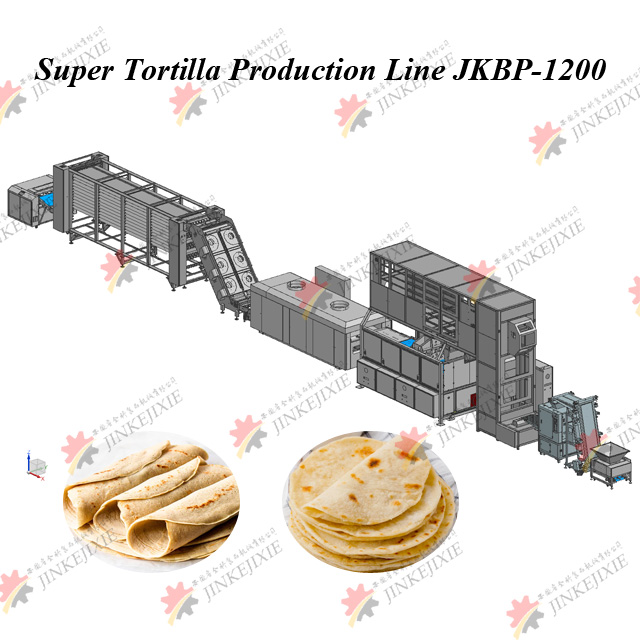
The cost of the machine correlates directly to its production capacity, typically measured in dozens per hour or rows across the belt. Wider belts require heavier frames, larger drive motors, and more robust oven burners to maintain even heat distribution. Buyers must discuss the diminishing returns of buying excess capacity versus the risk of under-sizing the line.
Purchasing a system that perfectly matches projected growth prevents wasted capital on unused capacity while ensuring demand can be met. If you buy a six-row press but only have the sales volume for a two-row output, you are burning excess gas and electricity to run a mostly empty oven.
Examining the cost of integrating automated packaging systems is vital for modern operations. Flow packers, counter-stackers, and Modified Atmosphere Packaging (MAP) modules represent a massive portion of the total line cost. MAP technology extends shelf life by flushing the package with a specific gas mixture, which is a non-negotiable capital requirement for distributing through regional and national retail chains.
While packaging automation adds to the initial CapEx, it opens doors to larger markets. Retailers demand strict adherence to shelf-life requirements and barcode placement. Automated packaging ensures every stack is perfectly aligned and sealed, reducing the risk of spoilage and retailer chargebacks.
Evaluating the cost difference between standard painted steel frames, 304 stainless steel, and washdown-rated 316 stainless steel components is necessary for compliance. This represents a trade-off between upfront cost and daily sanitation labor. Painted steel is cheaper but prone to chipping and rust in high-humidity dough environments.
Higher-grade materials simplify cleaning protocols and ensure adherence to strict food safety regulations. Washdown-rated motors and NEMA 4X electrical enclosures allow sanitation crews to use high-pressure water and caustic chemicals without damaging sensitive electronics. This reduces cleaning time and minimizes the risk of bacterial contamination.
Assessing the premium for advanced PLC/HMI systems with recipe management and SCADA integration highlights the shift toward smart manufacturing. Upgrading to industry-standard platforms like Allen-Bradley or Siemens ensures long-term parts availability and easier troubleshooting. Data-logging capabilities aid in tracking Overall Equipment Effectiveness (OEE) and justifying the higher initial cost.
Access to real-time production data allows managers to optimize performance and reduce downtime. Operators can load specific recipes with a single button press, automatically adjusting oven temperatures, press dwell times, and belt speeds. This eliminates human error during product changeovers.
Identifying the costs of upgrading HVAC systems to handle increased ambient heat from industrial ovens is a common oversight. Tortilla ovens generate massive amounts of radiant heat. Without proper makeup air units and exhaust hoods, the factory floor becomes an unsafe working environment. Necessary structural modifications include reinforced flooring to support the weight of the press and oven modules.
You must also budget for upgraded fire suppression systems and specialized drainage for washdown areas. Trench drains with heavy-duty grates are required to handle the wastewater generated during daily sanitation shifts. These facility upgrades are essential for safe and compliant operation.
Conduct a structural engineering review of the concrete slab.
Upgrade the main electrical service panel to handle increased amperage.
Install high-capacity gas regulators and dedicated piping for the oven.
Retrofit the roof to accommodate new exhaust stacks and makeup air units.
Pour sloped trench drains in the packaging and dough mixing zones.
Quantifying the opportunity cost of halting current production lines to install new equipment is crucial. Tearing out old machinery and rigging in a new line can take weeks. Mitigation strategies help maintain supply chains during the upgrade process. Proper planning minimizes revenue loss during installation.
Consider phased installations where the new line is built parallel to the existing operation. If space does not permit this, you must build a massive buffer inventory prior to the transition. Renting off-site cold storage to hold excess inventory ensures you do not short your customers while the new equipment is being commissioned.
Highlighting the necessity of purchasing recommended spare parts kits alongside the machine prevents extended downtime. You should always stock critical wear items such as Teflon press belts, high-temperature bearings, and replacement heating elements. Waiting for a proprietary part to ship internationally can shut down your factory for days.
Evaluating the cost-benefit of extended OEM service contracts and remote diagnostic support ensures that technical assistance is available when needed. Many modern lines feature secure VPN routers that allow factory engineers to log into your PLC remotely. They can diagnose sensor faults and push software updates without booking a flight, protecting your production schedule.
A standard formula for calculating ROI relies on CapEx, labor savings, waste reduction, and increased throughput. Addressing the reality of operating margins in high-volume production shows how line efficiency safeguards profitability. High-volume food manufacturing typically targets tight net margins, meaning efficiency is the only way to survive.
Realistic timelines for achieving break-even typically range from 18 to 36 months for high-volume lines. You must track every variable, from the cost of raw flour to the cubic feet of gas burned per hour. When the line runs at optimal OEE, the cost per tortilla drops significantly, allowing you to absorb minor fluctuations in commodity prices.
A reliable automated line allows manufacturers to bid on larger, more lucrative contracts. National retail chains and institutional food service providers require massive, consistent volume that manual operations simply cannot guarantee. The impact of consistent product quality and professional packaging on brand reputation and pricing power cannot be overstated.
Scalability directly correlates with increased market share and stronger profit margins. When you can guarantee a 90-day shelf life through MAP packaging and flawless circularity through servo-driven presses, buyers are willing to commit to long-term purchase orders. This stability allows you to negotiate better rates on bulk raw materials.
The true cost of a commercial tortilla line extends far beyond the initial quote. Profitability relies on accurately forecasting installation, packaging integration, utility, and maintenance variables. Buyers should prioritize OEMs that offer transparent cost models, modular scalability, integrated downstream packaging solutions, and robust post-sale support over those simply offering the lowest sticker price.
Conduct a comprehensive facility audit to verify gas, electrical, and structural capacities before signing a purchase order.
Request detailed utility consumption data from the equipment manufacturer to accurately forecast monthly operational expenses.
Map out a strict preventative maintenance schedule and secure a budget for critical spare parts inventory.
Evaluate your downstream packaging requirements to ensure compliance with target retail chain shelf-life mandates.
A: Prices vary widely based on engineering complexity. Entry-level commercial units require a modest investment, while high-capacity, fully automated industrial lines demand substantial capital. Production capacity, automation levels, and downstream packaging integration primarily dictate the final price.
A: Adding automated stackers, counters, and MAP flow wrappers significantly increases the initial equipment CapEx. However, this investment drastically reduces ongoing labor costs and increases shelf life, which is essential for retail distribution.
A: Yes, standard lines can be modified by adding an inline cutter and a continuous fryer. This requires extra capital for the new modules and ventilation upgrades but provides the flexibility to process further and enter higher-margin markets.
A: The expected operational lifespan is typically 15 to 25 years. Reaching this longevity is contingent upon strict adherence to preventative maintenance schedules, proper sanitation protocols, and timely replacement of wear parts.
A: The required footprint varies drastically based on cooling conveyor requirements and capacity. Compact lines may require around 50 feet of linear space, while high-throughput systems with extensive cooling and packaging modules can exceed 150 feet.