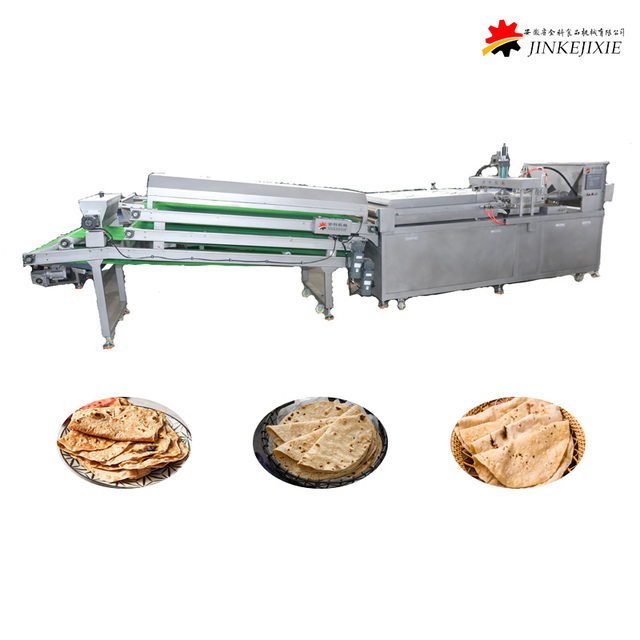
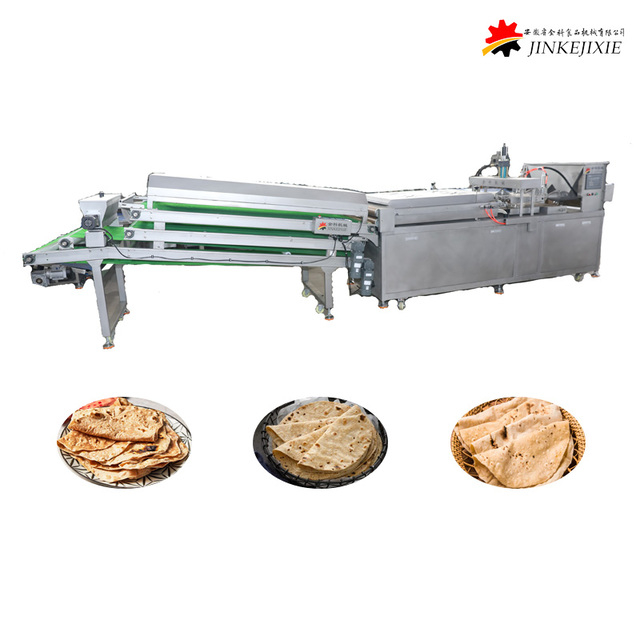
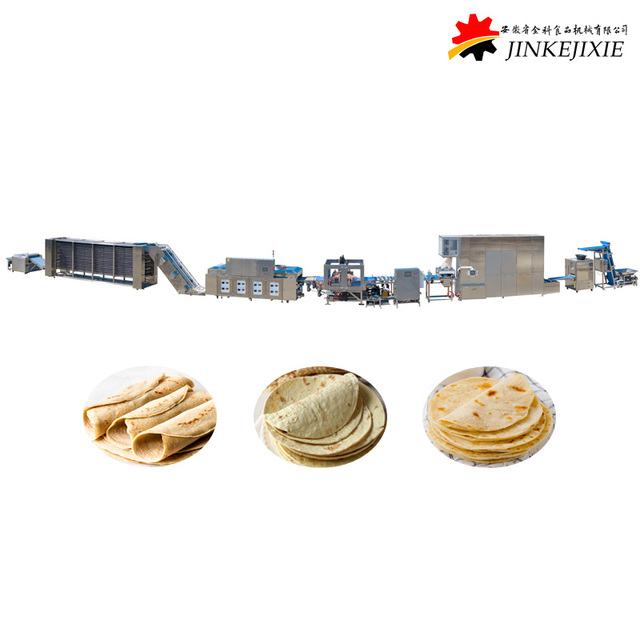
Scaling flatbread manufacturing to meet bulk supply contracts requires transitioning from batch-based manual labor to continuous-flow automation. Facility managers and production engineers face strict mechanical realities when upgrading operations. Miscalculating production capacity leads to immediate failures. Undersizing creates delivery bottlenecks and accelerates equipment wear through constant overexertion. Oversizing traps capital in underutilized assets and wastes valuable floor space. Successfully transitioning to commercial flatbread manufacturing requires a rigorous evaluation of throughput requirements, facility constraints, target market packaging needs, and the mechanical realities of dough handling at scale. You must align your upstream mixing capabilities with downstream baking and cooling speeds. This ensures continuous operation without gluten degradation or thermal inconsistencies.
True capacity planning must account for sustained throughput (chapatis per hour) rather than theoretical peak speeds, factoring in mandatory downtime for cleaning and maintenance.
Selecting between a semi-automatic and a fully automatic chapati line depends on your labor availability, target profit margins, and daily production volume thresholds.
Industrial scalability requires matching the dough mixer and extruder capacities precisely with the pressing and baking line speeds to prevent upstream bottlenecks.
Product quality—specifically moisture retention, thickness consistency, and recipe flexibility—must be validated through physical equipment trials before procurement.
Defining Success Criteria for Bulk Chapati Production
Calculating True Throughput Requirements
Production managers often make the error of planning facility capacity based on a machine’s theoretical maximum speed. In real-world manufacturing, continuous output is governed by Operational Equipment Effectiveness (OEE). A standard industrial bakery operates at an 80% OEE rate. This accounts for mandatory daily sanitation, mechanical calibration, dough changeovers, and minor conveyor jams.
Let us break down a standard 8-hour shift. You lose approximately 30 minutes for morning startup and thermal calibration. Mid-shift cleaning and dough batch changeovers consume another 45 minutes. End-of-shift sanitation requires at least 20 minutes. You only have about 6.5 hours of actual runtime. If your bulk contracts require 40,000 chapatis per shift, a machine rated exactly for 5,000 pieces per hour will fall short. You must calculate sustained demand by dividing your target output by your expected OEE percentage.
Capacity planning also relies heavily on precise weight-to-volume ratios. A standard retail chapati weighs approximately 30 grams. Heavy-duty restaurant variants may reach 45 grams. This 15-gram variance drastically alters your upstream dough preparation requirements. Running a 5,000 piece-per-hour line at 45 grams requires 225 kilograms of processed dough hourly. Sizing your spiral mixers and automated chunkers to meet this exact volumetric demand prevents extruder starvation. Building a 15-20% capacity buffer into your initial equipment specifications accommodates future contract growth without necessitating immediate secondary machinery purchases.
Quality Baselines: Maintaining Consistency at Scale
Transitioning from manual rolling to automated pressing introduces strict mechanical tolerances. You must establish acceptable variance limits for thickness and diameter. High-quality automated pressing mechanisms maintain a thickness tolerance of ±0.2 millimeters. Anything beyond this threshold results in uneven baking. Thinner edges burn before the center cooks completely. Establishing these baselines early ensures your quality control team can calibrate the pressing plates accurately.
To maintain consistency, operators must follow a strict calibration sequence during startup:
Verify the ambient temperature and humidity of the production floor.
Run a 5-kilogram test batch of dough through the extruder to prime the augers.
Measure the weight of ten consecutive dough balls to confirm the divider's accuracy.
Pass the dough through the pressing station and measure the raw diameter with calipers.
Adjust the pneumatic pressure or plate gap until the thickness variance is under 0.2 millimeters.
Recipe formulation flexibility remains a major hurdle in continuous production. Traditional recipes often feature varying hydration levels or fat contents. High-fat doughs utilizing ghee or dairy additions behave differently under pressure. Your chosen equipment must handle these variations without sticking to the extruder dies or requiring constant recalibration of the pressing belts.
Continuous baking impacts moisture retention differently than batch cooking on a traditional tawa. Evaluating how the oven's thermal profile affects the softness and shelf-life of the final product is mandatory. You must assess the mechanical limitations of replicating traditional folding and resting processes in a continuous flow. The final texture must meet market expectations without compromising line speed.
Evaluating Chapati Production Line Configurations
Semi-Automatic vs. Fully Automatic Chapati Lines
Choosing the correct equipment configuration directly impacts your operational overhead and daily output capabilities. Semi-automatic systems require manual intervention. Operators load pre-divided dough balls onto the pressing plates and manually transfer the pressed raw flatbreads to the baking stage. These systems fit perfectly into mid-tier volume operations producing 1,000 to 3,000 pieces per hour. They require lower upfront capital and offer flexibility for facilities producing multiple types of regional flatbreads on the same shift.
High-volume bulk supply contracts demand complete automation. An automatic chapati line operates as a fully integrated system. It handles continuous dough extrusion, precise dividing, heated pressing, multi-tier baking, and ambient cooling without manual intervention. These systems are essential for operations exceeding 5,000 pieces per hour. Labor reduction and strict hygiene controls are mandatory at this scale. Mapping your current labor availability against your volume thresholds determines the exact breakeven point for transitioning to full automation.
Feature
Semi-Automatic Line
Fully Automatic Line
Target Volume
1,000 - 3,000 pieces/hour
5,000 - 10,000+ pieces/hour
Labor Requirement
High (Manual dough loading & transfer)
Low (System monitoring & QC only)
Footprint
Compact, adaptable to smaller spaces
Extensive linear space required (15m+)
Product Consistency
Subject to operator handling variance
Highly uniform thickness and bake
Maintenance Complexity
Basic mechanical upkeep
Advanced PLC and sensor calibration
Modular vs. Integrated Systems
When engineering your facility layout, you must decide between a closed turnkey system and a modular approach. Modular upgradability allows production managers to install the core pressing and baking units first. You can add cooling conveyors or automated packaging wrappers at a later date. This phased approach manages initial capital outlay while leaving room for expansion.
For operations targeting the frozen or ready-to-cook retail markets, modular add-ons are vital. You must assess the integration of automated parchment or wax paper interleaving systems. These units stack the raw or par-baked chapatis before seamless transfer to blast freezers.
Turnkey integrated lines, purchased from a single vendor, guarantee that all electronic sensors and conveyor speeds communicate flawlessly. The PLC system manages the entire line from a single touchscreen interface. Assembling specialized components from multiple manufacturers might offer superior individual capabilities. However, your engineering team must integrate the programmable logic controllers effectively to prevent conveyor speed mismatches.
Core Evaluation Dimensions for an Industrial Chapati Machine
Dough Handling and Extrusion Capabilities
The foundation of consistent flatbread production lies in dough rheology. Industrial extruders handle massive volumes of dough, but their internal mechanics react differently to various hydration levels. You must evaluate how specific extruders manage high-hydration doughs without tearing the gluten network or causing the mixture to stick to the augers. A robust industrial chapati machine utilizes precision-machined extrusion dies and Teflon-coated components to maintain a smooth, continuous feed.
Mechanical stress during extrusion tightens the gluten structure. Intermediate proofing or resting conveyors are often necessary to relax the dough before it reaches the pressing station. Skipping this resting phase causes the dough to shrink immediately after pressing. This results in undersized, dense chapatis that fail quality control checks. Integrating heavy-duty spiral mixers with automated dough chunkers ensures a continuous, stress-free feed to the hopper. This maintains product integrity from mixing to baking.
Pressing, Baking, and Cooling Mechanics
The pressing station dictates the final shape and texture of the product. Manufacturers utilize pneumatic, hydraulic, or mechanical heated presses. Hydraulic presses deliver immense, uniform pressure suitable for dense doughs. Pneumatic systems offer rapid cycle times for softer formulations. You must evaluate the heat distribution across the pressing plates and the durability of their non-stick coatings. Uneven heat causes localized sticking and product deformation.
Oven configurations drastically impact both throughput and facility layout. Three-tier baking conveyors maximize baking time within a compact footprint. They flip the chapati automatically to simulate traditional two-sided cooking. Single-tier ovens require significantly more linear floor space but simplify maintenance access. Evaluating gas versus electric heating elements is necessary for thermal consistency. Gas typically provides rapid heat recovery and higher peak temperatures. Electric elements offer precise zone-control for delicate baking profiles.
When evaluating oven configurations, the conveyor belt material plays a significant role in heat transfer. Stainless steel mesh belts allow direct flame contact and superior airflow, ideal for achieving traditional char marks. Solid carbon steel bands provide highly uniform conductive heat but require heavier drive motors. You must also calibrate the baking temperatures precisely. A standard profile might utilize 280°C in the first zone for rapid puffing, dropping to 220°C in the final zone to prevent moisture loss.
Post-bake handling is equally important. Mandatory cooling conveyors must lower the product temperature to ambient levels before bulk packaging. Packaging hot flatbreads traps steam, leading to immediate condensation and rapid mold growth. Proper cooling prepares the product for Modified Atmosphere Packaging (MAP). MAP displaces oxygen with inert gases to lock in traditional softness and extend shelf life without chemical preservatives.
Footprint and Facility Utility Requirements
Industrial baking equipment demands meticulous spatial planning. You must calculate the total linear floor space required for the entire line, starting from the dough chunker through to the packaging wrapper. Facility managers must allocate a minimum of one meter of clearance on all sides of the equipment. This allows for daily sanitation, preventative maintenance, and operator access.
Utility loads require early verification. Commercial flatbread lines draw substantial industrial power, necessitating dedicated 3-phase electrical connections. If opting for gas-fired ovens, you must verify that your facility's gas line capacities and pressure regulators can sustain continuous high-BTU output. Industrial ovens generate immense ambient heat and moisture. Installing heavy-duty ventilation and exhaust hoods directly above the baking and cooling zones is mandatory. This maintains a safe working environment and complies with occupational health regulations.
Floor drainage is another frequently overlooked utility requirement. Daily sanitation of dough handling equipment requires high-pressure washdowns. Installing trench drains with heavy-duty grates directly beneath the mixing and extrusion zones prevents water pooling and slip hazards. Furthermore, exhaust systems must be rated for the specific Cubic Feet per Minute (CFM) output of your chosen ovens to prevent heat accumulation in the facility.
Financial and Operational Trade-Offs
Labor Reduction vs. Capital Expenditure
Investing in continuous automation fundamentally shifts your operational model from labor-intensive to capital-intensive. Aligning your capital expenditure with your specific bulk supply model is paramount. If your primary contracts involve ready-to-eat supplies for large-scale catering and hospitality clients, your investment should heavily prioritize high-capacity, heavy-duty baking ovens and rapid cooling systems. If your target market is retail supermarket distribution, prioritizing interleaving, MAP packaging, and freezing technology yields better market penetration.
The financial impact of this transition becomes evident through labor reallocation. Instead of employing dozens of manual operators for rolling and baking, you shift a smaller, more skilled workforce toward quality control, machine monitoring, and logistics. Quantifying the reduction in manual labor hours against the increased output volume provides a clear picture of your operational efficiency gains. This shift also drastically reduces the physical handling of the food product, inherently elevating your facility's hygiene standards.
Energy Consumption and Waste Minimization
Continuous baking operations consume massive amounts of energy. Evaluating the thermal efficiency of the baking chambers directly impacts your daily utility overhead. Ovens constructed with high-density ceramic insulation retain heat within the baking zone. This prevents energy loss into the facility and reduces the strain on your HVAC systems. You must analyze the cost-per-unit of gas versus electric baking based on your local utility rates to optimize daily operational expenses.
Burner technology also dictates gas efficiency. Ribbon burners provide a continuous sheet of flame across the width of the oven, ensuring edge-to-edge baking consistency. Infrared burners, while more expensive upfront, penetrate the dough faster and can reduce overall baking time by up to 15%. You must weigh these technical specifications against your local energy costs.
Waste minimization plays a major role in high-volume production. During daily machine calibration and start-up phases, a certain percentage of dough waste is unavoidable as operators dial in the thickness and temperature settings. Establishing acceptable scrap rate percentages and implementing clean mechanisms for dough recycling prevents raw material loss. Unbaked, off-spec dough can be safely reintroduced into the primary mixer to maximize yield.
Implementation Risks and Mitigation Strategies
Managing Dough Hydration at Industrial Scale
Scaling up dough production introduces severe environmental vulnerabilities. The primary risk involves ambient temperature and humidity altering dough consistency throughout the shift. A recipe that runs perfectly at 6:00 AM may become overly sticky by mid-afternoon as the facility heats up. This leads to catastrophic machine jams, misshapen products, and unplanned downtime.
Mitigating this risk requires strict environmental control. Implementing climate-controlled production zones stabilizes the ambient environment. Utilizing water chillers during the mixing phase allows operators to control the exact temperature of the dough mass. Maintaining a consistent dough temperature prevents premature yeast fermentation or gluten degradation before the dough reaches the extrusion hopper.
Dough Issue
Probable Cause
Mechanical Adjustment
Sticking to Extruder
Hydration too high / Ambient heat
Lower water temp via chiller; adjust Teflon scraper tension.
Industrial food production demands uncompromising adherence to food safety standards. Every component that touches the dough must be constructed from high-grade SS304 or SS316 stainless steel. All moving parts near the food zones must utilize certified food-grade lubricants to prevent contamination. When procuring a Chapati Production Line, verify these material specifications meticulously with the manufacturer.
Facility managers must acknowledge Clean-in-Place (CIP) limitations. While some liquid processing equipment cleans automatically, heavy dough extruders and pressing plates require manual teardown. Establishing realistic daily cleaning schedules prevents bacterial buildup and cross-contamination.
Evaluate the availability of spare parts. Importing niche machinery without a localized service network introduces severe operational risk. Ensure you maintain an on-site inventory of essential consumable parts. Stocking Teflon pressing belts, heating elements, and pneumatic seals minimizes unexpected downtime.
Conclusion
Conduct a comprehensive facility audit to map out linear floor space, 3-phase power availability, and gas line capacities before finalizing any equipment specifications.
Calculate your exact hourly throughput requirement by dividing your daily bulk order volume by an 80% OEE factor to ensure sustained delivery capabilities.
Request a physical Factory Acceptance Test (FAT) from the manufacturer using your specific flour blend and hydration ratio to validate thickness consistency and extruder performance.
Establish a localized supply chain for essential wear parts, including Teflon belts and heating elements, to prevent catastrophic downtime during peak production shifts.
FAQ
Q: How many chapatis can an industrial chapati machine produce per hour?
A: Output varies significantly by machine size and automation level. Semi-automatic models typically produce between 1,000 and 3,000 pieces per hour. Fully integrated industrial lines are engineered for bulk production, consistently outputting 5,000 to 10,000 pieces per hour depending on the diameter and baking time required.
Q: What is the difference between a semi-automatic and an automatic chapati line?
A: A semi-automatic line requires operators to manually load pre-portioned dough balls into the press and transfer them to the oven. A fully automatic line handles the entire process continuously—from bulk dough extrusion and dividing to pressing, baking, and cooling—without any manual handling.
Q: How do you calculate the dough capacity needed for bulk chapati production?
A: Multiply your target hourly output by the weight of a single chapati. Producing 5,000 chapatis per hour at 30 grams each requires 150 kilograms of processed dough per hour. Size your upstream spiral mixers to exceed this capacity slightly to ensure a continuous feed.
Q: Can an industrial chapati machine produce frozen, ready-to-cook chapatis?
A: Yes. For ready-to-cook products, the baking oven is bypassed entirely or set to a rapid, low-temperature par-bake. The line integrates with an automated interleaving machine that places parchment paper between the raw flatbreads before they enter a blast freezer.
Q: Does an automatic chapati line require a cooling conveyor?
A: Absolutely. Packaging flatbreads while they are still hot traps steam inside the wrapper. This condensation leads to immediate sogginess and rapid mold growth. A cooling conveyor ensures the product reaches ambient temperature, maintaining texture and extending shelf life.
Q: How do automated machines maintain chapati softness and moisture for retail sale?
A: Softness is maintained through precise thermal control in the oven to prevent over-baking, followed by controlled ambient cooling. For retail packaging, the cooled flatbreads are sealed using Modified Atmosphere Packaging (MAP), which removes oxygen to lock in moisture and prevent staling.