Scaling industrial bakery operations requires balancing aggressive throughput targets with rigid facility space constraints. Selecting the wrong equipment layout creates permanent operational bottlenecks, inflates labor costs through excessive operator movement, and complicates sanitation. When you lock in a floor plan, you are committing to a specific material flow that will dictate your daily efficiency for the lifespan of the equipment. Evaluating the structural and operational trade-offs between Straight (I-line) and U-Shaped systems—alongside hybrid L- and S-configurations—is a critical first step in engineering a profitable, high-yield flatbread operation. You must analyze your available square footage, structural column placements, and utility drops before specifying conveyor lengths or oven dimensions. A poorly planned layout forces operators to walk miles during a single shift just to monitor dough feeding and packaging, while a highly optimized footprint centralizes control and minimizes mechanical wear on transfer points.
Key Takeaways
Footprint vs. Flow: Straight layouts demand extensive linear floor space but offer simplified mechanical engineering, while U-shaped (horseshoe) layouts condense the footprint and centralize operator workstations.
Labor Utilization: U-shaped configurations typically require fewer operators by allowing a single technician to monitor both the dough-feeding and packaging stages simultaneously, minimizing unnecessary movement.
Mechanical Complexity: U-shaped lines introduce radius conveyors, turning units, and directional transfers, which require precise synchronization to prevent dough deformation or jamming.
Product Flexibility: Facilities operating a multi-product flatbread line often benefit from U-shaped designs, as centralized tooling stations expedite changeovers.
Hybrid Adaptability: L-shaped and S-shaped layouts serve as critical design alternatives when dealing with structural obstacles or specialized baking times.
Defining Success Criteria for an Automatic Flatbread Production Line
Establishing a highly functional Automatic Flatbread Production Line begins with mapping baseline production targets against physical facility limitations. Plant managers must evaluate available square footage, ceiling heights, and the exact locations of structural columns. You cannot simply force a high-capacity system into a room without first understanding the spatial requirements for dough preparation, baking, cooling, and packaging. Throughput demands directly dictate the physical length of the oven and cooling conveyors. When facility dimensions fall short of these linear requirements, layout geometry must adapt to maintain production volume without compromising product quality.
Material flow optimization remains a foundational element of bakery engineering. You must create logical, unidirectional pathways for raw ingredients, work-in-progress dough, and finished packaged goods. Crossing these streams invites cross-contamination and violates strict food safety protocols. A well-designed layout ensures that raw flour dust never settles near the cooling or packaging zones. Clean flow principles dictate that the physical arrangement of the machinery naturally guides the product from its rawest state to its final sealed package without backtracking or intersecting paths.
Labor optimization requires calculating the exact travel distance operators must cover during a standard shift. Technicians manage dough loading, monitor oven temperatures, oversee cooling transitions, and handle packaging. If a layout forces staff to walk excessive distances to clear a jam or adjust a roller, you lose valuable production time. Efficient layouts minimize these travel paths, allowing a smaller team to maintain total control over the entire process. We measure this in operator steps per hour, and reducing that metric directly improves shift output.
Sanitation and compliance standards heavily influence layout decisions. The chosen configuration must provide adequate clearance for rigorous washdown procedures. Maintenance teams need physical space to pull out rollers, replace belts, and lubricate bearings. Food safety compliance, including FDA and GFSI standards, mandates that all equipment surfaces remain accessible for inspection and cleaning. Ignoring these clearance requirements during the layout phase guarantees severe maintenance headaches and potential audit failures down the line.
Layout Type
Space Requirement
Labor Efficiency
Mechanical Complexity
Best Application
Straight (I-Line)
High Linear Space
Low (High travel distance)
Low (No curves)
High-speed, single product
U-Shaped
Compact / Square
High (Centralized control)
High (Radius conveyors)
Multi-product, limited space
L-Shaped
Corner / Irregular
Medium
Medium (One 90-degree turn)
Segregating heat zones
S-Shaped
Highly Condensed
Medium
Very High (Multiple turns)
Extended cooling requirements
The Straight-Line (I-Shape) Layout: Mechanics and Realities
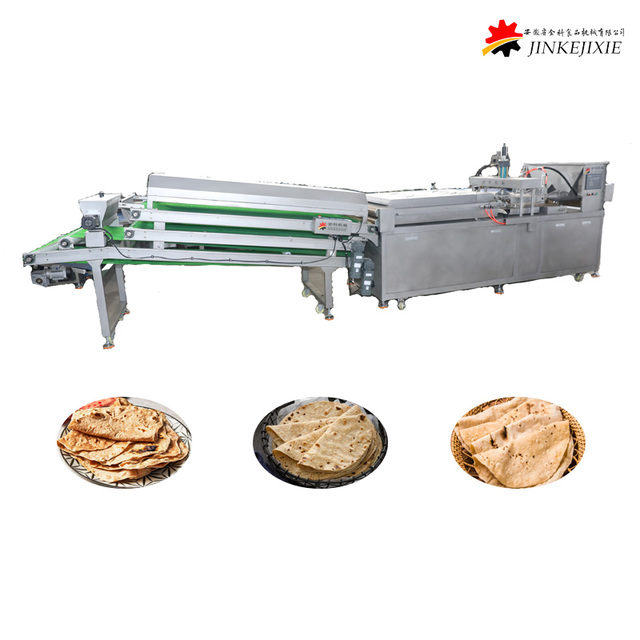
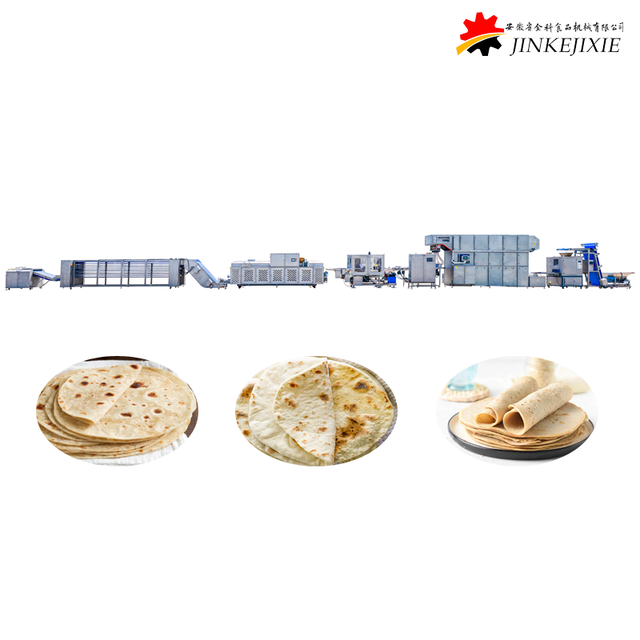
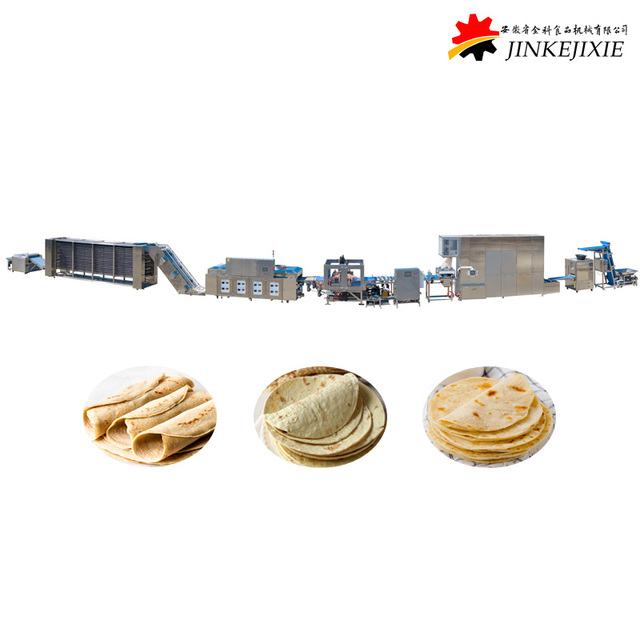
Straight-line systems operate on a simple, linear progression. The process begins at one end of the facility with dough mixing and dividing. The dough then travels straight through rolling, pressing, or sheeting stations. It moves directly into the proofing chamber, passes through the tunnel oven, and continues along a straight cooling conveyor before reaching the packaging wrappers. This uninterrupted flow represents the most mechanically straightforward method of industrial baking, minimizing the number of moving parts and transfer points.
This configuration offers massive advantages for high-speed, single-product runs. It completely eliminates the need for curved conveyors or directional transfer belts. Removing these complex mechanical transition points drastically reduces wear and tear on the system. Dough pieces remain in their original orientation from the divider to the wrapper. This layout is ideal for continuous, high-volume production where product changeovers rarely occur. Furthermore, straight lines naturally simplify thermal management. The intense heat generated by the tunnel oven remains physically isolated at the center of the line, far away from the temperature-sensitive packaging zone.
Dough mixing and automated dividing at the primary input station.
Linear sheeting, pressing, or rolling to achieve exact thickness.
Continuous proofing without directional changes.
High-temperature baking through a straight tunnel oven.
Extended linear cooling to release internal steam.
Direct feed into automated flow wrappers or bagging systems.
Despite these mechanical benefits, straight lines present severe implementation risks. They require a massive linear footprint. Many existing food processing facilities simply lack the uninterrupted length necessary to house a complete straight line. Plant managers often face the reality of knocking down internal walls or funding expensive building expansions just to fit the equipment. Labor inefficiency also plagues straight-line layouts. Operators must walk the entire length of the facility to monitor different stages. If a packaging jam occurs while the operator is loading dough at the front, the response time is delayed, leading to burnt product or extensive waste.
The U-Shaped Layout: Mechanics and Realities
U-shaped systems optimize material flow by folding the production line back on itself. This horseshoe architecture places the raw dough input and the final packaging output in close physical proximity. The dough travels down one side of the facility, rounds a 180-degree curve, and travels back up the opposite side. This design condenses the required footprint while maintaining the total conveyor length necessary for proper baking and cooling. It allows facilities with square floor plans to achieve the same throughput as massive linear buildings.
Structuring workstations in a U-shape enables continuous raw-to-packaged progression with minimal material handling distances. Intermediate dough processing stages, such as resting buffers, automated turning mechanisms, and oiling stations, are often integrated directly into or immediately following the U-bend curvature. This allows engineers to utilize the turn itself as active processing time, rather than just a dead transit zone. You can install flour dusters or seed sprinklers right at the apex of the curve to maximize space utilization.
Facilities operating a multi-product flatbread line gain significant advantages from U-shaped designs. The layout drastically reduces the required linear footprint, allowing high-capacity lines to fit into square or compact rooms. It enables lean staffing models. A single operator standing inside the "U" can easily monitor both the dough feeding station and the final packaging wrapper simultaneously. Additionally, this layout centralizes raw material delivery and finished goods takeaway, which heavily optimizes forklift and automated guided vehicle traffic within the plant.
However, U-shaped layouts introduce specific mechanical challenges. They require specialized radius conveyors and transfer belts. These components must be precisely calibrated to maintain the orientation and shape of the flatbread. Poorly synchronized curves will cause the dough to fold, stick, or tear at the edges. Thermal bridging is another critical risk. Placing the high-temperature baking zone too close to the return leg can interfere with cooling times. If the packaging area absorbs ambient heat from the oven, product condensation occurs inside the wrappers, ruining shelf life and causing mold growth.
Hybrid Layout Alternatives: S-Shaped and L-Shaped Configurations
When neither a straight nor a U-shaped layout fits the facility, engineers turn to hybrid configurations. L-shaped layouts utilize a single 90-degree turn. These are specifically designed for factories dealing with awkward corners or immovable structural columns that block a straight run. An L-shape is excellent for segregating the high-heat baking zone from the temperature-sensitive packaging zone. By placing the oven on one leg and the cooling/packaging on the other, the physical corner acts as a natural barrier for thermal management, often utilizing existing facility walls to block heat transfer.
S-shaped layouts, or multi-fold lines, maximize the conveyor path length within an extremely condensed footprint. The line snakes back and forth across the factory floor. This configuration is highly effective for high-volume operations that require extended natural cooling or proofing times. Flatbreads often need significant time to release internal steam before packaging. An S-shaped cooling conveyor provides this necessary dwell time without requiring a building expansion. However, every additional turn introduces another transfer point, increasing the mechanical complexity and the risk of product jams. Maintenance teams must monitor multiple radius belts and drive motors, increasing the daily inspection workload.
Head-to-Head Technical Evaluation: Straight vs. U-Shaped
Evaluating floor space utilization requires looking at the yield-per-square-foot. Straight lines consume massive linear space but leave wide open areas on either side. U-shaped lines maximize the square footage of a room by filling the central void, resulting in a much higher production yield per square foot of occupied space. You must measure the exact dimensions of your facility to determine which geometry maximizes your specific real estate. Wasted floor space equates to lost production capacity.
Operator ergonomics heavily favor the U-shaped design. Time-motion studies consistently show that operators on straight lines spend a significant portion of their shift simply walking. U-shaped lines align perfectly with lean manufacturing principles. By centralizing the primary workstations, operators execute tasks with minimal unnecessary movement. This reduces physical fatigue and allows for faster reaction times when equipment faults occur. A technician can step across the aisle to fix a wrapper instead of sprinting fifty yards down the line.
Equipment maintenance and sanitation access present a different dynamic. Straight lines offer unobstructed 360-degree access to all modules. Technicians can easily roll tool carts right up to the oven or divider. U-shaped lines require careful spatial planning. You must ensure adequate spacing between the two parallel legs of the "U". If the legs are placed too close together, maintenance technicians cannot safely access internal drive motors or clean the inner framework of the conveyors. Washdown hoses need clearance, and mechanics need room to swing wrenches.
Adaptability for regional flatbread production equipment varies by layout. High-temperature tandoor ovens for naan, heavy stamping presses for tortillas, or stretching equipment for lavash require specific structural supports. Straight lines easily accommodate these heavy, specialized modules without worrying about how they affect downstream curve transfers. U-shaped lines can integrate this equipment, but engineers must carefully calculate how the dough behaves after passing through these aggressive regional processing steps before it hits a radius conveyor. Stretched dough behaves differently on a curve than pressed dough.
Risk Mitigation: Preparing Your Facility for Installation
Proper utility routing prevents installation delays. Industrial bakeries require massive amounts of gas, electricity, water, and compressed air. U-shaped lines allow for centralized utility drops. You can bring the main power and gas lines down into the center of the horseshoe, distributing them efficiently to both sides. Straight lines require a long, distributed utility header running the entire length of the building, which increases piping and wiring complexity. You must size your headers correctly to prevent pressure drops at the far end of the line.
HVAC and exhaust considerations are critical. Flatbread ovens generate intense heat and moisture. You must ensure the facility's HVAC system can handle this thermal load. In U-shaped designs, the oven often sits dangerously close to the cooling and packaging areas. You must install robust exhaust hoods and potentially physical baffle walls to prevent oven heat from migrating across the room and destroying the ambient temperature required for proper dough cooling. Condensation on the ceiling will drip back onto the product if exhaust is inadequate.
Conveyor transfer points demand rigorous engineering oversight. When specifying a U-shaped or L-shaped line, you must utilize tight-radius transfers or cascading belts. The transition from a straight belt to a curved belt is where most product damage occurs. The speeds of both belts must be perfectly synchronized. Sensors and variable frequency drives (VFDs) are required to ensure the flatbread maintains its shape, does not fold over itself, and transfers smoothly around the corners. Misaligned transfers will cause continuous micro-stoppages that destroy daily yield targets.
Conclusion
The choice between a Straight, U-Shaped, or Hybrid layout is dictated by facility dimensions, labor availability, and product mix complexity. You must align the mechanical realities of the equipment with the physical constraints of your building. Choose a Straight Layout if you have abundant linear space, produce a single product at maximum speed, and want to minimize mechanical complexity. Choose a U-Shaped Layout if you are constrained by square footage, operate multiple product lines, and need to optimize labor efficiency. Choose an L- or S-Shaped Layout if you must navigate structural obstacles or require extra in-line cooling time within a compact room footprint.
Conduct a comprehensive 3D laser scan of your facility to map all structural columns, ceiling heights, and existing utility drops before ordering equipment.
Calculate the exact travel distances for operators under both layout scenarios to determine true labor requirements and ergonomic impact.
Consult with an industrial bakery systems engineer to model the thermal dynamics, ensuring oven heat will not compromise your packaging zone.
Run simulated product trials on radius conveyors to verify that your specific flatbread dough can survive directional transfers without deformation.
FAQ
Q: What is the minimum floor space required for an automatic flatbread production line?
A: Minimum space depends heavily on throughput and cooling requirements. A compact U-shaped line might fit in 1,500 to 2,000 square feet, while high-capacity straight lines often require 3,000 to 5,000 square feet of linear space. Always calculate based on oven length and necessary cooling dwell time.
Q: Can a straight flatbread line be converted into a U-shaped line later?
A: Yes, but it requires significant engineering. You must purchase and integrate powered radius conveyors, update the central control system to synchronize the new transfer points, and completely reroute facility utilities to accommodate the new equipment footprint.
Q: How do U-shaped conveyors affect the shape of raw flatbread dough?
A: If improperly calibrated, curved conveyors can cause raw dough to stretch, fold, or tear at the outer edges due to speed differentials. Using specialized tight-radius belts and precise speed synchronization prevents deformation and maintains product integrity.
Q: Which layout is better for integrating regional flatbread production equipment?
A: Straight layouts are generally easier for integrating heavy or highly specialized regional equipment, such as tandoor ovens or heavy presses, because they eliminate the need to manage complex dough transitions immediately after aggressive processing steps.
Q: How does the layout impact the cooling time of the flatbread?
A: Layout dictates the physical length of the cooling conveyor. S-shaped and U-shaped layouts maximize cooling time within a small footprint by folding the conveyor path, whereas straight lines require massive facility length to achieve the same cooling duration.
Q: How is dough turning and flipping managed on curved conveyor transfers?
A: Dough turning is managed using directional cascading belts, automated flipping mechanisms, or guided rails integrated directly into the curve. These systems use precise speed differentials to gently rotate or flip the product without causing structural damage.