Scaling tortilla manufacturing requires precise mathematical modeling, not rough estimates based on maximum machine speeds. Operations managers face a massive challenge when translating daily order volumes into exact equipment specifications. Miscalculating throughput leads to two costly extremes. You might under-size your equipment, causing daily bottlenecks, missed orders, and excessive overtime. Alternatively, you might over-capitalize on oversized machinery that destroys return on investment through extended idle time.
To bridge the gap between daily order volume and equipment specifications, you must apply a realistic capacity formula. This calculation must account for yield loss, product changeovers, lane configurations, and actual machine uptime. Relying solely on a manufacturer's theoretical speed rating will leave your facility short of its production targets. You need a data-driven approach to determine the exact hourly throughput required to satisfy your customer demand.
Nameplate vs. True Capacity: A machine rated for 10,000 pieces per hour (PPH) rarely yields 10,000 sellable tortillas hourly; calculations must factor in an Overall Equipment Effectiveness (OEE) of 75-85%.
Weight and Size Dictate Throughput: Capacity must be calculated in both Pieces Per Hour (PPH) and Kilograms Per Hour (KPH) to accurately size dough mixers and dividers.
Lanes and Belt Width: High-capacity output isn't just about speed; it relies on multi-lane configurations (e.g., up to 12 wide) to multiply production without compromising bake quality.
Bottleneck Identification: The true capacity of a tortilla production line is limited by its slowest component—typically the pressing, baking, proofing, or cooling stages, not the dough divider.
Future-Proofing: An optimal commercial tortilla machine investment builds in a 15-20% capacity buffer to accommodate seasonal demand spikes without requiring immediate secondary capital expenditure.
Defining Your Daily Order Requirements (Success Criteria)
Accurate capacity planning begins with a thorough audit of your historical sales data. You cannot size a production line based on an average Tuesday. You must establish a baseline metric that accounts for peak seasonal volume. Equipment must handle these peak periods without forcing your team into unsustainable overtime schedules. Establishing this baseline prevents equipment under-sizing and ensures you can meet demand during your busiest months.
To establish a reliable production baseline, follow these specific steps when auditing your facility data:
Extract the last twelve months of daily shipped orders from your inventory management system.
Isolate the top four highest-volume production weeks to identify your true peak demand.
Calculate the average daily unit requirement during those specific peak weeks.
Add a 15% operational buffer to this number to account for unexpected large orders or minor equipment faults.
Maximum diameter constraints heavily influence your production capabilities and dictate your lane configuration. A machine designed for a maximum diameter limit of 220mm operates differently than one built for 12-inch tortillas. Producing larger tortillas requires wider belts, larger press plates, and longer baking times. This directly impacts your pieces per hour (PPH). A 12-inch tortilla takes up significantly more surface area on an oven belt than a 6-inch tortilla. If your daily volume requires high output for large diameters, you will need a multi-lane setup. Single-lane systems simply cannot maintain high PPH when pressing maximum-diameter products because the belt speed would have to exceed the allowable oven dwell time.
You must also account for SKU variations and changeovers. Switching between different tortilla diameters takes time. Changing formulations from flour to corn requires complete system sanitation to prevent cross-contamination. Every minute spent swapping out press plates, adjusting proofer timing, or cleaning the dough divider is a minute of lost production. Calculate the average number of changeovers per shift. Multiply this by the time required for each changeover. Subtract this total from your available operating hours. Failing to account for changeover time artificially inflates your projected daily output.
Shift structures dictate your hourly production requirements. You must translate daily order targets into sustained hourly rates. A facility operating a single 8-hour shift needs significantly faster equipment than a facility running 24 hours a day. Consider a target of 50,000 tortillas per day. In an 8-hour shift, you need a sustained output of roughly 6,250 PPH. In a 24-hour continuous model, the hourly requirement drops to just over 2,000 PPH. Stress test your operational model. Determine if your labor force can support multiple shifts before investing in higher-speed machinery.
Core Variables in the Capacity Calculation Formula (Evaluation Dimensions)
Evaluating both Pieces Per Hour (PPH) and Kilograms Per Hour (KPH) is mandatory for proper line sizing. PPH tells you how many tortillas exit the cooling conveyor and enter the packaging wrappers. KPH tells you how much raw dough you need to mix and process upstream. You must align your tortilla line with upstream dough preparation equipment. A high-speed press is useless if your mixers cannot supply enough dough per hour. Calculate the individual weight of your target tortilla. Multiply this by your target PPH to find your required KPH. Size your mixers, bowls, and dividers to exceed this KPH requirement.
Dough yield and scrap rates directly impact your raw material requirements. You will never convert 100% of your mixed dough into sellable tortillas. Dough is lost to dividing inaccuracies, floor drops, and moisture evaporation during proofing. Edge trimming generates scrap. Quality control rejects malformed, folded, or underbaked final products. A typical facility experiences a 2-5% scrap rate. You must add this scrap percentage to your daily order volume before calculating required capacity. If you need 50,000 tortillas and have a 5% scrap rate, you must produce enough dough for 52,500 units to hit your target.
Sanitation and material design impact your daily uptime. Full stainless steel construction reduces daily cleaning time. Smooth, washdown-rated surfaces prevent dough buildup and bacterial growth. Easy-access panels speed up preventive maintenance tasks like greasing bearings or replacing worn belts. Reducing maintenance time directly increases your available operating hours. This boosts your Overall Equipment Effectiveness (OEE). When evaluating machinery, look for sanitary design features. The faster your sanitation crew can clean the line, the sooner your operators can resume production.
Calculating operational uptime requires deducting all non-productive time from your shift schedule. You start with a theoretical 8-hour shift, which equals 480 minutes. Deduct 45 minutes for daily sanitation and washdown. Deduct 30 minutes for preventive maintenance and startup calibration. Deduct 45 minutes for mandatory operator breaks and shift handovers. You are left with 360 minutes of true available production time. This represents an OEE of 75%. You must base your capacity calculations on these 360 minutes, not the full 480 minutes.
The standard capacity formula brings all these variables together. Use this equation: [Daily Order Volume + Scrap Buffer] / [True Operating Hours x OEE Percentage] = Required Hourly Machine Capacity. This formula prevents you from relying on theoretical maximums. It forces you to confront the realities of your production floor and ensures you purchase equipment capable of meeting your actual needs.
Production Variable
Theoretical Calculation
Realistic Calculation (OEE Adjusted)
Impact on Daily Output
Shift Length
8 Hours (480 mins)
6 Hours (360 mins)
Reduces available production time by 25%
Scrap Rate
0% Loss
5% Loss
Requires 5% more raw dough input per shift
Machine Speed
10,000 PPH
7,500 PPH (Sustained)
Lowers actual hourly yield due to micro-stops
Changeovers
0 Minutes
45 Minutes per shift
Further reduces the operating window for baking
Matching Capacity to Equipment Types (Solution Categories)
Entry-level setups suit low-to-medium volume facilities, such as regional bakeries or large restaurant commissaries. These semi-automated systems typically yield between 1,000 and 3,000 PPH. They require manual intervention at specific stages, such as loading the dough balls into the press or transferring baked products to the cooling rack. You must analyze their physical footprint. A standard module might measure 3300x1630mm. Ensure your facility has adequate floor space and ventilation. If your daily orders fall within this range, a commercial tortilla machine provides a reliable, space-efficient solution without excessive capital expenditure.
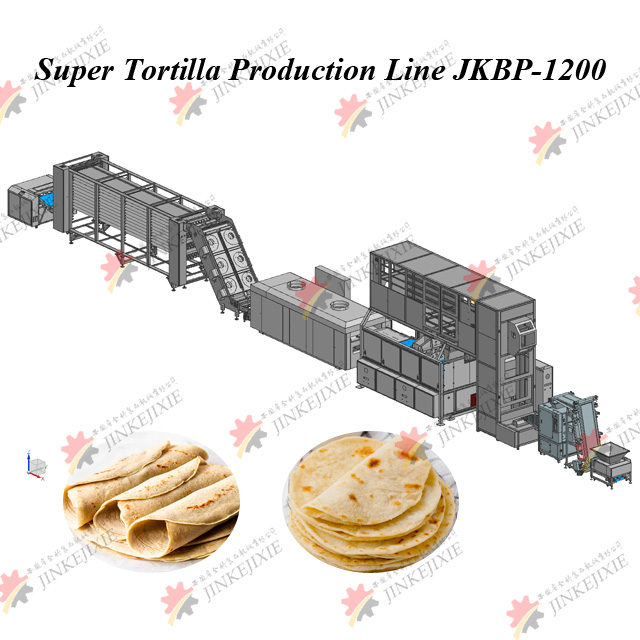
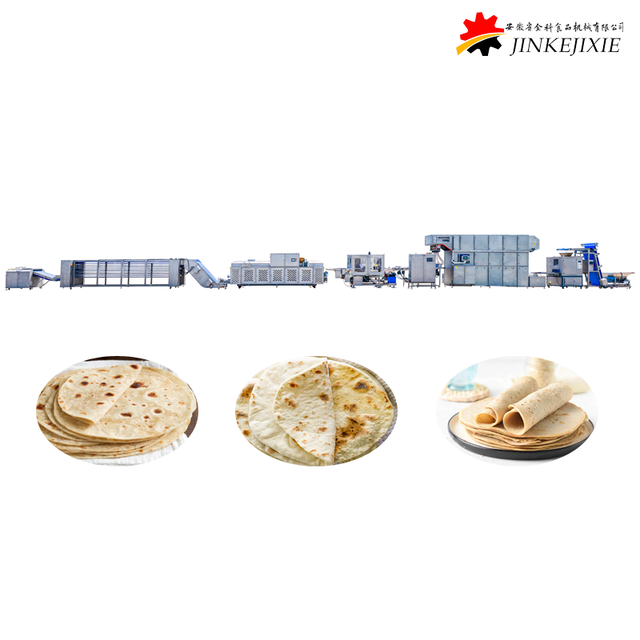
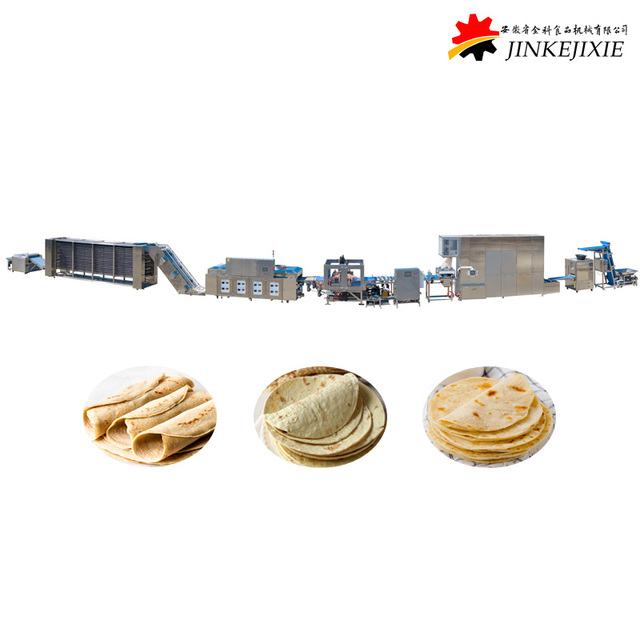
High-output industrial systems handle massive daily volumes for national distribution. These setups are designed for continuous, one-stop production. They range from 10,000 to over 36,000 PPH. Achieving these speeds requires multi-lane configurations. The dough is divided, pressed, and baked in parallel rows, often 4, 6, or 12 lanes wide. This multiplies output without forcing the oven belt to move at uncontrollable speeds. For facilities supplying regional grocery chains or large food service distributors, investing in a fully automatic tortilla production line is mandatory to meet sustained demand and maintain product consistency.
Component-level capacity matching prevents mid-line bottlenecks. Every module in your setup must share matching throughput capabilities. The dough divider must supply enough dough balls per minute. The proofer must rest the dough for the exact duration required for gluten relaxation at the rate the press consumes it. The oven must bake the tortillas thoroughly at the target belt speed. The cooling conveyor must dissipate heat before the product reaches the packaging wrappers. If your press can handle 10,000 PPH but your oven can only bake 8,000 PPH, your true capacity is capped at 8,000 PPH. You must synchronize every component.
You must evaluate the integration between the pressing and baking stages. The transfer conveyor between these modules is a common failure point in poorly designed systems. Dough must move smoothly from the heated press plates to the oven belt without folding, tearing, or overlapping. High-capacity systems use advanced tracking sensors and synchronized servo motors to maintain alignment. Ensure your equipment manufacturer guarantees component synchronization across the entire Tortilla Production Line. Mismatched components lead to frequent jams, excessive product waste, and ruined production schedules.
Evaluating Trade-Offs: Speed, Quality, and Footprint (Value Influencing Factors)
Accuracy in dough dividing becomes highly visible at high speeds. High-speed dividing impacts weight consistency. If your divider fluctuates by just three grams per piece, your final tortillas will vary wildly in size and thickness after pressing. Accurate dividing and rounding maintain consistent tortilla size at high volumes. Inconsistent dough balls lead to uneven pressing, resulting in irregular edges, oval shapes, and rejected products that fail quality control. Prioritize dividers with precise volumetric or gravimetric scaling mechanisms to ensure every dough ball is identical.
Heating and pressing times present an inverse relationship with production speed. As belt speed increases to hit higher PPH targets, oven dwell time decreases. You must ensure the oven dwell time remains sufficient for your target PPH. Rushing the baking process results in undercooked, gummy tortillas that stick together in the bag. To maintain high speed without sacrificing quality, you need a longer oven footprint. A three-tier or five-tier oven extends the baking path, allowing for higher belt speeds while maintaining the necessary 30 to 45-second baking duration. Never sacrifice bake quality for raw speed.
Calculating the return on investment requires analyzing labor costs versus automation. Upgrading to an automatic system reduces the manual labor required per 1,000 tortillas produced. Calculate your current labor cost per unit, including payroll taxes and benefits. Compare this to the projected labor cost with an automated system. Factor in the reduction of overtime pay during peak seasons. Automated systems require fewer line operators but demand higher-skilled maintenance technicians to service the pneumatics and sensors. Balance these variables to determine your true operational savings.
Facility space and power constraints often dictate your equipment choices. High-capacity lines have massive physical footprints. They require significant floor space for the overhead proofer, multi-tier oven, and extensive cooling conveyors. Equipment weight is another factor. Individual modules like the heated press can weigh upwards of 800kg. Ensure your facility floor can support this concentrated load. Utility requirements are equally demanding. High-output ovens draw substantial kW power or consume massive amounts of natural gas. Verify your facility infrastructure can handle these utility demands before finalizing your layout.
Configuration Type
Average Output (PPH)
Estimated Length (Meters)
Best Application
Single-Lane Semi-Auto
1,000 - 3,000
4 - 6 Meters
Local bakeries, small commissaries
4-Lane Automatic
8,000 - 12,000
10 - 15 Meters
Regional distributors, mid-size plants
8-Lane Industrial
16,000 - 24,000
18 - 25 Meters
National grocery suppliers
Implementation Risks and Capacity Pitfalls (Implementation Risks & Mitigation)
The nameplate capacity trap is the most common purchasing error in the baking industry. Manufacturers often state the maximum theoretical output of their machines in sales brochures. This number assumes zero scrap, zero changeovers, perfect dough consistency, and 100% operator efficiency. Basing purchasing decisions strictly on this theoretical output leads to severe under-capacity on the floor. Always calculate your required throughput based on sustained operational output. Demand performance guarantees from the manufacturer based on your specific dough formulations, target weights, and shift structures.
Labor dependencies in semi-automated setups artificially cap output. You might install a high-speed press and oven, but rely on manual labor for counting and packaging. If your packaging team can only handle 30 bags a minute, your entire line is limited to that speed, regardless of what the oven can do. Manual loading stages present similar bottlenecks. Identify every manual touchpoint in your production process. Evaluate whether human operators can keep pace with the machinery over an 8-hour shift. Automate these bottlenecks with stackers and flow wrappers to unlock the true potential of your equipment.
Scaling for future growth requires modular equipment selection. You want to expand capacity without replacing the entire line in three years. Select equipment that allows for modular upgrades. Can you add a wider belt to the press later? Can you upgrade the proofer with additional resting trays? Can you add a longer cooling tier to the conveyor system? Modular designs prevent overcapitalizing today while securing your ability to grow tomorrow. Plan your facility layout to accommodate future module additions, leaving empty floor space at the end of the cooling line.
Inadequate cooling time ruins high-volume production runs. Tortillas must reach a specific ambient temperature before packaging. Packaging hot tortillas causes condensation inside the bag. Condensation leads to rapid mold growth and ruined batches, resulting in costly retailer chargebacks. As you increase your PPH, you must proportionally increase your cooling conveyor length. A standard cooling rack might suffice for 2,000 PPH. At 10,000 PPH, you need extensive multi-tier overhead cooling conveyors that keep the product moving for at least three minutes. Never overlook the cooling stage when calculating line footprint and capacity.
Always test your specific dough formulation on the manufacturer's equipment before purchase to verify actual PPH.
Measure your facility's doorways and loading docks to ensure large oven modules can physically enter the building.
Verify your local gas pressure and electrical service can support the peak draw of industrial baking equipment.
Train your maintenance staff on servo motor calibration to prevent alignment issues on multi-lane setups.
Conclusion
Accurate capacity planning requires looking past theoretical maximums. You must calculate your required throughput based on realistic uptime, scrap rates, lane configurations, and SKU changeovers. Relying on basic math without factoring in OEE will leave your facility struggling to meet daily orders. A data-driven approach ensures your equipment investment aligns perfectly with your production realities. Facilities requiring under 3,000 PPH should evaluate standalone commercial machines. Operations demanding 10,000+ PPH must invest in a fully integrated, automatic line with synchronized components. Multi-lane configurations and extended baking paths are non-negotiable at these high volumes.
Audit your historical sales data to pinpoint your highest-volume production weeks and establish a true baseline.
Calculate your required KPH and PPH using the OEE formula, factoring in a 75% efficiency rate and a 5% scrap buffer.
Map out your facility floor space to ensure adequate room for extended ovens and multi-tier cooling conveyors.
Request guaranteed throughput metrics from equipment manufacturers based on your specific dough weights and maximum diameter requirements.
FAQ
Q: How many tortillas can a commercial tortilla machine make in an hour?
A: Output varies significantly by equipment type. Entry-level semi-automated machines typically produce between 1,000 and 3,000 pieces per hour (PPH). Fully automated, multi-lane industrial systems can yield anywhere from 10,000 to over 36,000 PPH. Actual output depends heavily on tortilla diameter, baking time, and operator efficiency.
Q: What is the difference between theoretical and actual capacity on a tortilla line?
A: Theoretical capacity is the machine's maximum speed under perfect conditions with zero interruptions. Actual capacity factors in your Overall Equipment Effectiveness (OEE). This includes deductions for sanitation, preventive maintenance, product changeovers, operator breaks, and standard scrap rates. Actual capacity is typically 75-85% of theoretical capacity.
Q: How do I calculate the dough required for my daily tortilla orders?
A: First, determine your target daily order volume and add your average scrap rate percentage (usually 2-5%). Multiply this total unit count by the exact weight of a single raw dough ball. Convert this total weight into kilograms to determine your required Kilograms Per Hour (KPH) for your mixers.
Q: Does tortilla size and maximum diameter affect the overall production line capacity?
A: Yes. Larger tortillas require more belt space and longer baking times. A machine pressing 6-inch tortillas can fit more units across a belt than one pressing 12-inch tortillas. Producing maximum-diameter products generally lowers your total pieces per hour unless you upgrade to a wider, multi-lane configuration.
Q: How do multi-lane configurations (e.g., 12-wide belts) impact production speed?
A: Multi-lane configurations multiply your output without forcing the conveyor belt to move at unmanageable speeds. By pressing and baking 12 tortillas side-by-side simultaneously, you achieve massive hourly volumes while maintaining the necessary oven dwell time for a thorough, consistent bake.
Q: What is the most common bottleneck in an automatic tortilla production line?
A: The most common bottlenecks are the baking and cooling stages. High-speed presses can easily outpace standard ovens. If the oven isn't long enough, tortillas will underbake. Similarly, if the cooling conveyor is too short, tortillas will be packaged hot, leading to condensation and mold.
Q: How much space and power is required for a high-capacity tortilla production line?
A: High-capacity lines require significant infrastructure. A standard industrial line can exceed 15 meters in length. Modules like the press and oven often weigh over 500kg each. They require robust electrical panels for motors and substantial natural gas lines to fuel the multi-tier baking ovens.