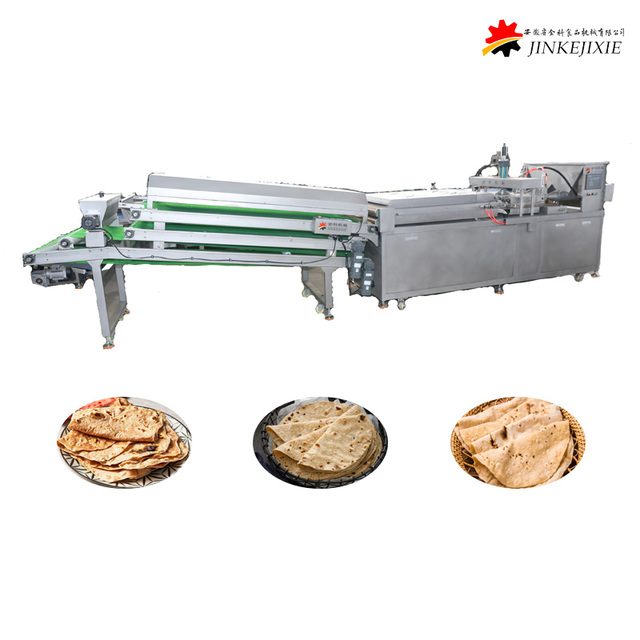
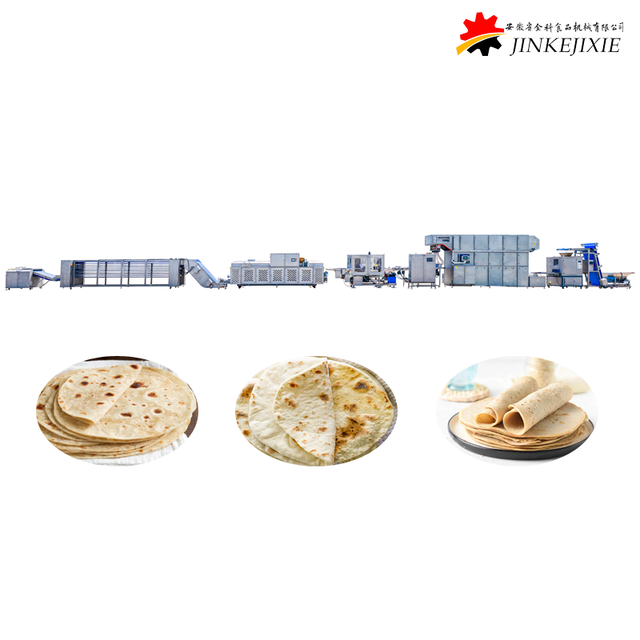
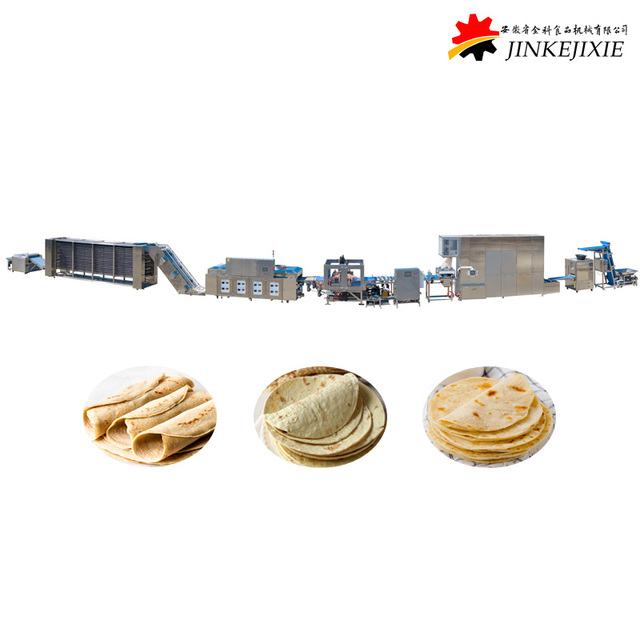
In automated flatbread production, the most common cause of line failure is not mechanical breakdown, but rheological inconsistency. Improper dough hydration halts operations faster than worn gears. Manufacturers often attempt to scale traditional recipes without adjusting for the mechanical realities of high-volume processing. This mismatch leads to frequent line jams, excessive mechanical wear, high product rejection rates, and unpredictable throughput.
Selecting and optimizing a commercial chapati line requires a precise understanding of how water-to-flour ratios interact with hopper feeds, sheeting rollers, and baking conveyors. A perfectly engineered production line will still fail if the dough lacks the correct balance of extensibility and elasticity. This guide breaks down the operational impact of dough hydration and how to evaluate equipment based on your specific formulation parameters.
Key Takeaways
Hydration Defines Throughput: The optimal hydration window (typically 55%–65% baker’s percentage for chapati) dictates the continuous operating speed of high output chapati equipment.
Mechanical Trade-offs: Low-hydration doughs increase mechanical stress and power consumption, while high-hydration doughs risk transfer failures and require excessive dusting flour.
Formulation Modifiers Matter: The strategic addition of oils, fats, and resting periods (autolyse) can drastically improve machine runnability without compromising the final product's moisture content.
Equipment Architecture: Different forming technologies (sheeting vs. pressing) and feeding mechanisms (like a gravity feed chapati line) have distinct tolerances for dough stickiness and elasticity.
Pre-Processing is Critical: Consistent machine performance relies entirely on upstream automated dosing, phased water addition, and temperature-controlled mixing to eliminate batch-to-batch hydration variance.
The Physics of Dough Hydration in Automated Production
Defining Commercial Hydration Metrics
Industrial bakeries measure hydration using baker’s percentage. This metric expresses water weight strictly relative to total flour weight. If a production run uses 500 kilograms of flour and 300 kilograms of water, the hydration rate is exactly 60%. Maintaining this precise ratio is non-negotiable for automated processing. Even a 1% deviation—just 5 kilograms of water in a half-ton batch—drastically alters dough behavior on the factory floor.
Baseline water absorption capacity depends heavily on your flour specifications. Whole wheat atta behaves differently than refined flours. High protein content (typically 11% to 12% for chapati) requires more water to form a stable gluten network. Starch damage from the milling process, especially in stone-milled flour, also increases water uptake. Furthermore, finer bran particle sizes absorb water faster than coarse bran. You must test your specific flour blend using a Farinograph to establish a reliable baseline before programming your mixing cycles.
Rheology and Machine Interaction
Dough rheology dictates how the mixture flows and deforms under physical stress. Automated processing requires a delicate balance between extensibility and elasticity. Extensibility allows the dough to stretch through reduction rollers without tearing. Elasticity causes the dough to snap back into shape. If elasticity dominates, the dough resists forming and shrinks on the resting conveyor after cutting, resulting in oval chapatis. If extensibility dominates, the dough becomes weak and struggles to hold its shape during transfer.
Hydration directly alters the coefficient of friction between the dough mass and machine components. Water acts as a primary binder but also increases surface tackiness. As hydration rises, the dough grips 304 stainless steel hoppers and Teflon-coated rollers more aggressively. Managing this friction is the core challenge of continuous flatbread production. Operators must find the exact hydration point where dough remains pliable but releases cleanly from polyurethane transfer belts and contact surfaces.
The Impact of Formulation Modifiers (Fats and Conditioners)
Water is not the only liquid influencing machine runnability. The precise dosing of industrial oils or shortening acts as a vital internal lubricant. Fat coats the gluten strands, limiting excessive water absorption and reducing overall surface stickiness. This internal lubrication prevents the dough from adhering to sheeting rollers. Consequently, operators can lower their dependency on external dusting flour, keeping the line cleaner and reducing fire hazards in the oven.
Commercial dough conditioners and emulsifiers also modify elasticity. Additives like sodium stearoyl lactylate (SSL) improve hydration tolerance during high-speed processing. Conditioners relax the gluten network, allowing stiffer doughs to pass through extruders with less mechanical resistance. When formulating for automation, these modifiers provide a wider operational window, preventing minor hydration errors from causing catastrophic line jams.
The Necessity of Dough Resting (Autolyse)
Mixing dough and immediately feeding it into an extruder guarantees poor results. Implementing a mandatory resting phase post-mix is required. This resting period, known as autolyse, allows full water absorption into the bran and damaged starches. Without this 20 to 30-minute window, free water remains on the dough surface, creating a sticky exterior and a dry, crumbly interior.
Resting also relaxes the gluten network formed during mixing. Freshly mixed dough holds immense internal tension. If you force tense dough into a forming machine, it will snap back or tear. A proper autolyse phase yields a smooth, extensible mass. This relaxed dough feeds consistently, sheets evenly, and puffs perfectly during the baking stage.
How Hydration Extremes Impact Commercial Chapati Machine Mechanics
The Cost of Low Hydration (Stiff Dough)
Running stiff, low-hydration dough severely taxes mechanical infrastructure. Extruder motors and sheeting rollers require significantly increased torque to process dense masses. This constant strain leads to accelerated wear on gearboxes, drive chains, and roller bearings. Equipment degrades faster, requiring premature maintenance and frequent part replacements. You essentially force the machine to work outside its engineered tolerances.
Stiff dough also causes severe product quality failures. As non-compliant dough forces its way through reduction rollers, micro-tearing occurs within the gluten network. These invisible tears compromise the dough's structural integrity. During the baking stage, steam escapes through these micro-tears instead of inflating the flatbread. The result is a dense, flat chapati that blisters rather than achieving a full puff, leading to high rejection rates.
Energy consumption spikes predictably when processing low-hydration batches. You will observe sharp increases in amperage draw on the Variable Frequency Drives (VFDs) as motors struggle against the stiff dough. This inefficiency drives up utility costs and risks tripping electrical breakers during peak production. Smooth operations require dough that yields to mechanical pressure rather than fighting it.
Motor Overload: High torque demands cause VFDs to fault and shut down the line.
Gearbox Wear: Continuous processing of stiff dough strips gears and overheats lubricating oil.
Shearpin Failure: Mechanical safety mechanisms break frequently to protect the main drive shafts.
The Risks of High Hydration (Wet/Sticky Dough)
Conversely, excessive hydration introduces a different set of operational disasters. Transfer failures become the primary bottleneck. Wet dough adheres stubbornly to cutting dies, conveyor belts, and transition points. A single piece of stuck dough quickly accumulates into a massive blockage, causing catastrophic line jams. Operators must frequently halt production to scrape down rollers and clear blocked transfer belts.
To mitigate this stickiness, operators often overcompensate with heavy dusting flour. This creates severe secondary issues. Excessive loose flour clogs ribbon gas burners in the baking oven, reducing thermal efficiency. It creates severe airborne dust hazards within the factory, pushing the environment toward Lower Explosive Limit (LEL) conditions and requiring aggressive ventilation. Furthermore, loose flour burns quickly on the hot baking plates, leaving a bitter, charred residue on the final product.
High hydration also leads to severe shape deformation. Wet dough lacks the structural rigidity to maintain its cut shape. After passing through the rotary cutter, highly hydrated dough relaxes too quickly. The circular cuts stretch into oval or irregular shapes as they transfer onto the baking conveyor. Precise, uniform circles demand a tighter, more controlled hydration ratio.
Hydration State
Mechanical Impact
Product Quality Impact
Operational Hazard
Low Hydration (<55%)
High torque, gearbox wear, amperage spikes
Micro-tearing, poor puffing, dense texture
Motor burnout, frequent shearpin replacement
Optimal (55% - 62%)
Smooth extrusion, low friction transfer
Even thickness, full puffing, round shape
Stable continuous production
High Hydration (>62%)
Sticking to rollers, clogged transfer belts
Oval deformation, burnt dusting flour residue
Line jams, airborne dust hazards, fire risk
Evaluating High Output Chapati Equipment by Dough Tolerance
Gravity Feed Chapati Line Mechanics
Feeding dough into the forming section is the first major mechanical hurdle. Standard gravity feeds rely entirely on the dough's weight to pull it down into the extruder. Sticky, high-hydration doughs fail spectacularly in these systems. The tacky dough clings to the hopper walls, creating empty voids in the center. This phenomenon, known as "bridging" or "rat-holing," stops the flow of dough entirely, starving the production line.
When evaluating a gravity feed chapati line, you must assess its feeding mechanisms. If your formulation requires doughs above 62% hydration, passive gravity feeds are insufficient. Look for active feeding technologies. Live-bottom hoppers, star rollers, or twin-screw extruders physically pull the dough downward. These active systems break up bridges and force sticky dough into the forming rollers with consistent pressure.
Forming Technologies: Sheeting vs. Heated Pressing
The choice between sheeting lines and heated presses depends entirely on your dough's rheological profile. Sheeting lines process dough by passing it through multiple sets of reduction rollers. This method requires highly extensible dough with moderate to high hydration. The dough must stretch repeatedly without tearing. When evaluating sheeting lines, focus heavily on roller coating materials (like industrial Teflon) and the precision of automated dusting systems.
Heated press lines utilize a different mechanical approach. A pneumatic or hydraulic press flattens dough balls between two heated plates. This technology handles slightly stiffer doughs exceptionally well. The intense heat from the press (typically 180°C to 200°C) creates an instant cooked skin on the dough surface, immediately neutralizing stickiness. When evaluating press lines, prioritize equipment with flawless pneumatic pressure consistency and highly accurate plate temperature control.
Success Criteria: Aligning Formulation with Machine Specifications
Establishing the Operational Hydration Window
Guesswork has no place in automated food production. You must define your baseline hydration scientifically. Conducting rheological testing on your specific flour blend determines its exact water absorption capacity. This data reveals how your flour behaves under mechanical mixing stress and identifies the precise point where the dough begins to break down.
Transitioning from manual to automated production always involves a scalability compromise. Traditional recipes often favor a very soft dough for maximum final product moisture. However, high-speed machinery requires slightly more structural integrity. You must adjust the traditional hydration rate slightly downward to achieve 99% machine uptime. Strategic use of fats and brief, high-heat baking preserves the final product's mouthfeel despite the lower initial hydration. Finding this balance is the key to operating a Commercial Chapati Machine efficiently.
Optimizing the Mixing Phase for Machine Readiness
How you introduce water to flour dictates how the dough performs downstream. Dumping all water into the mixer simultaneously creates dry pockets and uneven hydration. Phased water dosing prevents this. Adding water gradually in phases while alternating mixer speeds ensures uniform absorption. This technique creates a cohesive, homogenous dough mass fully prepared for the rigors of extrusion.
Temperature serves as a critical, often ignored variable. Industrial spiral mixers generate immense friction. This friction rapidly increases dough temperature during the kneading cycle. Warm dough releases moisture, becoming excessively sticky and difficult to process before it even reaches the hopper. Controlling this thermal variable is mandatory for continuous operations.
Chilled water integration solves the friction problem. Commercial facilities must use glycol-chilled water during the mixing phase. Injecting water at 2°C to 4°C offsets the mechanical heat generated by the spiral mixer. This maintains a consistent final dough temperature, typically between 24°C and 26°C. Stable temperatures guarantee stable hydration behavior, preventing midday line jams caused by overheated, sticky dough.
Dry Blending: Mix flour and dry ingredients for 2 minutes to ensure even distribution.
Initial Hydration: Add 80% of the chilled water and mix on low speed for 3 minutes.
Final Hydration: Add the remaining 20% of water and liquid fats, mixing on high speed for 5 minutes.
Temperature Check: Verify the final dough mass is exactly 26°C before discharging into the resting tubs.
Implementation Risks and Mitigation Strategies
Managing Flour Batch Variability
Flour is an agricultural product subject to constant change. Seasonal variations in wheat crops alter both protein levels and ambient moisture content. A fixed water ratio that works perfectly in January might yield a sticky, unworkable mess in July. Ignoring batch variability guarantees erratic machine performance and high waste.
Mitigating this risk requires strict flour intake specifications. Demand detailed certificates of analysis from your millers for every delivery. Furthermore, train your mixing operators to perform minor hydration adjustments based on real-time dough feel and machine feedback. Empowering operators to tweak water levels by 1% or 2% prevents massive downstream production failures.
Upstream Automation Dependencies
The most advanced chapati line cannot compensate for upstream human error. Manual water addition relies on operators measuring liquids with buckets or hoses. This method guarantees batch-to-batch inconsistency. One slightly over-poured bucket alters the rheology enough to cause severe bridging in the hopper or tearing on the sheeting rollers.
Investing in upstream automation eliminates this variable entirely. Install automated water dosing meters integrated with PLC-controlled mixing cycles. These systems measure water by exact weight and temperature, dispensing it at precise intervals. Removing human error ensures the dough entering your high output chapati equipment is rheologically identical every single time.
Conclusion
Audit your current mixing processes to identify batch-to-batch temperature and hydration variances.
Calculate your exact baker's percentage and send this data to prospective equipment vendors before requesting a quote.
Install automated, temperature-controlled water dosing meters above all industrial mixers to eliminate human error.
Implement a strict, timed autolyse resting phase between mixing and extrusion to ensure full water absorption.
Demand a Factory Acceptance Test using your exact flour blend to verify the equipment handles your specific dough rheology.
FAQ
Q: What is the ideal dough hydration for a commercial chapati machine?
A: Commercial lines typically require a hydration rate between 55% and 62%. This specific range balances product softness with machine runnability, preventing excessive sticking on the rollers while maintaining enough moisture for the flatbread to puff correctly in the oven.
Q: Why does my chapati dough stick to the sheeting rollers?
A: Sticking is usually caused by over-hydration, insufficient resting time, or high dough temperatures. If the bran hasn't fully absorbed the water during an autolyse phase, free moisture remains on the surface. Worn Teflon coatings on the rollers also contribute to sticking.
Q: How does adding oil or fat impact dough processing?
A: Adding a precise percentage of oil acts as an internal lubricant. It coats the gluten strands, reducing the dough's surface stickiness against stainless steel and polyurethane components. This improves elasticity and significantly lowers the need for excessive dusting flour on the line.
Q: Why is dough resting time critical before feeding?
A: Resting, or autolyse, allows the flour's starches and bran to fully absorb the water. This process relaxes the gluten network formed during mixing, making the dough more extensible and significantly reducing the risk of tearing during the high-speed sheeting or pressing phases.
Q: Can a gravity feed system handle highly hydrated dough?
A: Standard gravity feeds struggle with wet dough due to bridging, where the dough sticks to the hopper walls and stops flowing. High-hydration doughs require active feeding mechanisms like live-bottom hoppers, star rollers, or twin-screw extruders to force the dough downward.
Q: How does dough temperature affect production equipment?
A: Warm dough releases moisture and becomes highly tacky, leading to severe line jams and transfer failures. Commercial facilities must use glycol-chilled water during mixing to offset the friction heat generated by spiral mixers, maintaining a stable dough temperature around 26°C.
Q: Why are my machine-made chapatis tearing during production?
A: Tearing occurs when dough lacks extensibility. This is caused by low hydration, insufficient resting time, or forcing cold, tense dough through reduction rollers too quickly. The gluten network physically breaks under the mechanical shear stress of the sheeting rollers.