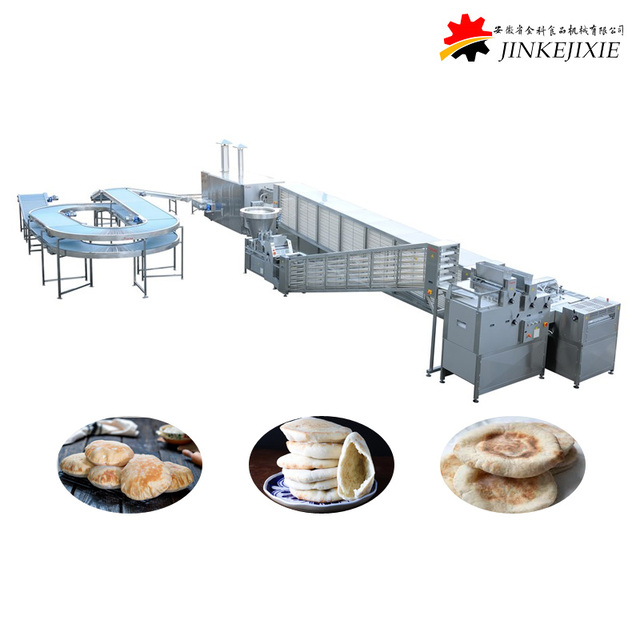
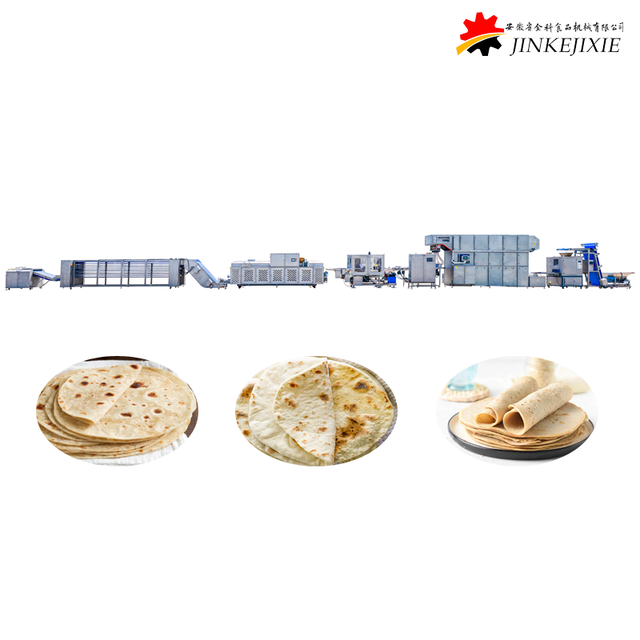
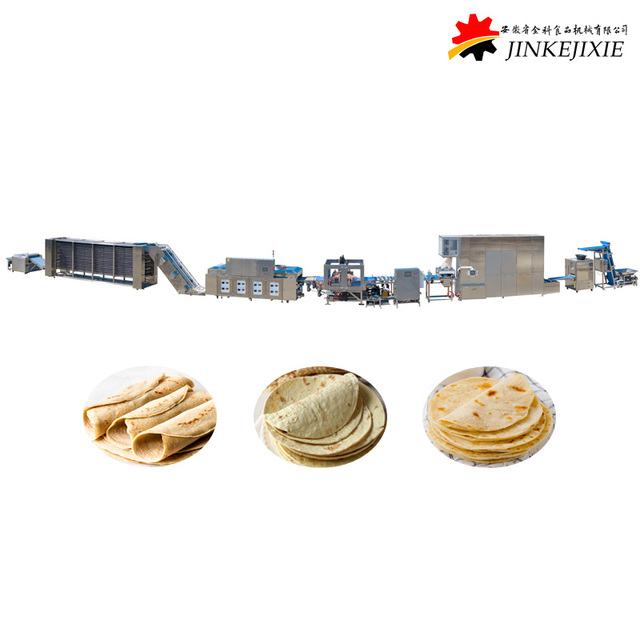
Inconsistent pita production carries a massive operational cost at scale. Flat, uneven, or easily torn pockets lead directly to high rejection rates, wasted ingredients, and lost wholesale contracts. Consumers and restaurants frequently resort to slicing pitas lengthways because the traditional pocket tears under the weight of heavy fillings like falafel and vegetables. Manual or semi-automated baking methods simply cannot overcome these limitations consistently. Home-baking remedies like damp towels, foil wrapping, or adding baking powder only mask underlying dough issues. Commercial bakeries require repeatable, physics-driven solutions to ensure steam expansion in every unit. You must upgrade to an automated Arabic Pita Bread Machine to standardize dough hydration, sheeting thickness, and high-heat baking phases. This equipment ensures a perfect pocket and the structural integrity required for heavy fillings.
Temperature & Steam Mechanics: Perfect pita pockets require a rapid "flash bake" (typically 700°F to 900°F) to turn internal moisture into steam before the crust hardens; automated tunnel ovens are required to maintain this consistency and manage top/bottom heat ratios at scale.
Precision Sheeting is Non-Negotiable: Uneven dough thickness causes asymmetrical pockets or blowouts. Commercial equipment utilizes multi-stage rollers to guarantee uniform thickness without degassing the dough.
Cooling Protocols Prevent Collapse: Proper cooling conveyors are critical post-bake to stabilize the crumb structure and retain moisture, replacing the manual "towel wrapping" method used in small-batch baking to keep bread pliable.
Equipment ROI: Investing in a dedicated pocket pita production line reduces labor costs and product waste, directly improving gross margins for high-volume bakeries.
The Physics of the Pita Pocket: Why Commercial Batches Fail
The Role of Hydration and Steam Generation
The science of the pita pocket relies entirely on rapid evaporation. When highly hydrated dough hits an intensely hot oven surface, the water inside rapidly converts into steam. The intense heat immediately sears and seals the exterior surfaces. This traps the steam inside. The expanding vapor exerts outward pressure, physically pushing the top and bottom layers apart to create the signature hollow center. You need precise moisture levels to execute this thermodynamic reaction properly. We typically look for hydration levels between 58% and 62%, depending on the flour's absorption capacity.
Inadequate hydration prevents this process. If the dough lacks sufficient water, you won't generate the required volume of steam. Excessive flour dusting during manual processing dries out the exterior skin. This dry layer prevents the top and bottom from separating cleanly, resulting in a dense, fused center. Operators struggle to balance hydration and stickiness without automated handling systems. Water temperature during the mixing phase also dictates how the dough behaves on the line. If you use water that is too warm, the yeast ferments too quickly before the dough reaches the oven. We aim for a finished dough temperature around 78°F to 82°F. This gives the dough enough time to develop flavor without blowing out the yeast activity prematurely.
True steam-driven expansion creates a clean, authentic texture. Home-baking crutches often involve adding baking powder to force the dough to rise artificially. Commercial facilities must rely strictly on thermodynamics rather than chemical leavening to achieve an authentic, clean-label texture. Chemical additives alter the flavor profile and create a crumbly texture that fails to hold heavy fillings. Authentic pita relies solely on flour, water, yeast, salt, and intense heat. Using filtered water is also highly recommended, as heavy chlorine levels in municipal water supplies can retard yeast growth and ruin the pocket formation.
Dough Resting and Gluten Relaxation
Stressed gluten actively fights the expansion process. When dough is divided and rounded, the mechanical action tightens the gluten network. If this dough is not rested properly after dividing and rounding, it shrinks during baking, leading to thick, fluffy breads with no pocket. The tension prevents the steam from separating the layers. The bread expands vertically like a standard loaf instead of puffing into a hollow pocket. You need flour with a moderate protein content, usually around 11% to 12%, to provide enough strength to hold the steam without becoming overly rubbery.
Small-batch resting allows bakers to simply leave dough on a bench covered with a cloth. Commercial facilities require continuous proofing solutions to maintain high throughput. Automated resting systems move the dough through controlled environments at a precise pace. This continuous proofing ensures that every single dough ball receives the exact amount of time needed for the gluten to relax fully before it enters the sheeting rollers. The resting phase directly impacts the final shape of the product.
If you try to sheet dough that hasn't rested, it will fight the rollers. You will set the roller gap to three millimeters, but the dough will snap back to five millimeters as soon as it exits the machine. This snap-back creates oval or misshapen pitas instead of perfect circles. We see this constantly when bakeries try to push their equipment faster than the proofing time allows. You cannot cheat the resting process. The gluten strands need time to realign and relax. Rushing this step guarantees a high rejection rate at the packaging station.
The "Flash Bake" Requirement
Pita bread demands unique thermal dynamics. The process requires a "flash bake" where the dough is exposed to extreme temperatures for a very short duration. Standard deck or convection ovens fail to deliver the immediate, intense bottom-heat required to seal the exterior instantly and flash the interior moisture. Without that instant seal, the internal moisture escapes as vapor. You lose the internal pressure necessary to separate the layers.
Automated tunnel ovens manage precise top and bottom heat ratios seamlessly. The bottom belt must be hot enough to sear the base on contact. The top radiant heat sets the upper crust just moments later. This synchronized heat application eliminates the manual need to "flip" the dough mid-bake to achieve a symmetrical, even puff. Managing the exhaust in these high-temperature ovens is a balancing act. If you pull too much air out of the baking chamber, you suck the heat away from the dough and dry out the surface.
If you don't pull enough air, the burners starve for oxygen and produce soot. You have to tune the exhaust dampers to maintain a slight positive pressure inside the oven. This keeps the heat enveloping the dough pieces as they travel down the belt. Operators must monitor the burner flames visually. A crisp blue flame indicates proper combustion, while a lazy yellow flame means the exhaust needs immediate adjustment to prevent carbon buildup on the bread.
Core Capabilities of a Reliable Arabic Pita Bread Machine
Multi-Stage Sheeting and Thickness Control
An automated line uses progressive reduction rollers to flatten dough evenly without tearing the gluten network. Instead of crushing the dough ball in a single pass, the machine passes the dough through a series of rollers with gradually decreasing gaps. This gentle reduction flattens the dough while preserving the gluten structure. You need that intact structure to trap the steam during the baking phase. We typically look for a 3:1 reduction ratio per pass to avoid stressing the dough.
The primary success criterion is the ability to calibrate thickness to the millimeter based on specific regional pita styles. A thin Lebanese-style pita requires a much tighter roller gap than a thicker Greek or Mediterranean-style bread. Precision control ensures the walls are robust enough for stuffing. If the sheeting is uneven, the resulting bread will have one thick wall and one paper-thin wall. That thin wall will blow out the second a customer tries to stuff it with falafel.
Setting up the sheeting line requires a methodical approach. You should follow these steps during your morning startup:
Inspect all roller scrapers for dried dough buildup and clean them thoroughly to prevent sticking.
Verify the gap settings on the primary reduction rollers using a set of feeler gauges.
Run a test batch of five dough balls to check the final sheet thickness and diameter.
Adjust the cross-roller speed to ensure the dough remains perfectly circular.
Calibrate the flour dusters to apply the absolute minimum amount of flour necessary to prevent sticking.
Check the variable frequency drives (VFDs) to ensure the belt speeds match the roller output perfectly.
Automated Proofing Conveyors
Intermediate proofers are integrated directly within the machine line. After the dough is divided and rounded, it enters a multi-tiered conveyor system enclosed in a cabinet. This automated resting phase allows the yeast to ferment slightly and the gluten to relax before the sheeting process begins. The continuous movement ensures a first-in, first-out sequence. The belts inside these proofers are usually made of specialized food-grade mesh to prevent the dough from sticking while allowing slight air circulation.
Climate-controlled proofing zones maintain ambient humidity, preventing the dough skin from drying out before hitting the oven. If the environment is too dry, a hard skin forms on the exterior of the dough balls. This dry skin restricts expansion and prevents the pocket from forming properly. By regulating both temperature and humidity, the automated proofer keeps the dough supple. We generally target a relative humidity of 75% to 80% inside the proofing chamber.
Drafts are the enemy of consistent proofing. If your proofer is located near a loading dock door or a high-velocity AC vent, the moving air will strip moisture from the dough surface. We always recommend installing physical baffles or heavy vinyl curtains around the proofing section if the ambient plant environment is volatile. You want the air inside the proofer to be warm, humid, and completely still. Any fluctuation in this microclimate will show up as inconsistent pocket formation at the oven exit.
High-Temperature Tunnel Ovens
Commercial tunnel ovens designed specifically for pita operate at extreme temperatures. These units must reach and sustain temperatures between 700°F and 900°F. The ovens feature heavy-duty insulation, advanced burner configurations, and specialized exhaust systems to manage the intense heat output safely. The dwell time inside the oven is typically less than two minutes. The thermal mass of the oven floor is critical here; it must absorb and hold enough heat to sear hundreds of dough pieces per minute without cooling down.
Evaluation dimensions include gas vs. electric, refractory stone belts vs. steel belts, and the ability to maintain 800°F+ consistently across high-volume shifts without temperature drops. Gas ovens generally provide faster recovery times and higher peak temperatures. Refractory stone belts offer superior heat retention and a traditional bake profile. Heavy-duty steel belts provide durability and easier sanitation. The oven must hold its temperature when loaded with hundreds of pounds of cold dough.
Bake Defect
Probable Oven Cause
Mechanical Adjustment
Pale Bottom Crust
Insufficient floor temperature or fast belt speed.
Increase bottom burner pressure; slow down the main drive motor.
Blistered Top Crust
Top radiant heat is too intense or dough is over-proofed.
Lower top burner output; check proofer humidity levels.
No Pocket Formation
Oven is too cold; steam escapes before sealing.
Allow oven to recover to 800°F+ before loading the next batch.
Uneven Puffing
Lateral temperature variance across the belt width.
Clean burner ports; check for blocked gas orifices on the manifold.
Evaluating a Pocket Pita Production Line for Your Bakery
Throughput vs. Consistency Trade-offs
Sizing commercial pita bread equipment requires a clear decision framework. A facility aiming for 1,000 pieces per hour faces different engineering challenges than one targeting 10,000 pieces per hour. High-throughput lines demand wider belts, larger mixers, and significantly more floor space. You must balance the desired output with the physical constraints of your facility and the required consistency of the final product. Pushing a small line beyond its rated capacity always results in torn dough and collapsed pockets.
Faster belt speeds require longer tunnel ovens to ensure the core temperature reaches the steam-generation threshold. If you increase the speed of the conveyor to push more product through, the dough spends less time in the baking chamber. To compensate, the oven itself must be physically longer. Attempting to run a short oven at high speeds will result in underbaked bread with collapsed pockets and raw dough centers. You cannot cheat the laws of thermodynamics by simply turning up the dial on the drive motor.
Dough piece weight also dictates your throughput limits. A 60-gram dough ball bakes much faster than a 120-gram dough ball. When you switch SKUs on the line, you have to adjust the belt speed and the oven temperature profile. You cannot run a heavy, thick pita at the same speed as a thin, light one. Operators need clear reference charts at the control panel to make these adjustments quickly during changeovers. Proper training ensures that throughput targets do not compromise the structural integrity of the bread.
Modular vs. All-in-One Systems
Choosing between modular and all-in-one systems dictates your future scalability. Modular lines allow you to upgrade individual components independently. You can swap out a divider, extend a proofer, or upgrade the oven as your production demands change. All-in-one compact systems offer excellent footprint efficiency for smaller facilities but often lack the flexibility to scale individual processes. You are locked into the maximum capacity of the weakest component in a compact system.
Scalability must be factored into the initial equipment purchase. As wholesale demand grows, you may need to add a secondary cooling tier or integrate an automated packaging system. Modular pocket pita production line setups accommodate these additions easily. You must evaluate how seamlessly the equipment vendor's ecosystem allows for future integration without requiring a complete line replacement. Look for standardized conveyor heights and universal control panel interfaces.
When planning a modular layout, you have to think about product flow. The dough should move in a logical path from the mixer to the divider, through the proofer, into the oven, and out to packaging. Avoid layouts that require conveyors to double back on themselves or cross over walkways. Straight-line configurations are the easiest to maintain and monitor. L-shaped or U-shaped layouts work well if you are constrained by the shape of your building, provided you install proper transfer belts at the corners.
Post-Bake Cooling and Moisture Stabilization
Pitas must cool gradually on specialized tiered conveyors immediately after exiting the oven. Rapid cooling in ambient air causes the pocket to collapse and the bread to become brittle. The cooling conveyors provide a controlled environment where the internal temperature drops slowly, allowing the crumb structure to set while keeping the exterior soft. The length of the cooling spiral must match the output of the oven exactly to prevent bottlenecks.
The science of moisture retention post-bake is straightforward. Automated cooling tiers replicate the home-baker's "towel or foil wrapping" trick by managing ambient humidity. These enclosed or semi-enclosed conveyors trap essential moisture, keeping the pita soft and pliable without causing soggy condensation that ruins the crust. Proper moisture retention is what allows a consumer to fold the pita around a heavy filling without the hinge cracking.
This automated feature provides massive labor savings and consistency gains over manual workarounds. Manual cooling requires staff to physically stack, wrap, and monitor the bread. This introduces human error and hygiene risks. Automated cooling stabilization ensures that every pita reaches the packaging line at the exact optimal temperature and moisture level. If you package the bread while it is still too warm, condensation will form inside the plastic bag. This free moisture creates a breeding ground for mold and drastically reduces the shelf life of the product. The cooling conveyor must be timed perfectly to hit that sweet spot—usually around 90°F to 95°F internal temperature at the point of bagging.
Upgrading to Commercial Pita Bread Equipment: Implementation Risks
Facility Footprint and HVAC Requirements
Installing an automated line involves strict physical realities. These lines are extensive, often requiring 50 to 100 feet of linear floor space depending on the cooling conveyor configuration. You must account for clearance around the machine for maintenance access, ingredient staging, and operator movement. Failing to measure the facility accurately leads to cramped operations and safety hazards. You also need reinforced concrete floors to handle the static weight of the tunnel oven and the dynamic vibration of the dough dividers.
Ventilation, gas line upgrades, and heat extraction systems are mandatory to safely operate high-temperature tunnel ovens indoors. These ovens generate massive amounts of ambient heat and combustion byproducts. You must install commercial-grade extraction hoods and ensure the facility's HVAC system can handle the increased thermal load. Inadequate ventilation creates a dangerous working environment and violates local fire codes. You must calculate the exact CFM (Cubic Feet per Minute) required to exhaust the oven safely while providing enough makeup air to the room.
Gas supply is a common bottleneck during installation. A large tunnel oven might require a dedicated 2-inch gas line delivering a specific water column pressure. If your building's main gas meter is undersized, the oven will starve for fuel when the burners kick on high. You will see the temperature drop rapidly, and the bread will come out pale and flat. Always consult with a mechanical engineer to verify your utility drops before the equipment arrives on site. Electrical panels must also be upgraded to handle the amperage draw of the multiple VFDs and drive motors.
Operator Training and Recipe Calibration
Moving from manual recipes to automated production requires recalibrating hydration levels, yeast percentages, and mixing times. You cannot simply multiply a small-batch recipe and expect it to run flawlessly through automated rollers. The dough requires specific adjustments to handle the mechanical stress of the divider and the sheeting rollers. You might need to switch from a planetary mixer to a heavy-duty spiral mixer to develop the gluten network properly for automated handling.
We recommend selecting equipment vendors that provide on-site commissioning and dough-tech support during the initial launch phase. Expert technicians will help you dial in the recipe, adjust the progressive reduction rollers, and train your staff on the specific operational nuances of the new commercial pita bread equipment. This hands-on training bridges the gap between traditional baking knowledge and modern mechanical operation.
Your mixing operators are the first line of defense against flat pitas. If they mess up the water temperature or the mixing time, the automated line cannot fix the dough. The machine only processes what you feed it. We spend days training mixing operators to recognize the correct dough feel, temperature, and extensibility. They need to know how to adjust the water or the mixing time if the ambient humidity in the flour storage room changes. Consistent dough at the front end guarantees consistent pockets at the back end.
Maintenance and Sanitation Compliance
Evaluate equipment based on food safety standards like NSF or CE. These certifications guarantee that the equipment is constructed from food-grade materials and designed to prevent bacterial harborage. Compliance is non-negotiable for commercial bakeries supplying supermarkets or large restaurant chains. Inspectors will look closely at the welding seams, the type of plastics used on the conveyor belts, and the accessibility of the internal drive components.
Highlight the importance of tool-less belt removal, accessible crumb trays, and wash-down rated components to minimize daily downtime. Sanitation crews need to clean the conveyors quickly without waiting for maintenance personnel with toolboxes. Smooth stainless-steel surfaces ensure that the line can be sanitized thoroughly and returned to production with minimal delay. Water-resistant bearings and sealed electrical enclosures are mandatory for any wash-down environment.
A strict preventative maintenance schedule keeps the line running efficiently. Your maintenance team should execute the following tasks:
Grease all high-temperature bearings on the oven drive shafts weekly using food-grade, high-temp lubricants.
Inspect the sheeting roller scraper blades daily for wear and replace them if they show signs of scoring.
Check the tension and tracking on all transfer belts to prevent edge fraying and premature failure.
Vacuum the oven combustion chambers monthly to remove carbonized flour dust and debris.
Calibrate the oven thermocouples quarterly to ensure the digital readouts match the actual floor temperatures.
Test all emergency stop buttons and safety interlocks before every production shift.
Conclusion
While recipe tweaks and manual workarounds can fix minor home-baking issues, eliminating flat, thick, or uneven pockets at a commercial scale requires the thermodynamic control provided by specialized automation. You need precise control over dough hydration, sheeting thickness, and oven temperatures to produce a consistent product. Upgrading your production line secures product consistency and protects your wholesale contracts from being canceled due to poor quality.
Buyers must prioritize equipment vendors based on oven temperature consistency, sheeting precision, and the availability of local technical support. A machine that cannot maintain 800°F during a heavy production run will inevitably produce failed batches. Focus on progressive reduction technology and robust cooling systems to ensure the final product remains pliable and structurally sound for your end-users.
Take the following steps to upgrade your production capabilities:
Audit your current production waste percentage to identify exactly how much revenue is lost to flat or torn pitas.
Calculate the potential return on investment by factoring in reduced manual labor and lower dough rejection rates.
Document your facility's physical dimensions, gas supply capacity, and HVAC extraction limits.
Request a technical consultation and a live equipment demo from a certified manufacturer to test your specific dough formulation.
FAQ
Q: Why is my commercial pita bread thick and fluffy with no pocket?
A: Thick, fluffy pita without a pocket is usually caused by insufficient oven floor temperature, inadequate dough hydration, or over-proofing. If the oven isn't hot enough to instantly sear the bottom crust, the internal moisture escapes slowly instead of flashing into steam. Without that rapid steam generation, the dough layers cannot separate, resulting in a bread that rises like a standard loaf.
Q: What is the ideal baking temperature for an Arabic Pita Bread Machine?
A: The ideal baking temperature ranges from 700°F to 900°F. This extreme high-heat environment is necessary for the "flash bake" process. The dough requires a very short dwell time in the oven—typically between 60 and 120 seconds—to rapidly convert internal moisture into steam and puff the bread before the exterior crust hardens completely.
Q: How does a pocket pita production line handle different bread sizes?
A: Automated production lines handle various sizes through the use of interchangeable die cutters and adjustable sheeting rollers. Operators can swap out the rotary cutting dies to stamp out different diameters of dough. Simultaneously, the progressive reduction rollers can be calibrated to adjust the millimeter thickness of the dough sheet.
Q: Can commercial pita bread equipment accommodate gluten-free dough?
A: Yes, but it requires specific modifications. Gluten-free dough lacks natural elasticity and tends to be highly sticky and fragile. Equipment must utilize Teflon-coated rollers, specialized dusting mechanisms, and precise hydration adjustments to prevent the dough from tearing or sticking to the belts during the sheeting and cutting phases.
Q: How long does the cooling conveyor process take for pita bread?
A: The cooling process typically requires 10 to 15 minutes of ambient travel time on tiered conveyors. This gradual cooling is essential to stabilize the crumb structure and trap essential moisture inside the pocket. Rushing this process or exposing the hot bread to cold air causes the pocket to collapse.
Q: What causes pita bread to tear when stuffed with heavy ingredients like falafel and veggies?
A: Tearing is caused by uneven dough thickness, which creates weak spots in the bread's walls. Multi-stage automated rollers ensure uniform wall thickness throughout the entire dough sheet. This precise sheeting guarantees structural integrity, allowing the pita to hold heavy ingredients safely and eliminating the need for end-users to slice the bread lengthways.