Allergen cross-contact in industrial baking carries severe financial and regulatory consequences. Layered dough products introduce unique manufacturing complexities, and diverse fillings compound these risks significantly. Plant managers face constant operational tension daily. They must maximize production uptime while executing rigorous sanitation protocols. Complex machinery makes allergen changeovers inherently difficult. Mitigating allergen risk without crippling throughput requires a calculated, multi-disciplinary approach. Facilities need hygienic equipment design and strategic production scheduling. Standardized checklists and verifiable sanitation standard operating procedures (SOPs) are mandatory. These elements must integrate seamlessly into a master Allergen Control Program (ACP). This framework ensures compliance while maintaining high-volume output.
Strategic production scheduling (running non-allergen to allergen profiles) is the most cost-effective baseline defense against cross-contact.
Wet and dry sanitation strategies must be strictly segregated to prevent microbial growth in flour-heavy environments.
Robust cleaning verification requires a multi-tiered approach: standardized checklists, visual clearance, ATP swabbing, and allergen-specific lateral flow tests.
The Unique Sanitation Challenges of a Paratha Production Line
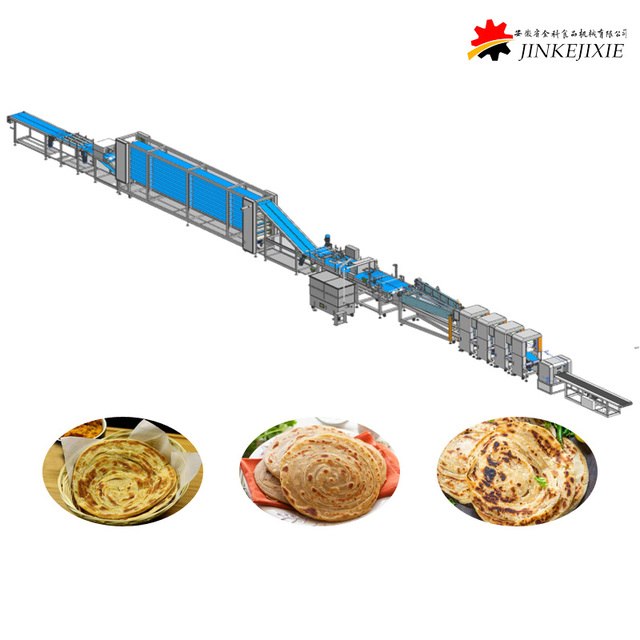
Defining a clean line requires strict adherence to GFSI (Global Food Safety Initiative) and FSMA (Food Safety Modernization Act) standards. A visually clean surface does not guarantee an allergen-free surface. Success criteria demand the complete removal of all allergenic proteins. Facilities must validate this removal through documented, empirical testing. Operating a Paratha Production Line involves handling sticky doughs, high-fat lamination layers, and particulate-heavy fillings. This combination creates a highly challenging sanitation environment that demands specialized cleaning protocols.
Fat, Dough, and Particulate Accumulation
Lamination requires significant quantities of ghee, margarine, or specialized oils. These fats create immediate sanitation hurdles. Fat acts as a water-resistant barrier. It coats stainless steel surfaces and traps proteins and carbohydrates underneath. Standard water rinses cannot penetrate this lipid layer. Alkaline detergents and specific water temperatures, typically between 130°F and 140°F, are necessary to emulsify the fat. If the fat is not properly broken down through saponification, allergenic proteins remain shielded from sanitizing agents, leading to failed swab tests.
Dough sheeting and resting conveyors introduce mechanical pinch points. Rollers, scrapers, and transfer belts constantly compress the dough. Hardened dough fragments accumulate in these tight spaces. As the line runs, ambient heat and airflow dry out these fragments. They turn into cement-like deposits. Removing these deposits requires aggressive mechanical action. Operators must scrape and brush these areas meticulously. Failure to clear these pinch points leads to continuous cross-contact as new dough passes over the contaminated areas.
High-Risk Allergen Zones in Stuffed Paratha Processing
Mapping critical control points (CCPs) is the first step in allergen management. Cross-contact is most likely to occur in specific mechanical zones. Filling hoppers hold concentrated allergen loads. Extrusion nozzles force these fillings into the dough casing. Folding mechanisms then seal the product. Each of these components features complex geometries. Threads, O-rings, internal valves, and manifold blocks provide harbor points for allergens. These areas require complete teardown during a changeover.
Common paratha allergens present distinct risks. Dairy, often found in paneer fillings, leaves behind casein and whey proteins. These proteins are highly heat-resistant and adhere strongly to metal surfaces. Gluten is inherently sticky and forms elastic networks across moving parts. Soy and tree nuts introduce particulate risks. A single crushed nut fragment trapped in a folding mechanism can contaminate thousands of subsequent units. Identifying these high-risk zones dictates the focus of the sanitation effort and determines where QA teams will conduct their final swab tests.
Evaluating Hygienic Design in Frozen Paratha Production Equipment
Equipment design dictates sanitation efficiency. Legacy equipment often requires extensive retrofitting to meet modern standards. These retrofits rarely achieve the cleanability of sanitary-by-design machinery. Modern equipment prioritizes accessibility and smooth surfaces. Evaluating these design elements helps facilities understand their baseline sanitation capabilities and identify areas where mechanical upgrades can reduce labor hours.
Tool-less Disassembly and Accessibility
Labor hours drive changeover costs. Equipment that requires wrenches and screwdrivers extends downtime significantly. Tool-less disassembly is a mandatory feature for modern facilities. Quick-release belts allow operators to remove and clean conveyors away from the main frame. Swing-away conveyors provide instant access to internal drop zones. Removable hoppers enable offline cleaning while the main line continues processing non-allergen products.
Complex automated folding mechanisms present a trade-off. They increase production speed but complicate cleanability. Intricate gears and folding arms create hundreds of potential harbor points. Sanitary design minimizes these complexities. Enclosed drive motors and open-frame architectures improve access. Operators must be able to reach all food-contact surfaces without specialized tools. If a component cannot be easily accessed, it will not be cleaned properly, leaving the facility vulnerable to cross-contact.
Material Finishes and Weld Standards
Surface texture directly impacts biofilm formation. Food-contact surfaces must meet specific surface roughness (Ra) standards. An Ra value of 0.8 micrometers (32 microinches) or lower is standard for sanitary applications. Smoother surfaces prevent proteins and bacteria from anchoring to the metal. Polished 304 or 316L stainless steel is the industry standard. Scratched or pitted surfaces must be repaired or replaced immediately, as they harbor microscopic allergen traces.
Welding standards are equally critical. Spot welds create overlapping metal seams. Capillary action pulls moisture, fat, and allergens into these micro-crevices. Sanitary design requires continuous TIG (Tungsten Inert Gas) welds. These welds must be ground smooth and polished to match the surrounding metal. Furthermore, the elimination of hollow tubing is essential. Square or round hollow frames can crack. Moisture enters these cracks, creating invisible breeding grounds for pathogens. Solid bar stock or fully sealed tubular frames are required for all structural components.
CIP (Clean-in-Place) vs. COP (Clean-out-of-Place) Capabilities
Integrating CIP and COP systems optimizes the changeover process. CIP systems handle liquid and fat distribution networks. Pumps, pipes, and liquid hoppers can be cleaned automatically. CIP relies on controlled flow rates, chemical concentrations, and temperatures. It removes human error from the sanitation of enclosed systems. Facilities verify CIP effectiveness through chemical titration drops at the discharge point. However, CIP is rarely suitable for mechanical dough-handling components.
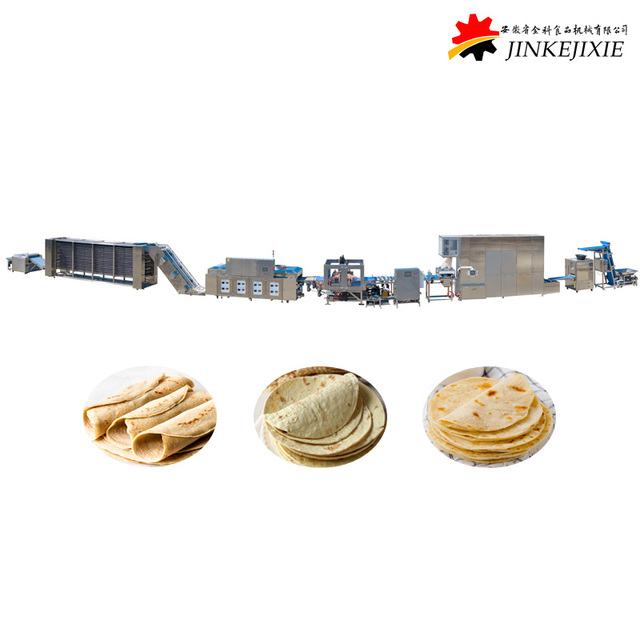
COP is necessary for the physical parts of a frozen paratha production equipment line. Extruder heads, cutting blades, and folding arms must be removed. They are transported to a dedicated COP room. Here, they undergo soaking, mechanical scrubbing, and sanitizing in agitated tanks. Supporting these systems requires substantial infrastructure. Facilities must provide adequate water pressure, precise temperature controls, and high-capacity drainage. Without this infrastructure, neither CIP nor COP can function effectively.
Structuring the Allergen Changeover Protocol
Executing a safe changeover requires a mapped, step-by-step operational protocol. Facilities must balance thoroughness with speed. Excessive downtime destroys production margins. Inadequate sanitation triggers recalls. Structuring the protocol correctly minimizes both risks and provides a repeatable standard for the sanitation crew.
Production Scheduling: Non-Allergen to Allergen Sequences
Production scheduling is the primary defense against cross-contact. The scheduling matrix must follow a strict non-allergen to allergen sequence. A standard run begins with plain, unflavored parathas. The line then transitions to vegetable-stuffed varieties. Finally, the schedule ends with high-allergen profiles containing dairy or meat. This sequence prevents allergens from contaminating clean runs and minimizes the need for full teardowns between every SKU.
Facilities must audit the frequency of these changeovers. Analyzing daily, weekly, and monthly schedules reveals inefficiencies. Grouping similar allergen profiles reduces the total number of full sanitation cycles required. Every avoided changeover increases available production time. Quantifying this reduction helps justify larger batch runs and optimized inventory management, ultimately improving the overall throughput of the plant.
Line Clearance, Purging, and Scrape-Down Procedures
Line clearance is the physical prerequisite to sanitation. Strict protocols must ensure all previous products are removed. Operators must clear the area of all packaging materials, labels, and raw ingredients. A dedicated inspector verifies this clearance before any water or chemicals are introduced. This prevents the accidental mixing of different product labels, which is a leading cause of undeclared allergen recalls.
Purging filling lines is the next step. Operators push inert or non-allergenic materials through the hoppers and extruders. This physical action forces out the majority of the allergenic filling. Purging reduces the volume of material that must be manually cleaned. Operating a stuffed paratha machine requires careful handling of scrap dough. Allergen-contaminated scrap must be safely removed and isolated. Dedicated, color-coded bins prevent this scrap from re-entering the facility environment.
Dry vs. Wet Cleaning Strategies for Dough Systems
Dough handling environments require strict segregation of dry and wet cleaning. Introducing water to flour creates a dense, sticky paste. This paste hardens and becomes extremely difficult to remove. Flour-dust zones must be dry-cleaned exclusively. Operators use dedicated scrapers, industrial vacuums, and stiff-bristled brushes. Vacuuming is preferred over compressed air. Compressed air simply relocates the dust to other areas of the facility, potentially contaminating overhead pipes and HVAC systems.
Wet cleaning is reserved for fat and filling zones. Once dry cleaning is complete, operators transition to wet chemistry. The process follows a strict 7-step sanitation sequence:
Dry clean and secure the area (Lock-out/Tag-out).
Pre-rinse with warm water to remove gross soils.
Apply foaming alkaline detergents to break down fats and proteins.
Mechanically scrub all surfaces to dislodge stubborn residues.
Post-rinse with potable water to remove all chemical traces.
Conduct a pre-op visual inspection and correct any deficiencies.
Apply an approved no-rinse sanitizer to eliminate remaining microorganisms.
Cleaning Verification and QA Sign-Off
Proving sanitation efficacy is mandatory for compliance. Auditors and regulators require empirical evidence. Trusting that a line is clean is insufficient. Facilities must document every step of the verification process to maintain their food safety certifications and protect consumers.
Standardized Allergen Changeover Checklists
Comprehensive checklists guide the entire changeover. These documents can be physical or digital, though digital systems offer better traceability. They are utilized jointly by the sanitation and production teams. A checklist is not merely a suggestion; it is a binding operational document. It mandates specific sign-offs at critical junctures, ensuring no steps are skipped during late-night shifts.
Sign-offs are required for equipment disassembly, line clearance, and sanitation execution. The final step is QA approval. Production cannot resume until Quality Assurance signs the final release. This multi-signature approach creates accountability. It ensures no single individual can bypass critical safety steps to rush the line back into production.
Visual Inspection Standards
The baseline requirement for verification is "visibly clean." However, visual inspection requires proper tools. Ambient overhead lighting is insufficient. Inspectors must use high-intensity flashlights (minimum 500 lumens) to illuminate shadows. Telescoping mirrors allow inspectors to view the undersides of conveyors and the backs of extrusion nozzles. If any residue is visible, the line fails inspection. The sanitation team must reclean the affected area entirely before QA will proceed to swab testing.
ATP Swabbing and Allergen-Specific Testing
Visual inspection is followed by scientific verification. ATP (Adenosine Triphosphate) swabbing detects general biological residue. It confirms that cellular material has been removed. Facilities set strict RLU (Relative Light Unit) limits. For example, a score under 10 is a pass, while anything over 30 is an automatic failure. However, ATP does not detect specific proteins. A passing ATP score does not guarantee an allergen-free surface.
Allergen-specific testing is required for high-risk changeovers. Facilities use ELISA (Enzyme-Linked Immunosorbent Assay) or lateral flow devices. These tests detect specific allergen proteins down to 5 parts per million (ppm). Swabbing locations must be based on the equipment risk map. Inspectors target extruder nozzles, conveyor seams, and folding hinges. These empirical tests provide the final proof of sanitation efficacy.
Cleaning Verification Methods Comparison
Verification Method
Target Detection
Tools Required
Primary Advantage
Visual Inspection
Macroscopic residue, dough, fat
Flashlights, mirrors
Immediate identification of gross contamination.
ATP Swabbing
Biological cellular material
ATP swabs, luminometer
Rapid quantification of overall surface cleanliness.
Lateral Flow Devices
Specific allergenic proteins
Allergen test kits
Fast, targeted detection of specific cross-contact risks.
Documentation proves compliance during an audit. The changeover log is the central record of the event. It must include time-stamped checklist sign-offs. Lot traceability ensures that the products run before and after the changeover are recorded. If a swab test fails, the log must detail the Corrective and Preventive Actions (CAPA) taken. This includes recleaning, re-swabbing, and final passing results. Maintaining these records ensures the facility is always audit-ready and can quickly isolate issues during a mock recall.
Quantifying Sanitation Downtime vs. Equipment Investment
Upgrading to highly cleanable equipment requires a clear financial justification. Plant managers must evaluate the ongoing costs of sanitation downtime against the capital expenditure of new machinery. Understanding these metrics allows facilities to make informed engineering decisions.
Calculating Changeover Costs
The true cost of an allergen changeover extends far beyond the hourly wages of the sanitation crew. Facilities must calculate the lost opportunity cost of the downtime. The formula involves multiplying the lost production volume per hour by the profit margin per unit, then adding the sanitation labor hours and the cost of chemicals and heated water. When a legacy machine takes six hours to clean, the lost production revenue often dwarfs the actual cleaning costs. Upgrading to sanitary-by-design equipment that cuts changeover time in half provides a rapid return on investment through increased production capacity.
Implementation Risks and Mitigation Strategies
New equipment and updated protocols introduce implementation risks. The primary risk is inconsistent operator execution of complex cleaning SOPs. Even the best equipment will fail swab tests if the sanitation crew does not understand how to disassemble it properly. Facilities mitigate this risk by implementing visual, color-coded SOPs mounted directly on the machinery. Dedicated allergen-specific cleaning tools, stored on shadow boards, prevent cross-contamination between zones. Continuous hands-on training programs, integrated into the facility's master sanitation schedule, ensure that all shifts execute the changeover with the same level of precision.
Conclusion
Successful allergen management on a paratha line relies on strict operational discipline. Hygienic equipment design forms the foundation. Without accessible, smooth surfaces, sanitation efforts will fail. Strict enforcement of production scheduling minimizes risk exposure. Standardized checklists and empirical verification protocols prove that the job was done correctly. Relying on visual inspections alone is a critical failure point in modern food manufacturing.
Equipment buyers must prioritize cleanability. Vendors must demonstrate documented sanitary design. Modular systems for stuffed and laminated doughs offer the best balance of speed and accessibility. Upfront design choices dictate daily operational efficiency.
Audit your current changeover downtime to identify mechanical bottlenecks.
Review your environmental swabbing data to pinpoint recurring harbor points.
Consult with equipment engineers to assess your line for sanitary design upgrades.
Implement color-coded sanitation tools to prevent cross-contamination between zones.
Transition from paper to digital checklists to enforce mandatory QA sign-offs.
FAQ
Q: What is the standard downtime for an allergen changeover on a paratha production line?
A: Standard downtime ranges from 2 to 6 hours. This depends entirely on equipment design and line complexity. Sanitary-by-design equipment with tool-less disassembly leans toward the 2-hour mark. Legacy equipment requiring heavy manual scrubbing and mechanical teardowns often exceeds 6 hours.
Q: What should be included in an allergen changeover checklist for food manufacturing?
A: A checklist must include line clearance verification, tool-less disassembly steps, dry/wet cleaning sequences, and visual inspection sign-offs. It must also mandate ATP and allergen-specific swab testing results, concluding with a final Quality Assurance release signature before production resumes.
Q: How do you clean a stuffed paratha machine to prevent dairy cross-contact?
A: First, purge the filling hoppers. Disassemble all extrusion nozzles and folding mechanisms. Use an alkaline detergent and hot water to emulsify the dairy fats. Mechanically scrub all food-contact surfaces. Finally, verify the removal of dairy proteins using a specific lateral flow allergen test.
Q: Should dough conveyors be cleaned using wet or dry sanitation methods?
A: Dough conveyors in flour-heavy zones should primarily use dry sanitation methods. Scraping, brushing, and vacuuming prevent flour from turning into a hard paste. Wet cleaning is only introduced if fat or sticky fillings have contaminated the belt, requiring full dry-down before restarting.
Q: What is the difference between ATP testing and allergen swabbing in food manufacturing?
A: ATP testing detects general biological residue, measuring overall surface cleanliness. It does not identify specific proteins. Allergen swabbing uses targeted antibodies (like lateral flow or ELISA) to detect specific allergenic proteins, such as gluten or dairy, proving the surface is safe from cross-contact.
Q: How does hygienic equipment design reduce frozen paratha production equipment maintenance costs?
A: Hygienic design eliminates complex harbor points, hollow tubing, and inaccessible gears. This reduces the labor hours required for teardown and reassembly. Continuous TIG welds and high Ra surface finishes prevent corrosion and chemical damage, extending the lifespan of the equipment components.
Q: What are the GFSI requirements for allergen changeover documentation and line clearance?
A: GFSI standards require documented proof that line clearance and sanitation occurred. This includes time-stamped logs, signed verification checklists, recorded swab test results, and documented corrective actions if initial inspections fail. All records must be traceable to specific production lots.