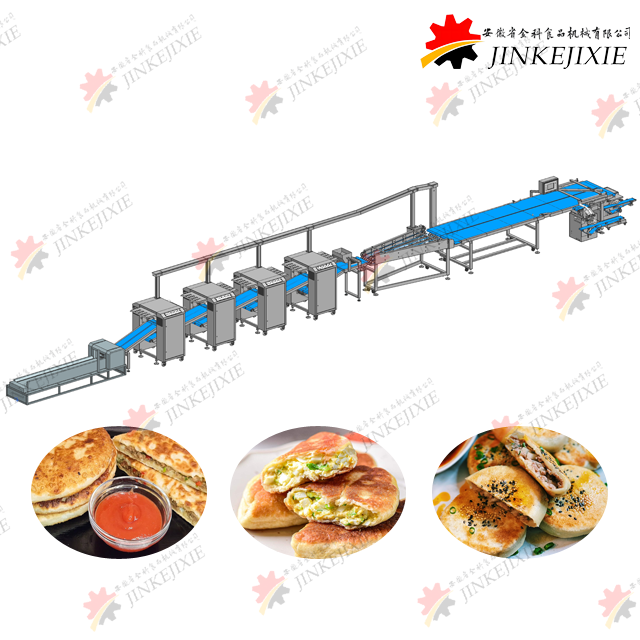
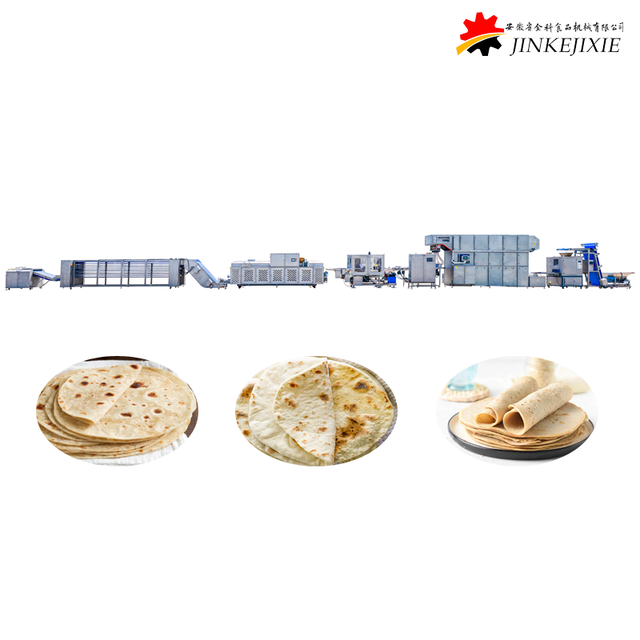
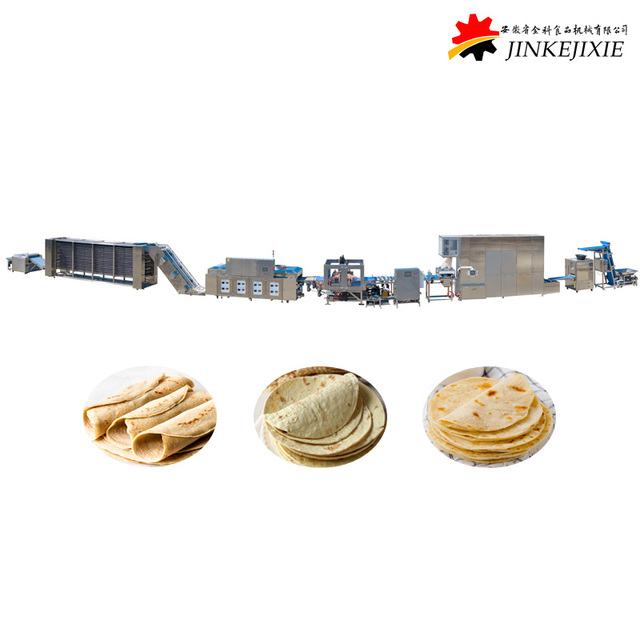
Scaling stuffed pie manufacturing presents a hard operational bottleneck. Plant managers must increase throughput without destroying crust integrity, filling consistency, or visual appeal. Moving from semi-manual batch processing to continuous automation introduces heavy mechanical risk. Selecting the wrong machinery leads to massive product giveaway, constant maintenance downtime, and rigid lines that cannot adapt to new recipes. You need a systematic framework to evaluate equipment based on exact throughput requirements, product variety, and facility constraints. We will break down how to assess critical mechanical components, compare machine configurations, and mitigate implementation risks before you tear up your production floor. Mastering these variables ensures your facility maintains product quality while hitting aggressive production targets.
Match equipment throughput to precise batch size requirements, scaling from 50-liter filling systems to multi-tonne continuous lines.
Prioritize modularity and tool-less changeovers if producing both single-crust and two-crust varieties across multiple SKUs.
Validate equipment compliance with regional food safety standards (e.g., FDA, CE) through rigorous washdown ratings and hygienic design.
Defining Success Criteria for Commercial Stuffed Pie Equipment
Throughput vs. Product Consistency
Calculate target units per minute (UPM) against acceptable defect rates. High-speed dough sheeting must balance with necessary dough resting times. Rushing this process causes crust shrinkage or tearing during baking. Determine the minimum production run volume required to justify changeover times between different pie formats. High throughput numbers look impressive on paper, but actual yield depends on maintaining consistent dough rheology. Mechanical stress during high-speed extrusion alters the gluten network. Operators must monitor dough temperature continuously. Friction from rollers and extruders heats the dough, melting laminated fats prematurely. Melted fats destroy the flaky texture of the final baked crust. Facilities must specify equipment capable of handling chilled dough efficiently.
Analyze the relationship between line speed and product giveaway margins. Volumetric filling accuracy degrades at higher speeds. A variance of just three grams per pie translates to massive annual ingredient losses. Define your acceptable weight tolerance before evaluating machines. Equipment vendors must guarantee these tolerances at maximum operating speeds. Slower speeds are mandatory for highly viscous or chunky fillings. Establish a baseline OEE (Overall Equipment Effectiveness) target accounting for planned sanitation stops and product changeovers. Maximizing UPM means nothing if the line requires excessive downtime for cleaning.
Calculate maximum units per minute against acceptable defect rates and scrap limits.
Determine the minimum production run volume required to justify mechanical changeover times.
Measure dough temperature at the start and end of the sheeting process to monitor friction heat.
Establish strict weight variance limits for both dough shells and internal fillings.
Integrate pneumatic blow-off valves to automatically reject underweight pies before baking.
Recipe Complexity and Product Variety
Evaluate filling dynamics carefully. Dedicated meat pie lines require heavy-duty systems. They must handle chunky meats and high-viscosity gravies without mashing the ingredients into a paste. Sweet applications involve smooth purees or delicate fruit particulates. These delicate ingredients need gentle extrusion to maintain visual identity. The fluid dynamics of your filling dictate the pump type. Shear-thinning fluids behave differently under pressure than Newtonian fluids. Starch-thickened gravies break down if pumped too aggressively. Test exact recipes on vendor equipment. Never rely on water or generic substitutes during equipment trials. Integrating a Stuffed Pie Production Line requires matching the pump mechanics directly to your specific fluid viscosity.
Define crust architecture requirements clearly. Specify whether the line handles pressed shells, spun shells, or high-rim formats. Single-crust and two-crust configurations demand different mechanical handling. Pressed shells require precise blocking dies. Spun shells need specialized rotating mandrels. Laminated puff pastry behaves differently than shortcrust pastry. Puff pastry requires stress-free sheeting lines. Shortcrust tolerates more aggressive roller reduction. Document every SKU in your current and future portfolio. The machinery must accommodate the thickest and thinnest dough requirements. It must also handle the largest and smallest pie tin diameters without requiring complete line reconfiguration.
Core Components of a Stuffed Pie Production Line
Dough Preparation and Sheeting Systems
Compare continuous dough feeding mechanisms against batch-loading hoppers. Continuous feeders maintain a consistent head pressure. This consistent pressure ensures uniform dough sheet width and thickness. Batch hoppers cause pressure fluctuations as they empty. These fluctuations lead to inconsistent dough weights. Stress-free sheeting technology maintains gluten structure. Multi-roller reduction stations gently thin the dough. Cross-rollers widen the sheet without tearing the edges. Gauge rollers provide the final thickness calibration. Integrate automated flour dusting mechanisms to prevent the dough from sticking to the reduction rollers during high-speed runs.
Assess the precision of adjustable dough sheet thickness controls. Manual handle-adjusted rollers work for basic setups. Highly precise servo-driven systems offer better consistency for high-volume runs. Servo motors adjust the roller gap in increments of millimeters. Optical sensors monitor the dough sheet continuously. They send feedback to the PLC to adjust roller speeds automatically. This closed-loop control prevents dough tearing. It compensates for variations in dough batch elasticity. Proper sheeting minimizes the need for chemical dough relaxers and reduces the volume of scrap dough generated at the trimming station.
Precision Filling and Dosing Stations
Evaluate volumetric versus piston fillers based on particulate integrity. Piston fillers draw filling into a cylinder before pushing it out. This method prevents the crushing of meat or fruit chunks during extrusion. Auger fillers use a rotating screw. Augers work well for smooth pastes but destroy delicate particulates. Establish strict requirements for weight accuracy. Specify drip-free nozzles with mechanical cut-off wires to keep the pie sealing edges clean. Contaminated edges prevent hermetic crust seals. Poor seals lead to filling boil-out during baking, which ruins the product and fouls the oven belts.
Jacketed hoppers maintain temperature. Hot fillings require water-jacketed hoppers to prevent congealing. Cold fillings need chilled jackets to prevent bacterial growth. Agitators inside the hopper keep particulates suspended in the gravy. Specify the correct agitator blade design. Scraped-surface agitators prevent starches from burning on the hopper walls. Rotary valves control the flow between the hopper and the nozzle. Choose valves designed for quick disassembly. Tool-less removal speeds up sanitation shifts and prevents operators from damaging sensitive components with heavy wrenches.
Forming, Crimping, and Sealing Mechanisms
Detail bottom and sidewall shell forming techniques. Tailor these techniques for specific pie tins or foil containers. Heated blocking dies prevent the dough from sticking. Pneumatic presses offer adjustable forming pressure. Servo-driven presses provide precise depth control and adjustable dwell times. Automated lidding stations place the top crust accurately. Misaligned top crusts cause visual defects and uneven baking. The lidding mechanism must handle delicate dough without stretching it. Specify Teflon or titanium nitride coatings on the forming dies to eliminate sticking issues with high-hydration doughs.
Crimping and edge-trimming stations ensure a hermetic seal for two-crust pies. A consistent aesthetic across every batch builds brand recognition. Rotary crimpers roll over the edges continuously. Plunge crimpers stamp the edge in a single motion. Plunge crimping operates slower but offers intricate pattern designs. The trimming mechanism must cut cleanly. Dull blades stretch the dough and ruin the seal. Specify hardened steel blades for longevity. Ensure the crimping pressure is adjustable to accommodate different dough thicknesses. Quick-release crimping heads allow operators to swap patterns rapidly between different product runs.
Conveying and Automated Scrap Rework Systems
Evaluate conveyor belt materials for specific production stages. Use homogeneous polyurethane for raw dough handling. Polyurethane resists fat absorption and prevents sticking. Switch to wire mesh for baking and cooling transfers. Wire mesh allows air circulation and withstands high temperatures. Belt tracking systems keep operations running smoothly. Wandering belts damage delicate pie edges. Pneumatic tensioning systems keep belts aligned automatically. Quick-release belt tensioners facilitate thorough cleaning underneath the conveyor. Install nose-bar transfers between conveyors to prevent small pies from tipping over during handoffs.
Assess the integration of automated scrap return conveyors. These systems capture edge trimmings immediately after cutting. They recycle the scrap back into the dough feeder. This minimizes waste and improves overall yield. Scrap dough has a different texture than fresh dough. The rework system must blend the scrap evenly. Limit the scrap ratio to prevent dough toughening. High scrap ratios create dense, unappealing crusts. The PLC should monitor and control the fresh-to-scrap dough ratio automatically. Install catch pans under all transfer points to keep fallen scrap off the factory floor.
Evaluating Automatic Filled Pie Machine Configurations
Linear vs. Rotary Production Lines
Assess factory floor layout and footprint constraints. Linear configurations suit long, narrow spaces. Rotary configurations offer a compact footprint. Compare speed capabilities and mechanical complexity. Linear lines typically achieve higher throughput. They allow for multiple filling and forming stations in sequence. Rotary machines index in a circle. They are limited by the number of stations around the carousel. Rotary machines fit well in facilities with limited floor space but restrict future scalability.
Feature
Linear Production Line
Rotary Production Line
Footprint Requirements
Long and narrow, requires significant floor length.
Compact, circular footprint, ideal for tight spaces.
Maximum Throughput
High (100 - 300+ UPM).
Medium (30 - 100 UPM).
Scalability & Expansion
Easy to add modular stations downstream.
Limited by the fixed circumference of the carousel.
Maintenance Access
Excellent access along both sides of the line.
Can be cramped; central components are harder to reach.
Motion Type
Continuous or intermittent motion available.
Strictly intermittent indexing motion.
Consider the indexing motion. Continuous motion linear lines never stop moving. The tooling travels with the pie during forming and filling. This allows for extremely high speeds. Intermittent motion lines stop for a fraction of a second at each station. Intermittent motion is simpler mechanically but limits maximum throughput. Choose continuous motion for high-volume, single-SKU operations. Choose intermittent motion for diverse product portfolios requiring frequent changeovers.
Dedicated vs. Modular Systems
Weigh the efficiency of high-volume dedicated lines against modular flexibility. Dedicated lines produce one specific pie size constantly. They offer unmatched reliability and speed. Modular systems accommodate multiple pie sizes and shapes. They feature interchangeable forming dies and filling nozzles. Determine the acceptable time limit for tooling changeovers. Fast changeovers maintain high equipment effectiveness when switching runs. Slow changeovers destroy daily production targets. Modular lines require more skilled operators who understand how to calibrate the machine after every changeover.
Look for tool-less changeover features. Operators should swap parts using quick-release pins and clamps. Avoid machines requiring wrenches or specialized tools. Color-code the change parts for different SKUs. This prevents operators from installing the wrong components. Provide dedicated tool carts for storing the change parts safely. Damaged forming dies cause immediate product defects. Implement RFID tags on change parts. The PLC can read these tags to verify the correct tooling is installed before allowing the machine to start.
Technical Evaluation Dimensions and Trade-Offs
Sanitation and Hygienic Design (Compliance)
Evaluate Clean-in-Place (CIP) versus Clean-out-of-Place (COP) capabilities. CIP systems automate the internal cleaning of hoppers and pipes. They circulate hot water and caustic chemicals without disassembly. COP requires operators to remove parts and wash them in a separate tank. CIP saves hours of labor. Verify IP65 or IP69K washdown ratings. IP69K withstands high-pressure, high-temperature washdowns. Standard enclosures fail under these conditions. Specify chemical-resistant seals, such as Viton or EPDM, to withstand harsh foaming sanitizers.
Examine the construction materials. Specify 304 stainless steel for general frames. Use 316 stainless steel for parts in direct contact with highly acidic fruit fillings. Eliminate harborage points to meet strict HACCP standards. Avoid flat horizontal surfaces where water pools. Specify sloped frames with a minimum three-degree angle for natural drainage. Check the quality of the welds. Hygienic welds must be ground smooth and polished. Rough welds harbor dangerous bacteria. Ensure adequate standoff distances between components to allow cleaning brushes to pass through easily.
Automation and Controls Integration
Review PLC and HMI capabilities for recipe management. The HMI should store hundreds of specific product recipes. Operators select the recipe, and the machine adjusts parameters automatically. Look for automated parameter adjustments for roller gaps, fill weights, and conveyor speeds. Production data logging provides necessary data for quality control. The system should track UPM, reject rates, and downtime events. Export this data to your facility's central management system for analysis. Specify large, 15-inch capacitive touch screens that operators can use while wearing sanitary gloves.
Assess how well the automatic filled pie machine integrates seamlessly with other machinery. Upstream integration includes mixers and dough chunkers. The pie line must signal the chunker when it needs more dough. Downstream integration includes spiral freezers, ovens, and packaging lines. Conveyor speeds must synchronize perfectly. A bottleneck at the freezer forces the pie line to stop. Specify standard communication protocols like Ethernet/IP or PROFINET. Proprietary communication systems complicate future equipment upgrades. Install remote access routers so the vendor can troubleshoot PLC faults off-site.
Implementation Risks and Mitigation Strategies
Facility Constraints and Utilities
Audit existing power, compressed air, and water supply capacities. Compare them against the equipment's requirements. Automated lines consume significant electrical power. Ensure your facility has the correct voltage and amperage drops available, typically 480V 3-phase power. Pneumatic actuators require clean, dry compressed air. Moisture in the air lines destroys pneumatic valves. Install dedicated air dryers and filters near the machine. Check your chilled water capacity if the machine requires jacketed cooling hoppers. Verify the floor loading capacity can support multi-tonne equipment.
Manage environmental factors on the factory floor. Temperature and humidity control are required for consistent dough handling. Hot factory environments cause dough to become sticky. Sticky dough jams the sheeting rollers and forming dies. Install dedicated HVAC systems over the dough preparation area. Control ambient humidity to prevent condensation on chilled equipment parts. Condensation dripping onto the product violates food safety regulations. Map the floor space accurately. Account for operator walkways, maintenance access zones, and ingredient staging areas.
Operator Training and Adoption
Acknowledge the learning curve associated with operating complex commercial stuffed pie equipment. Transitioning from manual labor to automated supervision requires different skills. Operators must learn to read HMI screens and interpret fault codes. Mitigate risk by mandating comprehensive vendor training programs. Do not rush the training phase. Have the vendor train your maintenance staff separately from the machine operators. Maintenance staff need deep technical knowledge of the servo drives and PLC logic. Have your lead operators shadow the vendor's technicians during the final installation phase.
Provide accessible troubleshooting documentation. Create visual Single-Point Lessons (SPLs) for common tasks. Hang these visual guides directly on the machine. Ensure the HMI features intuitive, multi-language interfaces. Operators should navigate the screens easily in their native language. Implement a structured certification program for your staff. Only certified operators should adjust critical machine parameters. Lock out advanced settings behind password-protected HMI screens to prevent unauthorized tinkering. Translate all maintenance manuals into the primary languages spoken on your factory floor.
Factory Acceptance Testing (FAT)
Running proprietary dough and filling recipes during the FAT is non-negotiable. Do this before equipment shipment. Testing with generic flour and water proves nothing. Ship your actual ingredients to the vendor's facility. Test the most difficult SKU in your portfolio. If the machine handles the toughest product, it handles the rest. Conduct both dry testing and wet testing. Dry testing verifies mechanical movements. Wet testing proves actual production capabilities. Run the machine continuously for an eight-hour shift to identify thermal expansion issues or component fatigue.
Define clear performance guarantees in the procurement contract. Specify target UPM, weight variance, scrap rate, and filling integrity. Do not sign off on the FAT until the machine hits these numbers consistently. Document the entire FAT process with video. Use these videos later for operator training. Establish a clear protocol for the Site Acceptance Testing (SAT). The SAT occurs after the machine is installed in your facility. The vendor must prove the machine performs identically on your floor as it did during the FAT. Document all punch list items and withhold final payment until every mechanical issue is resolved.
Conclusion
Audit current production bottlenecks to determine exact throughput requirements and acceptable defect rates.
Document exact product specifications including weights, dimensions, and filling viscosities for every SKU in your portfolio.
Map your available factory floor space, noting utility drop locations, floor loading capacities, and environmental controls.
Request detailed RFQs from a shortlisted group of specialized food processing equipment vendors.
Schedule site visits to observe similar equipment operating in active, high-volume production environments.
FAQ
Q: What is the average throughput of a commercial stuffed pie production line?
A: Throughput varies significantly based on machine configuration and pie size. Entry-level rotary machines produce 30 to 50 units per minute. High-speed continuous linear lines exceed 200 units per minute. The exact output depends heavily on dough resting requirements, filling viscosity, and the mechanical limits of the crimping stations.
Q: How do automatic filled pie machines handle chunky meat fillings without crushing them?
A: Advanced machines utilize specialized volumetric piston fillers rather than standard rotating augers. These piston systems gently draw the filling into a cylinder and extrude it. This prevents the mechanical crushing of meat chunks or delicate fruit particulates, maintaining the desired texture and visual appeal of the final product.
Q: Can a single production line produce both single-crust and double-crust pies?
A: Yes, modular production lines handle both formats. Operators electronically bypass or physically remove the lidding and crimping stations when running single-crust products. Quick-change tooling allows facilities to switch between single and double-crust SKUs with minimal mechanical downtime.
Q: How do automated pie lines handle excess dough and edge trimmings?
A: Modern lines feature automated scrap rework systems. Conveyors catch the excess dough trimmed from the edges immediately after crimping. This scrap is continuously transported back to the primary dough feeder, where it blends with fresh dough to minimize waste and maximize overall production yield.
Q: What are the standard washdown and sanitation requirements for commercial pie equipment?
A: Equipment must feature IP65 or IP69K washdown-rated electrical enclosures to withstand high-pressure cleaning. Construction utilizes 304 or 316-grade stainless steel. The design eliminates harborage points, features sloped surfaces for drainage, and offers Clean-in-Place (CIP) systems for internal filling components.
Q: How is dough sheet thickness controlled automatically during production?
A: Dough thickness is managed through a series of reduction rollers. High-end systems use servo-driven motors linked to laser or optical sensors. These sensors continuously monitor the dough sheet and automatically adjust the roller gaps in real-time to maintain precise thickness without manual operator intervention.