Dimensional inconsistency in commercial flatbread manufacturing creates a compounding cascade of operational costs. When flatbreads vary by just a few millimeters in diameter or a fraction of a millimeter in thickness, the entire production floor suffers. Uneven dimensions cause immediate packaging bottlenecks. Oversized flatbreads jam flow wrappers, while undersized ones fail quality control checks. Furthermore, irregular thickness leads to uneven baking, resulting in burnt edges, raw centers, increased scrap rates, and rejected batches.
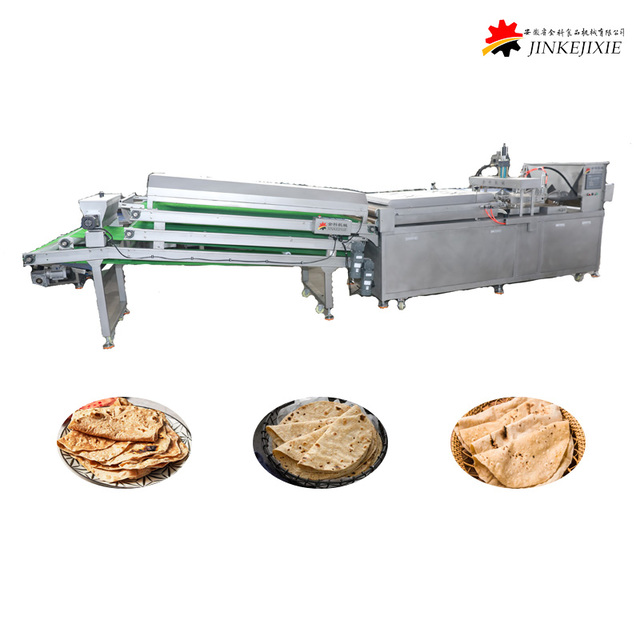
Achieving a perfect 6-to-7-inch diameter and uniform thickness is manageable at a small scale where operators adjust pressure intuitively. However, dough elasticity, gluten memory, and hydration variables make manual scaling highly unpredictable and labor-intensive. Transitioning from manual rolling to a fully automated system eliminates these physical variables. Evaluating a commercial Chapati Production Line serves as the definitive solution for standardizing product dimensions at high throughput.
Consistent chapati diameter relies fundamentally on precise volumetric dough dividing and controlled gluten relaxation before the pressing or rolling stage.
An automatic chapati line utilizes multi-stage gauge rollers or heated pneumatic presses to guarantee uniform thickness (typically 1.5mm to 2mm) without tearing the dough.
Evaluating an industrial chapati machine requires assessing its thermal calibration capabilities, as uneven baking temperatures directly cause post-bake shrinkage and shape distortion.
Transitioning to automated production necessitates recipe standardization; ambient humidity, flour protein content, and dusting flour management must be strictly controlled to match machine tolerances.
The Mechanics of Dough: Why Dimensional Consistency Fails at Scale
Gluten Memory and Post-Roll Shrinkage
Wheat dough operates under strict physical rules dictated by its protein structure. When you mix flour and water, glutenin and gliadin proteins bond to form a resilient, elastic gluten network. Mechanical stress applied during rapid division, rounding, and rolling tightens these gluten strands significantly. They behave exactly like stretched rubber bands under high tension. You might successfully roll a piece of raw dough into a perfect 7-inch circle on a stainless steel bench. However, once the mechanical pressure of the rolling pin is released, the tight gluten strands immediately snap back. The dough shrinks, losing its circular shape and reducing in diameter by up to 20% within seconds. This post-roll shrinkage remains the primary enemy of dimensional consistency in large-scale manufacturing. If you do not account for the relaxation time required to neutralize this tension, your final baked product will never match your raw cut dimensions.
Resting Time (Minutes)
Dough Temperature
Observed Shrinkage (%)
Impact on 7-inch Target
0 - 2
28°C
18% - 22%
Reduces to ~5.5 inches
5 - 7
28°C
8% - 12%
Reduces to ~6.2 inches
10 - 15
28°C
1% - 3%
Maintains ~6.8 to 7 inches
Hydration Variables, Sticking, and the Dusting Dilemma
Minor fluctuations in water-to-flour ratios drastically alter dough rheology on the production floor. A batch mixed at 65% hydration behaves entirely differently than a batch at 60%. Every flour blend has a specific water absorption capacity (WAC). If your flour's WAC is 62% and you hydrate the batch to 65%, the excess moisture remains as free water. This overly hydrated dough becomes excessively sticky. It clings to processing rollers, causing surface tearing and wildly uneven thickness profiles across the flatbread. Conversely, under-hydrated dough turns stiff and unyielding. It resists the mechanical force of flattening, requiring higher pressure that ultimately causes the dough to crack severely around the edges, ruining the circular profile.
Manual operations depend heavily on dusting flour, or dry atta, to prevent this sticking. Operators throw handfuls of dry flour onto the dough to create a temporary non-stick barrier. At scale, this manual dependency creates severe downstream issues. Excess dusting flour falls off in the baking tunnel. It acts as an insulator, preventing proper heat transfer to the dough. Worse, it burns rapidly on the oven belts, leaving carbonized residue, bitter flavors, and dark spotting on the final product. Mechanically managing this dusting process is mandatory for clean, continuous production.
The Bottleneck of Semi-Automatic Processing
Standalone dough dividers or manual pneumatic presses offer a false sense of automation. These semi-automatic setups still require human operators to transfer, rotate, and manually adjust the dough between discrete processing steps. This introduces a massive margin of error into the production timeline. An operator might let one batch rest in the trays for five minutes and the next batch for twelve minutes due to a shift change or a temporary distraction. Variations in resting time change how the gluten behaves, leading to inconsistent shrinkage across different batches. The labor costs remain high, throughput remains bottlenecked by human movement speed, and the final product dimensions fluctuate wildly based on operator fatigue.
Core Mechanisms of an Automatic Chapati Line for Dimensional Control
Precision Dough Extrusion and Volumetric Portioning
You cannot achieve a consistent 6-inch diameter if your raw dough weights fluctuate between 40 grams and 50 grams. Automated dividers ensure exact gram-weight accuracy per dough ball. Consistent weight serves as the non-negotiable prerequisite for consistent diameter. Volumetric portioning systems utilize precision twin-augers and synchronized rotary cutting blades. They pull dough from the main hopper and extrude it under controlled, continuous pressure into a volumetric chamber. The system slices the dough into perfectly uniform pieces based on volume rather than relying on gravity. This eliminates the baseline variable of mass, ensuring every flatbread starts with the exact same amount of raw material before it ever reaches the pressing or rolling stage.
The operator loads bulk dough into the primary hopper, ensuring a consistent fill level to maintain steady downward pressure.
Twin augers gently pull the dough downward, minimizing shear stress to prevent premature gluten tightening.
The dough enters the volumetric chamber where a mechanical piston or rotary drum measures the exact volume required.
A synchronized blade severs the dough, dropping a precisely weighed portion onto the rounding belt.
Automated Resting Conveyors (Proofing/Relaxation)
Intermediate resting conveyors bridge the critical gap between the divider and the flattening mechanism. They play a mandatory role in managing dough physics. These overhead or multi-tier conveyors allow the dough balls to rest for a precisely calculated duration, often moving slowly through a climate-controlled enclosure. This resting period relaxes the tightened gluten network. It neutralizes the rubber-band effect created during the dividing and rounding stages. By controlling the ambient temperature and maintaining relative humidity around 75% to 80% inside the enclosure, the system prevents the dough from developing a dry skin. Proper gluten relaxation guarantees the dough will not snap back during the flattening phase, locking in the intended diameter permanently.
Multi-Stage Rolling vs. Heated Pressing Systems
An automatic chapati line generally employs one of two distinct industrial flattening methods to achieve uniform thickness across thousands of units.
The heated pressing system uses dual-heated Teflon-coated plates driven by heavy-duty pneumatic or hydraulic cylinders. The machine positions the rested dough ball precisely in the center of the bottom plate. The top plate descends, applying 4 to 6 bars of pressure to flatten the dough instantly. Simultaneously, the plates, heated to approximately 180°C to 200°C, flash-cook the surface of the dough for 1 to 1.5 seconds. This micro-baking process gelatinizes the surface starches, locking in the exact diameter and preventing the dough from sticking to the plates or shrinking afterward.
Alternatively, the sheeting and die-cutting method passes a large, continuous dough mass through multi-stage gauge rollers. The first set of rollers reduces the dough block into a thick band. Subsequent rollers gradually reduce this band into a continuous sheet of uniform thickness, taking it from 20mm down to 2mm in stages. Gradual reduction prevents tearing the gluten structure. Cross-rollers gently stretch the sheet horizontally to relieve directional tension. Once the sheet reaches the target thickness, a rotary cutter stamps out perfect circles, leaving a web of excess dough behind.
Automated Flour Dusting and Excess Extraction
Sheeting lines require dry flour to prevent the continuous dough sheet from sticking to the stainless steel gauge rollers. Precision flour sifters apply a controlled, microscopic layer of dust across the dough surface using adjustable mesh screens and motorized agitators. To prevent this flour from burning in the oven, automated lines integrate rotary brushes and vacuum extraction systems. These components sweep the surface of the cut flatbreads and suction away all excess dry flour immediately before the dough enters the baking stage. The extracted flour is often routed to a collection bin for sifting and reuse. This guarantees a clean finish on the final product and eliminates the risk of oven fires caused by airborne flour dust igniting.
Evaluating an Industrial Chapati Machine: Features-to-Outcomes
Calibrators, Gauge Roller Tolerances, and the "Too Thin" Threshold
When assessing an industrial chapati machine, roller design dictates thickness accuracy. Look for heavy-duty stainless steel 304 construction that resists deflection under high mechanical pressure. Micro-adjustment dials are mandatory on all gauge rollers. They allow operators to fine-tune the roller gap down to fractions of a millimeter, compensating for slight variations in dough density throughout a production shift. Non-stick coatings or specialized synthetic scrapers on the final rollers prevent surface tearing and keep the equipment running continuously without manual intervention.
These mechanical features translate directly to achieving the exact "dime-thick" specification consistently across thousands of units. However, operators must respect the critical thickness threshold. Reducing thickness saves dough and increases yield per batch, which looks great on a production spreadsheet. But calibrating the rollers below approximately 1.5mm compromises the structural integrity of the dough. If the flatbread is too thin, the top and bottom layers fuse together during the rolling process. This fusion prevents the internal steam generation required for the flatbread to separate into two distinct layers and puff properly during baking.
Multi-Zone Thermal Control in the Baking Tunnel
The baking phase impacts final dimensions just as much as the rolling phase. Uneven heat causes flatbreads to warp, curl at the edges, and shrink unpredictably on the oven belt. Advanced industrial ovens replicate the traditional "high-to-low" cooking method via multi-zone temperature profiling. A typical three-tier baking tunnel utilizes independent temperature controls for the top and bottom burners in each specific zone.
Baking Zone
Target Temperature
Primary Function
Zone 1 (Entry)
320°C - 350°C
Delivers high-heat shock to seal the exterior, locking in the diameter and preventing moisture loss.
Zone 2 (Middle)
260°C - 280°C
Provides sustained heat to cook the crumb and begin internal steam generation.
Zone 3 (Exit)
220°C - 250°C
Forces the trapped steam to expand, creating the characteristic full puff without burning the exterior.
Scrap Return and Waste Management (For Sheeting Lines)
Die-cut sheeting systems inherently generate waste. After the rotary cutter stamps out the circular flatbreads, a continuous web of excess dough remains on the belt. Handling this scrap efficiently determines the overall profitability and consistency of the line. Automated scrap return conveyors lift this webbing away from the primary production belt immediately after the cutting station. They transport it overhead or alongside the machine back to the primary dough hopper. The system must reincorporate this waste into the fresh dough gently, typically at a ratio of no more than 20% scrap to 80% fresh dough. Over-working the scrap dough tightens its gluten further. If too much scrap enters the hopper at once, it disrupts the density and thickness of subsequent batches, causing the gauge rollers to produce uneven sheets.
Implementation Risks and Mitigation in High-Volume Production
Recipe Standardization and Flour Quality
Legacy recipes optimized for manual rolling almost always fail in automated systems. Manual bakers adjust hydration on the fly based on how the dough feels in their hands. Automation demands rigid, repeatable metrics. You must work closely with food technologists to standardize your recipe before installing the equipment. Flour protein levels must remain consistent from batch to batch, ideally between 10% and 12% for optimal elasticity. Water temperature must be controlled, often chilled to 15°C to 18°C, to regulate yeast or enzymatic activity during the mixing phase. Resting times must be locked in to match the specific conveyor speed and mechanical tolerances of the machinery.
Operator Training and Preventive Maintenance
Mechanical precision degrades rapidly without proper upkeep. Miscalibration of gauge rollers leads to immediate batch rejection due to uneven thickness. Uneven heat distribution caused by clogged oven burners ruins the puffing process and creates raw spots. Mitigate these risks by establishing strict standard operating procedures (SOPs) for your maintenance team.
Mandate daily calibration checks for all gauge rollers using digital calipers to ensure the gap remains perfectly parallel.
Enforce regular cleaning schedules for Teflon belts and pressing plates using non-abrasive pads to prevent coating degradation.
Inspect and clean all optical sensors and limit switches to ensure they remain aligned and free of airborne flour dust.
Check burner nozzles weekly for carbon buildup to maintain a consistent blue flame and even heat distribution across the oven width.
Footprint, Capacity, and Scalability Trade-offs
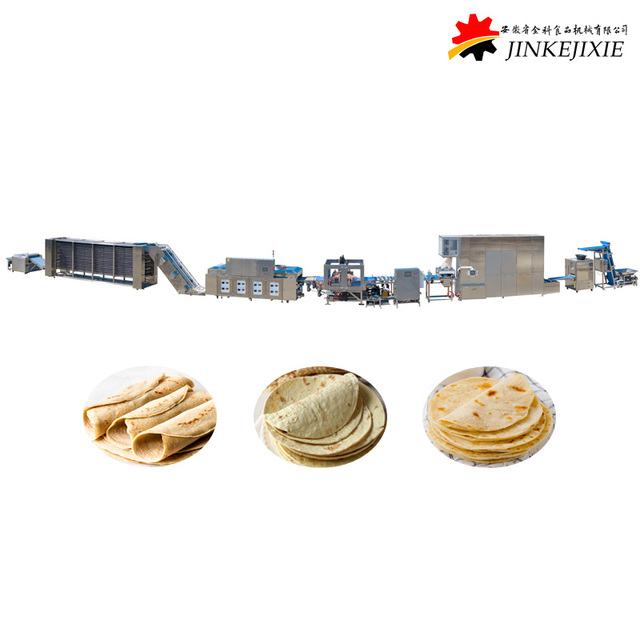
Continuous production lines require significant physical space on the factory floor. A fully automated setup, including volumetric dividers, resting conveyors, flattening systems, multi-tier baking tunnels, and spiral cooling conveyors, often spans 15 to 30 meters in length. Facility managers must balance their desired throughput against available floor space and capital expenditure. A line designed to produce 2,000 pieces per hour might fit in a compact linear arrangement, while a 10,000 piece per hour system requires massive overhead cooling spirals and wider oven belts that dominate the facility layout. Ensure your ceiling height can accommodate the necessary exhaust hoods and ventilation systems required to remove the massive heat load generated by industrial baking tunnels.
Conclusion
Audit your current manual dough weights to establish a strict baseline tolerance for your new volumetric dividing equipment.
Send a 50kg sample of your specific flour blend to the manufacturer for a live extrusion and pressing trial to validate thickness and diameter consistency.
Map your factory floor space accurately, ensuring you leave a minimum 2-meter clearance around the proposed baking tunnel for safe maintenance access.
Upgrade your facility's HVAC and extraction systems to handle the excess heat and airborne flour dust generated by continuous production lines.
FAQ
Q: What causes chapatis to shrink after being rolled on an industrial machine?
A: Shrinkage is caused by insufficient gluten relaxation. Mechanical stress during dividing and rolling tightens the gluten network. If the dough does not pass through an intermediate resting conveyor to relax these proteins, the dough will snap back and shrink once the rolling pressure is removed.
Q: How does an automatic chapati line maintain uniform thickness?
A: It maintains uniform thickness using multi-stage gauge rollers or heated pneumatic presses. Gauge rollers gradually reduce the dough sheet thickness using micro-adjustment calibrators, preventing tearing. Heated presses use precise cylinder pressure and flash-cooking to lock in the exact thickness instantly.
Q: Why do some machine-made chapatis fail to puff?
A: Failure to puff often correlates with rolling the dough too thin. If the dough is calibrated below 1.5mm, the top and bottom layers fuse together. This prevents the flatbread from trapping the internal steam required to separate the layers and create a proper puff during baking.
Q: Is a pressing machine or a die-cutting machine better for round chapatis?
A: Die-cutting machines offer exact, geometrically perfect circles, making them ideal for strict packaging tolerances. Pressing machines create a more traditional, slightly tapered edge profile and generate zero dough scrap, which simplifies the production process and eliminates the need for return conveyors.
Q: What is the ideal dough hydration for an industrial chapati machine?
A: Ideal hydration typically ranges between 55% and 65%. The exact percentage depends heavily on the flour's protein content, water absorption capacity, and the machine's specific roller coatings. Proper hydration prevents the dough from sticking to the machinery or cracking during the flattening phase.
Q: How do automated lines handle the puffing process without distorting the shape?
A: They utilize multi-zone, high-heat baking tunnels. The initial zone applies rapid, high heat to seal the dough surface and lock in the shape. Subsequent zones apply sustained, even heat to generate internal steam, allowing the flatbread to puff without curling at the edges.
Q: How is excess dusting flour managed on an automated line?
A: Automated lines use precision sifters to apply a minimal amount of flour. Before the dough enters the oven, rotary brush extraction systems and vacuums physically sweep and suction away the excess dry flour, preventing it from burning in the baking tunnel and causing bitter flavors.