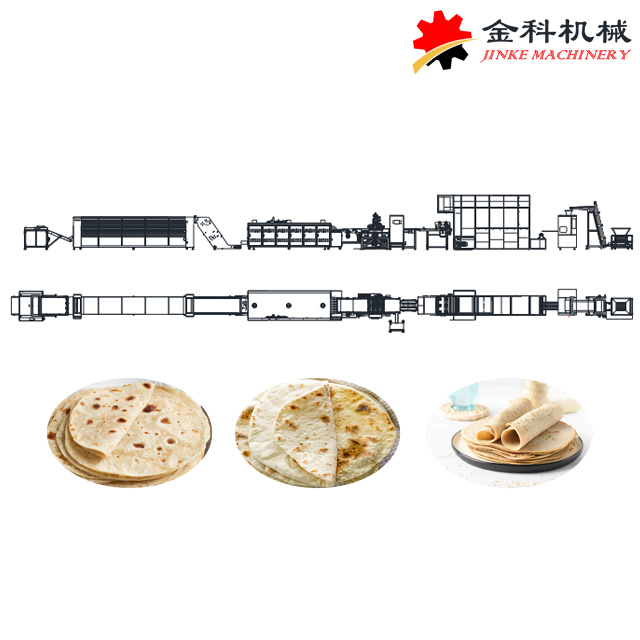
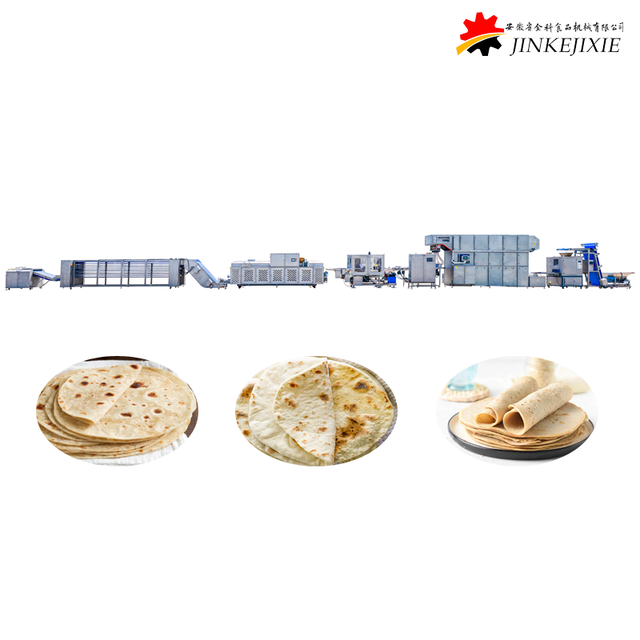
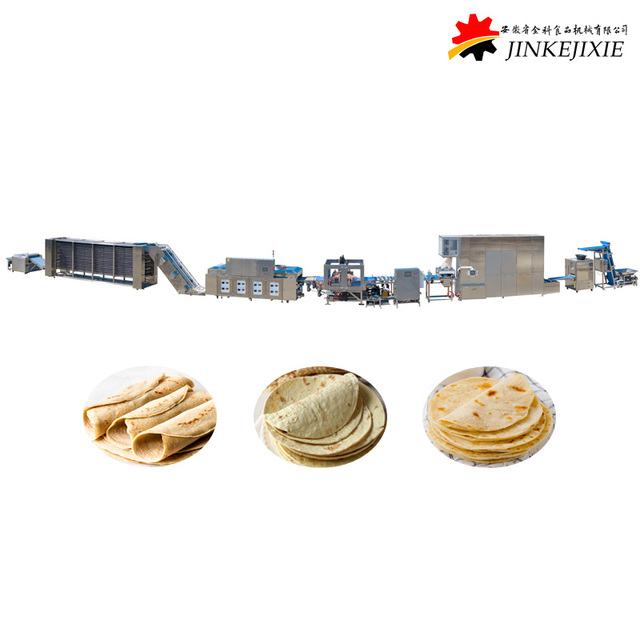
At commercial volumes, the line between a premium, pillowy-soft, flexible flour tortilla and a stiff, brittle product is often determined before the dough ever hits the press or oven. Stiff, dry, or cracking tortillas lead to high defect rates, reduced shelf life, and lost retail contracts. While operators often blame formulation (fat/moisture ratios) or baking temperatures, the root cause is frequently inadequate proofing (resting) caused by equipment bottlenecks.
Scaling production without sacrificing product quality requires equipment that respects dough chemistry. This guide examines the technical role of proofing in tortilla softness and outlines how to evaluate an Industrial Tortilla Machine based on its capacity to manage this critical phase.
Proofing (resting) allows dough to hydrate fully and gluten networks to recover from mechanical stress, which is the primary driver of a soft, pliable end-product.
Upgrading to a continuous tortilla production line eliminates the inconsistencies of manual batch resting, ensuring uniform proofing times across high-volume runs.
When evaluating a large scale tortilla machine, buyers must weigh the trade-offs between throughput speed, required floor space for proofing conveyors, and integrated climate control.
Post-bake cooling and moisture management—the industrial equivalent of "trapping steam"—are just as critical as pre-bake proofing to prevent starch retrogradation and maintain flexibility in the packaging phase.
The Science of Proofing: Defining Success Criteria for Tortilla Softness
Problem Framing: What Softness Means at Scale
Defining softness in a commercial manufacturing environment goes beyond simple tactile feel. A successful product must exhibit high pliability, allowing consumers to roll and fold the tortilla without cracking or tearing. It requires an extended shelf life where the product resists staling and starch retrogradation over weeks or months. Finally, it demands a specific chewy texture that holds up to heavy fillings without turning gummy. Achieving these characteristics consistently across thousands of units per hour relies entirely on how the dough is handled before it ever reaches the heat.
When plant managers evaluate product quality, they look at specific failure points. A tortilla that cracks when folded cold has failed the pliability test. A product that turns translucent and hard around the edges within three days of packaging has failed the moisture retention test. These defects rarely originate in the oven; they start on the resting conveyors.
Recovery from Mechanical Stress
The initial stages of production subject raw dough to immense physical strain. Extruders force the bulk mass through dies, while dividers shear it into precise volumetric portions. Rounders then aggressively roll these portions into tight spheres. This intense mechanical action tightens the gluten matrix, creating a highly elastic, tense dough ball. If you attempt to press this dough immediately, it will fight back.
The dough will shrink back from the edges of the press plate, resulting in thick, uneven, and dense discs. Proofing provides the mandatory recovery period. It allows the protein bonds to physically relax, transforming a tight rubber band of dough into a malleable, extensible structure ready for pressing. Without this relaxation period, the mechanical force required to flatten the dough exceeds the capacity of standard pressing equipment, leading to immediate processing failures.
Dough Condition
Press Behavior
Baking Outcome
Final Product Texture
Unrested (0-2 mins)
High snap-back, resists flattening, requires excessive pneumatic pressure.
Resting dough balls serves a biochemical function alongside mechanical recovery. During the mixing phase, water and fats are introduced, but they do not instantly distribute with perfect uniformity. The proofing phase gives moisture the time it needs to fully permeate the flour particles. This complete hydration is what lubricates the gluten strands.
As the strands relax and slide past one another easily, the dough gains the extensibility required to achieve ultra-thin profiles. Products like translucent Sonoran-style tortillas are impossible to manufacture without extended resting periods. Without proper hydration time, the dough tears under the immense pressure of the heated press plates. The water must bind completely with the damaged starch and proteins to prevent free moisture from boiling off too rapidly in the oven.
The Proofing-Baking Symbiosis
Proper resting directly dictates the success of the baking phase. A well-proofed dough ball enters the oven with a relaxed structure that can rapidly expand. As heat hits the dough, internal moisture turns to steam. Because the gluten network is extensible, this steam creates desirable air pockets and the characteristic blistering that consumers expect from a premium flour tortilla.
Conversely, under-proofed dough restricts this expansion. The steam cannot stretch the tight gluten matrix, forcing the moisture to escape through microscopic tears instead of forming bubbles. The result is a dense, flat, cracker-like texture that lacks the signature chewiness of a high-quality product. The oven can only bake the structure that the proofer provides; it cannot fix a tight dough ball.
The Cost of Under-Proofing
Skipping or rushing the resting phase carries severe operational penalties. When dough is too tight, operators must increase the hydraulic or pneumatic pressure on the pressing equipment to force the dough into shape. This excessive force accelerates wear and tear on press belts, heating plates, and mechanical linkages.
Increased Equipment Wear: High pressure destroys Teflon press belts prematurely and blows out pneumatic seals.
High Defect Rates: Tight dough rarely presses into a perfect circle, leading to high rejection rates for misshapen products.
Customer Rejection: The final texture becomes tough and leathery, driving up customer complaints and returns.
Wasted Energy: Forcing tight dough requires higher platen temperatures to set the shape, wasting electrical or gas energy.
How a Modern Industrial Tortilla Machine Manages the Proofing Stage
Solution Categories: Batch vs. Inline Systems
Historically, commercial facilities relied on manual batch resting. Operators loaded dough balls onto sheet pans, placed them on rolling racks, and parked them in a designated resting area. This method introduces massive inconsistencies. The first dough ball on the rack rests significantly longer than the last one, leading to wildly varying product quality within the same batch.
Modern manufacturing solves this through automated inline proofing systems. These engineered enclosures handle the dough continuously, ensuring that every single unit receives the exact same resting duration, down to the second. Inline systems eliminate the labor costs associated with moving racks and drastically reduce the floor space required for work-in-progress inventory.
Automated Resting Conveyors
An advanced production setup utilizes multi-tier, enclosed conveyors to manage the resting phase without interrupting the flow of the facility. These systems transport dough balls slowly through a controlled environment, typically providing between 5 and 15 minutes of resting time depending on the specific formulation.
By stacking the conveyor belts vertically, manufacturers maximize resting time without consuming excessive linear floor space. The dough balls drop gently from one tier to the next. This drop slightly re-orients the dough ball, preventing it from flattening out completely on one side. Maintaining a spherical shape is necessary to ensure the dough enters the press perfectly centered, which guarantees a round final product.
Handling High-Hydration Doughs
Maximum softness requires high moisture content. However, high-hydration doughs are notoriously sticky and difficult to process at high speeds. Modern proofers are specifically engineered to handle these challenging formulations. They utilize specialized, non-stick food-grade belting, often coated with polyurethane or Teflon, to prevent dough balls from adhering to the transport surface.
Precise transfer points between conveyor tiers are designed with minimal drop heights and active scraper blades to ensure smooth transitions. Some systems incorporate light flour dusters or targeted air blowers to slightly dry the very outer surface of the dough ball, preventing it from sticking to the belt while maintaining high internal moisture. This allows facilities to run the wet, sticky doughs necessary for premium softness without causing catastrophic jams inside the proofer.
Transitioning to a Continuous Line
Linking the divider and rounder directly to the proofer and press creates a seamless operational flow. Upgrading to a continuous tortilla production line eliminates the human error associated with manual rack handling. It also protects the dough from environmental exposure.
When dough sits on open racks, it is subjected to drafty factory air, fluctuating ambient temperatures, and varying humidity levels. An integrated, enclosed line maintains a stable microclimate around the dough from the moment it is divided until it is pressed. This guarantees absolute consistency across multiple shifts, regardless of whether it is a humid summer morning or a dry winter night on the plant floor.
Evaluation Dimensions: Selecting a Large Scale Tortilla Machine
Features-to-Outcomes: The Necessity of Climate Control
When evaluating equipment, you must prioritize temperature and humidity-controlled proofing enclosures. Factory environments are volatile. If a dough ball is exposed to dry air, it develops a "skin"—a dried-out outer layer. When a skinned dough ball hits the press, the dry exterior cracks, resulting in a tortilla with jagged edges and a rough, unappealing surface texture.
Enclosed proofers with active climate control inject precise amounts of humidity to keep the dough surface supple. They monitor the dew point inside the cabinet to ensure moisture does not condense and drip onto the belts, while keeping the air humid enough to prevent evaporation from the dough. Preventing this skinning directly translates to a smoother, softer, and more visually appealing final product.
Scalability and Throughput Calculations
Matching your proofer size to your production goals requires strict mathematical calculation. You cannot simply speed up a conveyor to increase output without destroying product quality. If your target throughput is 2,000 dozen per hour, and your formulation requires a strict 10-minute resting time, you must calculate the exact linear footage of conveyor belt required to hold that volume of dough for that specific duration.
Buyers must ensure the proofer has the physical capacity to support maximum divider speeds while still delivering the mandatory resting minutes. If you buy a high-speed press but pair it with a short proofer, you will be forced to run the proofer too fast, resulting in under-rested dough and tough tortillas.
Footprint and Space Utilization
Physical space is often the most restrictive constraint in a manufacturing facility. Buyers must carefully assess the structural realities of different equipment configurations before committing to a layout.
Proofer Configuration
Primary Advantage
Facility Requirements
Best Operational Fit
Overhead Multi-Tier
Maximizes floor space by utilizing vertical height above other equipment.
Requires high ceilings (15+ feet) and robust structural steel supports.
High-volume facilities with limited square footage but ample vertical clearance.
Compact Floor Model
Easy access for daily maintenance, belt tracking, and sanitation.
Consumes significant linear floor space, requiring longer production halls.
Facilities with ample floor space, lower ceiling heights, and strict daily washdown protocols.
Modular Expandable
Allows for future capacity additions by bolting on extra tiers later.
Requires flexible layout planning to accommodate future length extensions.
Growing operations planning phased expansions over a 3-5 year timeline.
Product Versatility
A high-performance facility rarely produces just one type of product. You might run thick, homestyle flour tortillas in the morning and switch to super-thin, chewy burrito wrappers in the afternoon. Each product requires different resting parameters.
When sourcing a large scale tortilla machine, evaluate the control interface. The system must allow operators to easily adjust conveyor speeds and climate settings to accommodate varying dough weights, hydration levels, and fat contents without requiring complex mechanical changeovers. Programmable Logic Controllers (PLCs) with recipe-saving functions allow operators to switch from a 10-minute rest for a 6-inch tortilla to a 15-minute rest for a 12-inch wrap with the push of a button.
Sanitation and Compliance
Food safety cannot be compromised. Enclosed proofing cabinets create warm, humid environments—ideal conditions for mold and bacterial growth if not properly maintained. Evaluate the equipment based on its sanitation accessibility.
Look for features like quick-release side panels, tool-less belt removal, and integrated clean-in-place (CIP) systems. The use of antimicrobial, food-grade belting is non-negotiable. Furthermore, the design must prevent any cross-contamination, ensuring that dough debris does not accumulate in hidden crevices within the drive mechanisms. Removable catch pans under every tier are necessary to collect excess dusting flour and dough fragments, preventing them from falling onto the factory floor.
Implementation Risks and Conceptual Trade-Offs
Balancing Speed with Quality
The most common operational error in commercial production is prioritizing throughput speed over dough chemistry. Production managers often face pressure to hit volume targets, leading them to increase the speed of the divider and press. To keep up, they speed up the proofing conveyor. This directly reduces the resting time.
Pushing equipment beyond its engineered resting capacity immediately compromises softness and flexibility. The dough enters the press too tight, resulting in tough, shrinking tortillas. You must accept that true product quality operates at the speed of biochemical relaxation, not just mechanical capability. If you need more volume, you need a longer proofer, not a faster belt.
Formulation vs. Equipment Constraints
Changes in recipe demand adaptable equipment. If an R&D team introduces a new dough conditioner, switches from solid shortening to liquid oil, or pushes hydration levels higher to improve shelf life, the resting requirements will change. A rigid proofer with fixed speeds will fail to accommodate these innovations.
Variable frequency drives (VFDs) on all proofing conveyors are a mandatory feature. VFDs allow operators to dial in the exact resting time required for new formulations, ensuring the equipment does not become a bottleneck to product development. If a new enzyme requires 12 minutes to activate instead of 8, the VFD allows the operator to slow the belt down precisely to hit that mark.
Mitigating Implementation Risks
Do not purchase equipment based solely on theoretical specifications. You must implement a rigorous Factory Acceptance Testing (FAT) protocol. Require the manufacturer to run your specific, high-moisture dough formulations on their equipment before finalizing the purchase.
Hydration Stress Test: Run your wettest dough recipe to verify the proofer belts can handle the stickiness without jamming.
Climate Verification: Monitor the internal humidity of the proofer during a continuous 4-hour run to ensure it maintains the setpoint without condensation.
Transfer Point Inspection: Watch the dough balls drop between tiers to ensure they do not fold over, flatten, or stick to the scraper blades.
Press Recovery Check: Measure the diameter of the pressed tortilla immediately after pressing and again 60 seconds later to check for unacceptable snap-back.
Beyond the Proofer: Post-Baking Moisture Management
Controlled Cooling to Prevent Moisture Loss
Softness is created in the proofer, but it is preserved on the cooling line. In a home kitchen, cooks keep fresh tortillas wrapped in a towel to trap steam and maintain pliability. Industrial production requires the exact same concept, executed at scale. As tortillas exit the oven, they are extremely hot and rapidly losing moisture to the surrounding air.
Cooling conveyors must bring the product down to safe packaging temperatures gradually. Using enclosed, multi-tier cooling belts prevents aggressive factory drafts from stripping away internal moisture. If the product cools too quickly under heavy fans, it turns brittle. If it cools too slowly and enters the bag hot, condensation forms inside the packaging, leading to rapid mold growth.
Packaging Integration
The handoff from the cooling conveyor to the packaging system must be immediate. Prolonged exposure to ambient factory air after the optimal cooling temperature (typically around 85°F to 90°F) is reached will rapidly degrade the product's flexibility.
The production line must integrate directly with bagging or flow-wrapping equipment to seal in the residual moisture. This trapped moisture acts as an internal plasticizer, ensuring the tortilla remains soft, pliable, and resistant to cracking throughout its journey from the warehouse to the consumer's kitchen. Any bottleneck at the packaging station that leaves tortillas sitting on the belt will undo all the careful moisture management achieved during the proofing and baking stages.
Conclusion
Take the following actions to optimize your production:
Audit your current resting times by tracking a single dough ball from the rounder to the press, and compare this duration against your formulation's ideal requirements.
Calculate your exact throughput requirements and cross-reference them with the linear footage of your current or proposed proofing conveyors.
Request detailed technical specification sheets for automated, climate-controlled proofing integrations from your shortlisted equipment vendors.
Schedule a Factory Acceptance Test using your most difficult, high-hydration dough recipe to verify equipment performance before installation.
FAQ
Q: What is the ideal proofing time for industrial flour tortillas?
A: The standard resting time ranges from 5 to 15 minutes. The exact duration depends heavily on dough temperature, hydration levels, fat content, and the specific resting environment. High-hydration or ultra-thin products typically require times at the longer end of this spectrum to ensure complete gluten relaxation.
Q: How does an industrial tortilla machine prevent dough from drying out during resting?
A: Modern systems utilize enclosed proofing cabinets to shield the dough from drafty factory air. They incorporate active climate control, injecting precise amounts of humidity to maintain a stable microclimate. This prevents the surface of the dough balls from drying out and forming a tough skin.
Q: Can a continuous tortilla production line handle different dough formulations?
A: Yes, provided the system is equipped with Variable Frequency Drives (VFDs). VFDs allow operators to adjust the speed of the proofing conveyors, thereby lengthening or shortening the resting time to accommodate high-hydration flour, corn blends, low-carb variants, or ultra-thin Sonoran styles.
Q: Why are my commercial tortillas lacking air pockets and blistering?
A: A lack of blistering usually indicates under-proofed dough. If the gluten network has not sufficiently relaxed during the resting phase, it remains too tight. When the dough hits the oven, the internal steam cannot stretch the tight gluten to form bubbles, resulting in a dense, flat product.
Q: What causes flour tortillas to become stiff after commercial packaging?
A: Post-packaging stiffness is often caused by moisture loss. This can result from under-proofing, excessive baking temperatures, or improper cooling protocols. If the cooling conveyors expose the product to too much draft, the internal moisture evaporates before the packaging can seal it in.
Q: How much floor space does an automated proofing system require?
A: Space requirements vary significantly by design. Linear floor models consume substantial square footage, while multi-tier overhead configurations maximize vertical space. To determine exact needs, you must calculate the required conveyor length based on your target throughput and mandatory resting minutes.