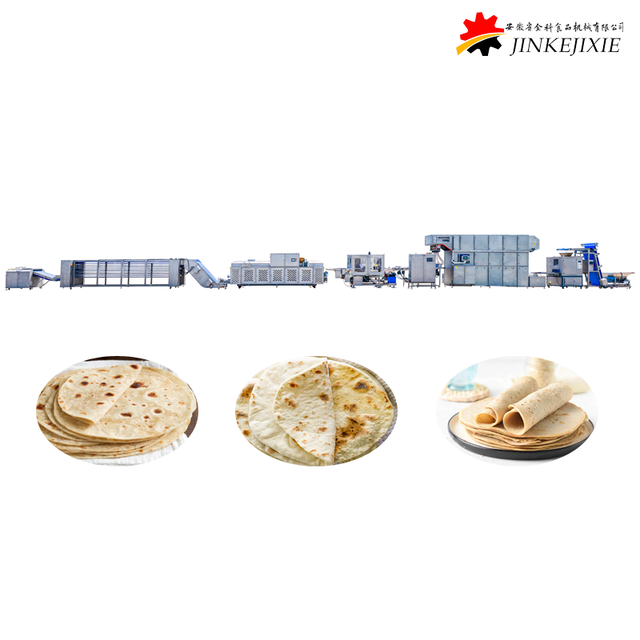
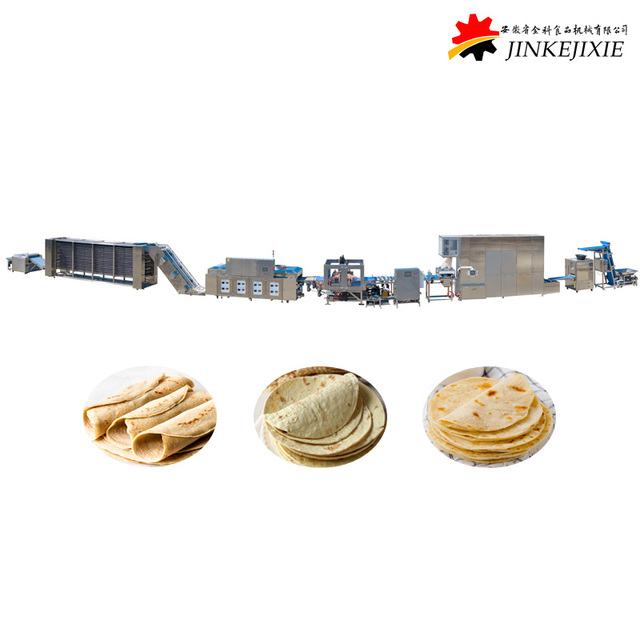
Ever bake a perfect, golden-brown flatbread, only to find it ruined by soggy packaging a few days later? For food manufacturers, this is a frustrating and costly reality. Baking usually gets the most capital investment. Quality control focuses heavily on the oven. Yet, factory managers frequently discover the biggest bottleneck happens right after baking. Packaging warm products guarantees unwanted condensation. This trapped moisture acts as a catalyst. It breeds mold and destroys shelf life.
Precise thermal reduction prevents these critical failures. Understanding the thermodynamics of dough production is essential for any facility manager. Integrating a Commercial Tortilla Machine equipped with automated cooling solutions safeguards your daily output. It drastically reduces manual labor and ensures consistent, retail-ready products hit the shelves.
Key Takeaways
Moisture Control is Crucial: Packaging hot wraps causes rapid condensation inside the wrapper. Trapped moisture accelerates mold growth and clumping, severely diminishing profitability.
Texture and Flexibility Preservation: A scientifically controlled temperature drop allows starches to set properly. This ensures the dough remains soft, highly pliable, and resistant to tearing.
Automation Equals Efficiency: Industrial machinery with multi-tier conveyors saves factory floor space. It lowers labor costs and guarantees uniform temperature reduction across every batch.
Scalability for Supermarkets: Upgrading to a fully automated line ensures your products meet the strict standards required for large-scale retail distribution.
The Hidden Dangers of Packaging Hot Dough
Skipping or rushing the thermal reduction phase introduces severe physical and chemical alterations to baked goods. Factory operators sometimes push for higher throughput without respecting the mandatory resting duration. The consequences manifest directly on the supermarket shelf.
Condensation and Accelerated Mold Growth
The fundamental science of baking dictates that warm dough continuously releases steam as it exits the oven. Picture a freshly baked batch placed immediately into sealed polyethylene bags. The core temperature remains elevated. That escaping steam becomes trapped. As the ambient air outside the bag cools, the trapped steam reaches its dew point. It transforms into liquid water droplets on the inside of the wrapper.
This excess moisture drastically alters the water activity on the surface of the food. High water activity creates an ideal breeding ground for bacteria and mold spores. In a commercial setting, this accelerated microbial growth reduces shelf life from weeks to mere days. This translates directly into costly retail chargebacks and permanent damage to brand trust.
Product Sticking and the Brick Effect
Beyond microbial risks, packaging warm flatbreads fundamentally ruins the user experience. Industry engineers often call this the brick effect. When wraps are hot, the starches present in the flour or corn masa are still highly active, gelatinous, and moist.
Stacking and compressing these warm pieces inside a tight wrapper turns the starches into a powerful adhesive. The individual pieces fuse together into a solid block. When end-consumers attempt to separate them for a meal, the product tears or crumbles entirely. This structural failure frustrates buyers and drives them toward competitor brands.
Loss of Pliability and Texture
The cellular structure of baked dough relies heavily on a biochemical process known as starch retrogradation. As the product cools, the gelatinized starches begin to realign and crystallize. This gives the wrap its final durable texture.
Subjecting the dough to a rapid, shocking drop in temperature makes it brittle. It becomes prone to cracking when folded. Conversely, prolonged exposure to its own trapped heat makes the texture unpleasantly gummy. A controlled, gradual temperature reduction is the only way to ensure the product holds heavy fillings without splitting.
The Optimal Cooling Environment: Time, Temperature, and Airflow
Achieving the perfect parameters requires a precise balance of time, ambient temperature, and airflow dynamics. Facility operators must implement standardized operating procedures. This ensures absolute uniformity before the stacking phase.
Ideal Temperature Targets
Before a wrap can safely enter a plastic wrapper, its core temperature must drop to match the ambient room conditions of the facility. In most commercial bakeries, this thermal threshold ranges between 75 and 85 degrees Fahrenheit.
Reaching this specific target ensures the temperature differential between the product and the packaging environment is virtually zero. Without a differential, condensation simply cannot form. Consistently hitting this mark requires calibrated equipment adapted to the specific thickness of the batch.
Core Comparison: Ambient vs. Automated Forced Air
Historically, smaller artisan bakeries relied on static ambient air. They manually transferred batches to large wire racks. While acceptable for low-volume shops, this method is entirely unsustainable for industrial manufacturing. Modern facilities utilize forced-air conveyor systems. Stripping away the boundary layer of humid air accelerates heat transfer.
Parameter
Manual Rack Method
Automated Conveyor System
Processing Speed
15 to 20 minutes per batch
1.5 to 3 minutes continuous
Floor Space Efficiency
Very Low, requires massive staging areas
High, utilizes vertical multi-tier stacking
Product Consistency
Inconsistent, relies on room drafts
100 percent uniform across all pieces
Contamination Risk
High exposure to human handling
Minimal, fully enclosed and automated
Industry Trends: The Shift Towards Automated Thermal Control
Recent market analyses reveal a massive shift in the wholesale bakery sector. Stricter food safety regulations are transforming factory floors. Consumers demand extended shelf life without the addition of harsh chemical preservatives. This drives manufacturers away from manual handling and rack resting.
The industry standard is rapidly moving toward fully enclosed, climate-controlled environments. Leading facilities are upgrading to a tortilla line for retail production to meet uncompromising supermarket compliance metrics. Automation is no longer a luxury. It is the baseline for survival and profitability in high-volume food manufacturing.
Engineering the Solution: Equipment Selection and Parameters
To eliminate the bottleneck of the post-bake phase, scaling manufacturers must turn to automated engineering. Modern industrial equipment seamlessly integrates baking and temperature reduction into one continuous workflow.
Multi-Tier Conveyors and Footprint Optimization
Floor space is one of the most expensive assets in any plant. Attempting to process thousands of pieces per hour on a single flat belt would require a machine dozens of meters long. Industrial equipment combats this spatial limitation by utilizing vertical, multi-tier layouts.
These systems stack three, five, or even seven passes of belting on top of one another. As the product travels to the end of one tier, it drops down to the next. It travels back and forth within a compact vertical footprint. This ingenious layout maximizes air exposure while taking up minimal square footage.
Flipping and Precision Air Exposure
One critical mechanical benefit of a multi-tier system is the automatic flipping of the product. When a hot wrap sits on a solid or mesh belt, the side touching the material retains moisture longer. As it drops from one vertical tier to the next, the machine naturally flips the piece over. This ensures both sides receive equal exposure to the forced air, preventing a soggy bottom.
Choosing the Right Machinery
Selecting the correct parameters is vital for operational success. For mid-to-large scale operations, integrating a tortilla machine for food factories like the JKBP-820 or JKBP-950 series provides a massive engineering advantage. These models feature precise inverter speed controls. They synchronize perfectly with the oven output to guarantee the strict 1.5 to 3-minute exposure window.
Furthermore, these industrial lines utilize food-grade stainless steel mesh belts. The mesh design allows maximum upward airflow from integrated cooling fans. By matching the mechanical speed to the biological retrogradation rate of the dough, factories achieve zero-defect packaging every single shift.
Frequently Asked Questions
How long should flatbreads cool before packaging?
The standard timeframe sits between 1.5 to 3 minutes under forced ambient air. Thicker flour wraps require the full three minutes, while thinner corn varieties reach the target faster. The core temperature must drop to ambient room levels, typically around 75 to 85 degrees Fahrenheit, to completely prevent condensation inside the bag.
Why do my packaged wraps stick together in a solid block?
Sticking occurs when products are stacked while their internal starches are still hot and highly active. Without proper thermal reduction, these gelatinous starches act as a strong adhesive. Utilizing automated conveyors prevents this by allowing the starches to crystallize and set properly before the stacking and bagging phase.
Elevate Your Production Line Today
Stop letting poor thermal management ruin your perfect bake. Upgrading your facility with engineered machinery eliminates production bottlenecks. It reduces manual labor costs and guarantees a consistent, highly profitable product. Whether you need a compact system for a growing bakery or a high-capacity industrial line for supermarket distribution, choosing the right equipment changes everything. Explore the full range of advanced automated solutions at https://www.tortilla-machine.com to find the exact setup tailored to your factory demands.