Global demand for Mexican cuisine is surging rapidly today. This places foodservice suppliers under immense pressure to deliver consistent, high-quality products at an unprecedented scale. Is your facility truly prepared for this kind of explosive growth?
Scaling up operations without a solid, data-driven plan inevitably causes severe bottlenecks. Think about the daily headaches on your floor. Inconsistent shell textures. Wasted raw ingredients. Overworked machinery. These issues lead to costly downtime that eats directly into your profit margins. Strategic capacity planning is the ultimate solution. Upgrading your facility is not simply about purchasing the largest equipment available. It requires a calculated alignment of throughput, floor space, and automation technology to match your specific business objectives.
In this comprehensive guide, you will learn how to optimize your manufacturing capacity effectively. We will cover calculating precise production needs, selecting the right machinery, and maximizing your overall Return on Investment.
Industry Trends Driving Taco Manufacturing Upgrades
Before diving into the technical specifications, we must look at the broader market forces reshaping food manufacturing. Industry analysts tracking foodservice supply chains note a distinct and rapid trend. Suppliers are aggressively moving away from fragmented batch processing. Instead, the focus has shifted toward continuous, data-driven manufacturing ecosystems.
What is driving this pivot? The massive expansion of fast-casual Mexican restaurant chains. These commercial clients demand exceptionally tight tolerances on shell thickness and minimal breakage rates. Furthermore, chronic labor shortages in the manufacturing sector make relying on manual operators unsustainable. Facilities are now forced to automate to survive. Investing in high-capacity, synchronized equipment is no longer a luxury but a baseline requirement for staying competitive.
Key Takeaways
Accurate Forecasting is Crucial: Successful capacity planning requires calculating baseline daily demand and peak seasonal spikes. This prevents under-equipping your floor or over-spending on unnecessary capital assets.
Equipment Synergy Matters: A high-speed forming press is only as effective as the frying and cooling systems stationed downstream. Matching throughput rates across all machines prevents critical operational choke points.
Automation Drives Profitability: Transitioning from semi-automatic setups to fully automatic continuous lines drastically reduces direct labor costs. It minimizes human handling errors and improves product uniformity across massive batches.
Space and Utilities Dictate Choices: Your physical footprint, ventilation capabilities, and energy infrastructure are primary constraints when configuring commercial manufacturing equipment.
Quality Control at Scale: Proper capacity forecasting must factor in extended cooling times, automated oil management systems, and inline packaging speeds to maintain strict food safety standards.
Understanding the Anatomy of a Commercial Taco Production Setup
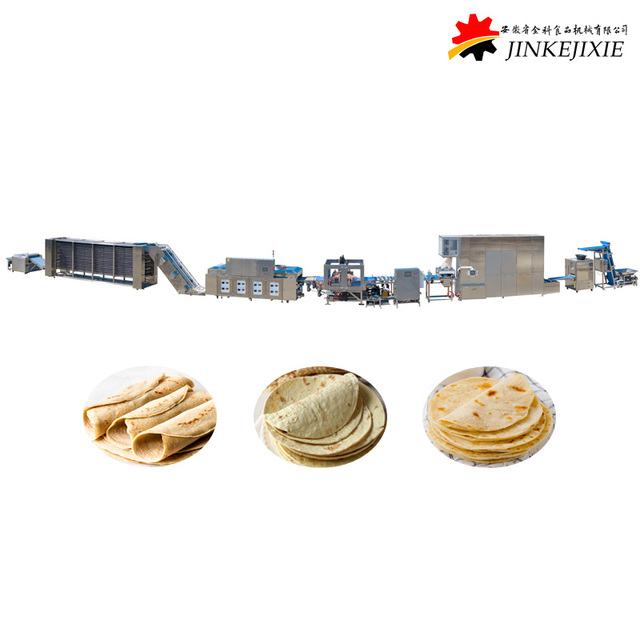
Facility managers must first understand the interconnected systems that make up an industrial manufacturing setup. A modern Taco Production Line operates as a synchronized ecosystem. It transforms raw masa or wheat flour into packaged, shelf-ready goods without interruption.
Let us break down the core components of this ecosystem.
Dough Mixing and Portioning: Product consistency is born here. Industrial mixers hydrate the flour to precise moisture levels. Automated dividers then portion the dough into exact gram weights. This ensures uniform shell diameters later in the run.
The Pressing and Forming Stage: Heated pneumatic or servo-driven plates flatten the dough balls. The temperature and pressure settings applied here dictate the final thickness, flexibility, and structural integrity of the tortilla. Modern PLC touch screens allow operators to lock in these parameters precisely.
Baking and Cooking: A rapid flash-bake in a multi-tier oven sets the starch structure. This crucial step prevents the dough from disintegrating or absorbing excessive grease during the subsequent frying phase.
The Frying Stage: To create the iconic U-shape and rigid crunch, the dough is submerged in high-temperature oil. Specialized folding molds securely hold the product as it travels through the vat.
Cooling and Packaging: Post-frying, the shells retain significant residual heat. Rapid cooling conveyors are mandatory to bring the product down to ambient temperature. Rushing this step leads to condensation inside the sealed packaging. Condensation promotes mold growth and ruins the shell's crispness.
How to Calculate Your Target Production Capacity
Investing in heavy-duty foodservice machinery means leaving rough estimates behind. Strict mathematical forecasting protects your capital. Overestimating demand ties up funds in idle machinery. Underestimating leaves you scrambling to fulfill client orders, ultimately straining your equipment to the point of failure.
How do we determine true throughput requirements? Plant managers must translate weekly client purchase orders into actionable manufacturing metrics. We look at pieces per minute or pieces per hour. Beyond raw output, these calculations must heavily factor in yield loss.
In real-world industrial food processing, a typical yield loss ranges from three to five percent. This accounts for dough scrap, shells that crack during extraction, and units rejected by quality assurance sensors. For example, assume you need to supply 500,000 shells a week running two 40-hour shifts. Your base requirement is 6,250 shells per hour. Factoring in a five percent yield loss pushes your actual target machine capacity closer to 6,562 shells per hour just to meet the baseline quota.
A frequent pitfall in factory planning is sizing equipment based solely on historical averages. Foodservice suppliers experience aggressive seasonal spikes. Think of summer music festivals or localized weekend restaurant rushes. Your floor capacity should feature a built-in buffer to absorb these peaks smoothly.
Standard engineering practice follows the 80/20 rule of machine utilization. Running a press or fryer at maximum capacity continuously accelerates mechanical wear and tear. Size your line so that normal daily operations utilize only 75 to 80 percent of its maximum throughput. This leaves essential room for sanitation cycles, preventative maintenance, and unexpected surge orders.
Choosing the Right Equipment for Your Volume
Matching hardware capabilities to your long-term market strategy is foundational. You need actionable criteria to avoid buyer's remorse.
Mid-sized suppliers testing limited-run product lines often gravitate toward semi-automatic setups. These require operators to manually transfer baked tortillas into batch fryers. While the initial capital expenditure is lower, the ongoing labor burden makes them difficult to scale.
Conversely, high-volume distributors absolutely require fully automatic systems. Selecting an advanced commercial taco shell machine integrates mixing, pressing, baking, and cooling into one continuous workflow. By minimizing human touchpoints, these systems drastically reduce contamination risks. They utilize food-grade 304 stainless steel construction and advanced servo motors to guarantee a uniform output rate.
Low. Requires 1-2 operators for monitoring and QA.
National distributors, major fast-casual restaurant suppliers.
Actual production capacity is also heavily dependent on equipment uptime. If your facility supplies both 4-inch street-style shells and 6-inch standard shells, the machinery must accommodate varying diameters seamlessly. Evaluate the required changeover times before purchasing. Modern modular systems utilizing quick-release tooling can execute these changeovers in under 30 minutes. This preserves valuable production hours.
Optimizing the Frying Process: Sizing the Thermal Core
Walk the floor of almost any taco manufacturing plant. You will quickly find the primary operational bottleneck. It is the frying stage. Frying is an incredibly complex thermal dynamic. Rushing the dwell time results in chewy, undercooked centers. Over-processing yields brittle, burnt shells that shatter during transit.
For industrial-scale operations, continuous fryers are non-negotiable. A high-performance taco shell fryer machine utilizes a submerged conveyor system to pull products through the hot oil. This guarantees that every single unit is subjected to the exact same thermal exposure. It ensures absolute consistency across tens of thousands of shells.
The true capacity of a fryer is dictated by its thermal recovery rate. We measure this in British Thermal Units. When a wave of cold, moisture-heavy dough enters the vat, the oil temperature drops instantly. If the gas burners lack the power to recover that heat rapidly, the line must be throttled down. Otherwise, the shells will absorb excess grease and become unmarketable. Premium fryers feature advanced gas heating with precise PLC temperature control to prevent this drop.
To combat oil degradation, continuous filtration systems are critical. Frying masa releases fine particulates that quickly carbonize. Automated inline filtration extracts these crumbs in real-time. This extends the usable life of the expensive edible oil and eliminates the need to halt the line for mid-shift oil swaps.
Identifying and Eliminating Production Bottlenecks
A manufacturing line will only ever run as fast as its slowest component. System synchronization is paramount. If your forming press processes 8,000 units per hour but the downstream machinery can only handle 6,000, that excess volume becomes a costly bottleneck.
Cooling conveyors are frequently the most underestimated phase in facility planning. A shell might fry in 60 seconds. However, cooling it to a safe, package-ready temperature often takes five to seven minutes. Consequently, the cooling conveyor must possess the physical footprint to hold five to seven times the volume of the fryer at any given moment. Calculating the correct length and vertical tier structure of the cooling belt prevents disastrous pile-ups.
Furthermore, automated bagging or boxing systems must operate at a speed that slightly exceeds the output of the cooling stage. If the packaging arm jams, shells will quickly overflow the conveyors. To mitigate minor jams without shutting down the entire factory floor, engineers implement accumulation tables. These buffer conveyors act as temporary holding zones. If a packaging machine requires a brief pause to reload plastic film, the accumulator safely stores the incoming shells. Once packaging resumes, it runs at a heightened speed to clear the buffer.
Space, Layout, and Utility Requirements
Procuring high-capacity equipment is a futile endeavor if the machinery cannot physically fit inside your building. Thorough infrastructural planning must occur before a single purchase order is signed.
Industrial lines can easily span 50 to 100 feet in length. Linear layouts are ideal for long, narrow buildings. They provide a straight-line material flow from the raw ingredient silos to the shipping docks. Alternatively, U-shaped layouts are frequently utilized to optimize operator ergonomics. A U-shape allows a single supervisor to visually monitor both the dough mixing station and the final packaging area from one central vantage point.
Heavy-duty commercial fryers and multi-deck ovens demand massive energy inputs. While electric models exist, natural gas is overwhelmingly preferred for industrial frying. It offers a lower operational cost and rapid heat output. Facilities must verify that their incoming gas mains can support the required pressure load.
Frying at scale generates intense heat, steam, and vaporized grease. Strict HVAC requirements, including Type 1 commercial exhaust hoods equipped with integrated fire suppression systems, are legally mandated. The mixing stages require precisely temperature-controlled potable water lines. The entire floor needs strategically placed drains for high-pressure sanitation washdowns.
Ensuring Quality Control and Food Safety at High Volumes
When transitioning to high-capacity industrial manufacturing, maintaining an artisanal bite becomes a significant engineering challenge. Manual quality inspection is entirely impossible when production speeds exceed a few thousand pieces per hour. You must integrate automated compliance mechanisms directly into the conveyor architecture.
Modern facilities deploy high-speed vision inspection systems mounted above the cooling tiers. These optical cameras scan every single shell for color uniformity, localized burn marks, and structural cracks. Defective items are instantly blasted off the belt via pneumatic air jets. Inline metal detectors and X-ray scanners are also mandatory under HACCP frameworks to ensure zero foreign contaminants reach the consumer.
Available capacity is intrinsically linked to sanitation speed. Machinery that is difficult to dismantle requires longer cleaning shifts. This subtracts directly from active manufacturing hours. Buyers should prioritize equipment featuring IP65 or IP69K washdown ratings. This ensures electrical panels can withstand high-pressure hot water jets. Systems equipped with Clean-in-Place technology can automatically circulate detergents through internal piping, drastically reducing manual labor.
ROI and Total Cost of Ownership for Taco Equipment
Upgrading a production floor is a monumental financial decision. Justifying the expenditure requires looking far beyond the initial sticker price. You must calculate the Total Cost of Ownership over a ten-year horizon.
Capital Expenditure encompasses the purchase price, shipping, facility modifications, and installation. However, Operating Expenses often eclipse the capital costs within the first 36 months. This includes natural gas, edible oil, direct labor, and replacement parts. Investing upfront in a slightly more expensive machine with superior thermal insulation or a micro-filtration oil system usually yields a significantly lower total cost over its lifespan.
Labor remains one of the highest variable costs in food manufacturing. Transitioning to a fully automated continuous line often allows plant managers to reallocate three to five operators per shift to other value-added tasks. In regions with high hourly wages, these labor savings alone can offset the cost of the new equipment rapidly.
Precision automation also addresses raw material waste directly. By reducing dough scrap and minimizing broken shells from an eight percent scrap rate down to an industry-standard two percent, suppliers salvage thousands of dollars annually. This immediately improves profit margins.
Conclusion
Strategic capacity planning is the definitive blueprint for maximizing your overall profitability in the competitive foodservice sector. It transforms chaotic, fragmented manufacturing into a unified, highly efficient ecosystem.
By accurately forecasting your throughput requirements, sizing your fryers correctly, and embracing the labor-saving power of automation, you prevent operational headaches. The right engineering and equipment partner will ensure your facility meets today's aggressive client demands while possessing the scalability to handle tomorrow's growth.
Ready to scale your foodservice operations effectively and eliminate production bottlenecks? Evaluate your current floor space and capacity needs, and explore the advanced, food-grade automated solutions available at https://www.tortilla-machine.com to transform your bottom line today.
FAQ
How many taco shells can a commercial machine produce per hour?
Production capacity varies significantly based on the machine's footprint, conveyor belt width, and the specific diameter of the shells. Entry-level batch machines typically output between 1,000 and 3,000 pieces per hour. High-volume industrial continuous lines engineered for major distributors easily exceed 10,000 to 15,000 pieces per hour. This massive throughput is achieved via multi-row pressing plates and wider continuous fryers.
What is the lifespan of an industrial fryer?
When subjected to rigorous preventative maintenance and strict daily sanitation protocols, a high-quality stainless steel commercial fryer operates efficiently for 10 to 15 years, and frequently longer. Critical maintenance routines include regular boil-outs to remove carbonized oil buildup, daily inspections of the conveyor belt tracking, and routine calibration of thermal sensors.
Can a single line handle both hard corn shells and soft flour tortillas?
While certain upstream components like dough mixing and initial pressing stages can be adapted using quick-changeover tooling, the cooking processes are fundamentally different. Hard corn shells require a specialized continuous fryer equipped with forming molds. Soft flour tortillas require a multi-tier baking oven. Advanced hybrid lines utilize a mechanical diverter to route the flattened dough into either the oven or the continuous fryer.
How do I know if I need a semi-automatic or fully automatic setup?
The decision relies heavily on your target output volume and local labor economics. If your facility needs to consistently produce more than 3,000 shells per hour, upgrading to a fully automatic line is highly recommended. Semi-automatic setups require manual transfer of products, which increases direct labor costs and introduces human error.
What is the most common cause of downtime in taco manufacturing?
Downtime in high-capacity environments is most frequently caused by improper oil management and downstream bottlenecks. If edible oil is not continuously filtered, carbonized particles accumulate, degrading heating elements. Additionally, bottlenecks often occur at the cooling and packaging stages. If the bagging machines cannot keep pace with the fryer's output, operators are forced to halt the entire line.
How does cooling conveyor length impact final product quality?
Cooling conveyor length directly dictates the temperature of the shell before it enters the packaging phase. If the conveyor is too short, the shells are packaged while still emitting residual heat. This causes condensation inside the plastic film, leading to a loss of crunch and rapid mold development. A properly sized cooling tier ensures the product reaches ambient temperature, maximizing shelf life.
What are the primary facility utility requirements for high-volume taco manufacturing?
High-volume lines require robust industrial infrastructure. This includes high-pressure natural gas lines to feed the multi-deck ovens and continuous fryers, heavy-duty electrical drops for servo motors and packaging arms, and commercial Type 1 exhaust hoods with fire suppression systems. Additionally, facilities need strategically placed floor drains and temperature-controlled potable water lines for the dough mixing stages.