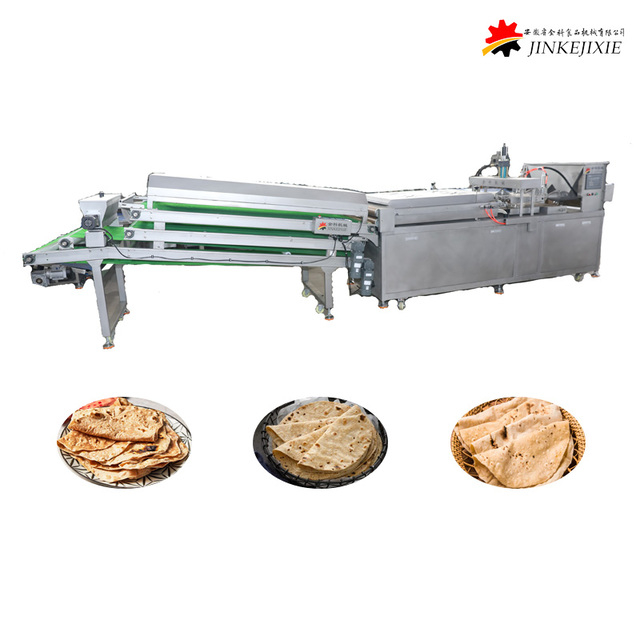
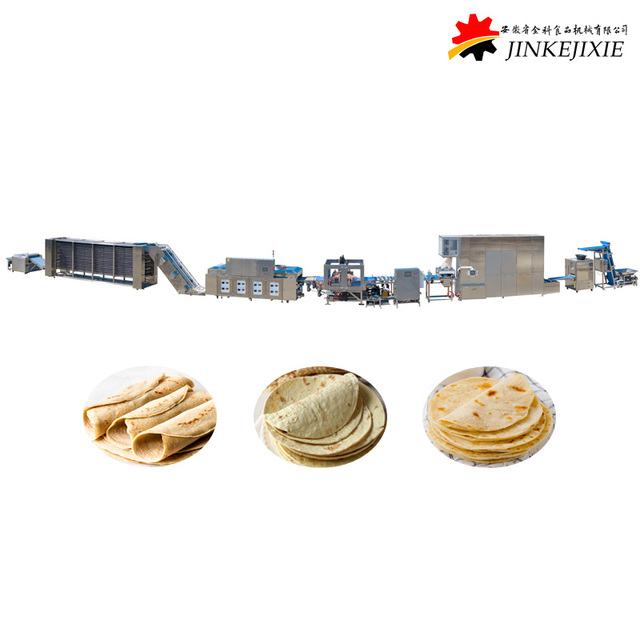
Is the machine price really your full project cost? A pita bread production line for sale can involve much more than equipment alone.
You must also budget utilities, freight, installation, and spare parts.
In this guide, you will learn how to estimate a complete turnkey project.
How to Budget a Complete Turnkey Pita Bread Production Line
A realistic budget should cover the whole project. The machine quotation is only the starting point.
Start With the Core Production Line Cost
The first cost category is the main production equipment.
A complete line may cover dough dividing, rounding, pressing, proofing, baking, cooling, and stacking. Some suppliers may quote only part of this process.
Before comparing prices, define:
required hourly capacity;
pita diameter and thickness;
dough weight;
recipe type;
automation level;
packaging requirements.
JinKe's Pita Bread Production Line is designed around commercial and industrial pita production. Its dedicated product range also shows how different processing modules can be combined into one production system.
Capacity should be confirmed before pricing. A larger oven, wider conveyor, or higher-speed forming section can significantly change project cost.
Add Dough Preparation and Upstream Equipment
Some quotations begin after dough has already been prepared.
That can make a line appear much cheaper.
A true turnkey budget may also require mixers, elevators, dividers, rounders, and fermentation equipment.
These machines prepare consistent dough portions before forming. Better portion accuracy can also improve finished bread weight and size consistency.
When comparing suppliers, confirm exactly where the quoted production process begins.
Include Baking, Cooling, Stacking, and Packaging
Downstream equipment often represents a large part of total investment.
The oven may require multiple heating zones. Cooling may need long conveyors or multiple tiers.
JinKe's Arabic Pita Bread Machine Production Line includes dough dividing, rounding, pressing, proofing, baking, cooling, and stacking stages. Its listed configuration also allows optional flow-wrapper or vacuum-sealer integration.
Packaging should match production capacity. A fast oven provides little value if finished bread waits for manual packing.
Budget Factory Utilities and Site Preparation
The equipment must fit your factory infrastructure.
The listed JinKe pita line uses 23 kW total power. It also supports 220V, 380V, or customized electrical supply.
Your budget may therefore need:
electrical panels;
breakers and cables;
gas supply;
ventilation;
drainage;
compressed air;
floor preparation;
lighting;
sanitation areas.
Factory space also matters. A line around 33 meters long needs working clearance for operators, cleaning, and maintenance.
Add Freight, Customs, and Import Costs
International buyers should not compare EXW machine prices alone.
A delivered project can include:
export packing;
sea freight;
insurance;
port handling;
customs duties;
import taxes;
inland transport;
unloading;
customs broker charges.
Different Incoterms shift responsibility between buyer and supplier.
A quoted FOB price, for example, does not represent final installed project cost.
Include Installation, Commissioning, and Training
Installation terms can vary significantly.
Some suppliers provide remote guidance. Others offer engineer visits.
JinKe lists on-site engineer installation as an additional quotation item for its Arabic pita line. It also provides project support covering installation guidance, operator training, maintenance assistance, and spare-parts support.
When an engineer visits your factory, budget for:
flights;
accommodation;
meals;
visas;
local transport;
translators if needed;
local technicians;
commissioning materials.
Tip: Ask every supplier to separate machine price, installation cost, and buyer-side expenses in the quotation.
Add Spare Parts and Contingency
A complete project should include startup spares.
Typical items may include belts, sensors, seals, heaters, bearings, switches, and electrical components.
Ask for a recommended one-year spare-parts list.
It is also wise to reserve contingency funds for electrical changes, local compliance work, or layout adjustments.
What Equipment Should a Turnkey Pita Bread Production Line Include?
Equipment scope should be defined before comparing quotations.
Dough Mixing, Dividing, and Rounding
Mixing prepares the dough structure.
Dividing creates controlled portions. Rounding then produces smoother dough balls for stable pressing.
JinKe's pita line lists servo-driven dividing and rounding stages. Its published specification states a dough cutting range of 50–200 grams.
These upstream stages help control final bread weight and size.
Pressing and Proofing Equipment
Pressing determines basic diameter and thickness.
JinKe lists an adjustable pressing range of 0.5–3.0 mm on its current Arabic pita line. A controlled proofing chamber then relaxes the dough before baking.
For factories producing several product sizes, adjustable forming settings improve flexibility.
Pita Bread Oven and Cooling System
Baking performance directly affects color, texture, puffing, and moisture.
Industrial pita lines may use gas or electric heating. The right choice depends on local utility costs and factory infrastructure.
JinKe's Flatbread Tunnel Oven is designed for high-speed commercial and industrial flatbread baking.
Cooling is equally important. Bread should reach a suitable temperature before sealed packaging.
Counting, Stacking, and Packaging
High-volume lines should also consider automatic counting and stacking.
JinKe's pita system can create customizable stacks of 10–50 pieces. Optional wrapping equipment can then handle final packaging.
Manual packaging may reduce initial investment. It can also become a production bottleneck later.
How Capacity and Automation Affect Project Cost
Production capacity strongly affects the final budget.
Small Commercial vs Industrial Production
A smaller line generally needs shorter conveyors, smaller ovens, and lower utility capacity.
Large industrial systems need stronger controls, more processing zones, and greater cooling capacity.
Do not compare a 2,000-piece-per-hour system against a 7,000-piece-per-hour line only by price.
Their infrastructure requirements can be very different.
Semi-Automatic vs Fully Automatic Systems
Semi-automatic systems usually reduce initial investment.
However, they require more manual loading, transfer, and collection.
Fully automatic systems cost more upfront. They can improve process continuity and reduce repeated handling.
Automation should therefore be evaluated through total operating cost, not purchase price alone.
Product Size and Dough Weight
Larger pita breads may need wider pressing areas and longer baking times.
Thicker products can also require different proofing or heating settings.
JinKe's current pita line supports dough portions from 50 to 200 grams.
Always include target weight, diameter, and thickness when requesting pricing.
Customized Production Requirements
Special recipes can affect equipment configuration.
Customized voltage, bread dimensions, packaging formats, interfaces, and factory layouts can also change price.
A standard machine price therefore should not be treated as a universal turnkey price.
What Factory Costs Should Be Included?
A turnkey budget should include buyer-side infrastructure.
Factory Space and Layout
Plan the complete process flow.
The layout should include:
ingredient storage;
dough preparation;
forming;
proofing;
baking;
cooling;
packaging;
finished-product storage.
Maintenance access should remain open around major machines.
Future expansion space also has value.
Electrical and Heating Infrastructure
Verify voltage, phase, and frequency before production begins.
The current JKJX-PTB line supports 220V, 380V, or customized power.
The oven may also require gas or electric heating infrastructure.
Local electricians should confirm cable sizes and breaker requirements.
Food-Safety and Sanitation Requirements
Food factories need cleanable surfaces and practical sanitation access.
Budget for drainage, ventilation, washable walls, handwashing stations, and other local compliance requirements.
JinKe lists food-grade SS304 for product-contact parts on its Arabic pita line.
Expansion Space
Leaving unused space may appear inefficient initially.
However, it can reduce future reconstruction costs.
A growing factory may later add packaging machines, larger cooling systems, or another line.
What Logistics and Installation Costs Are Often Missed?
International projects frequently underestimate delivery costs.
Packing and International Freight
Ask whether export packing is included.
Complete production lines may require several shipping units.
Container quantity depends on machine size and packaging method.
Customs Duties and Local Taxes
Import duties vary by country.
Your landed cost may include duties, VAT, sales tax, customs broker fees, and destination port charges.
These expenses usually sit outside the machine quotation.
Unloading and Factory Positioning
Large machines may require forklifts or cranes.
Check entrance dimensions before delivery.
Plan the unloading route from the truck to the final installation position.
Engineer Travel and Commissioning
Confirm exactly what the installation service includes.
A one-year warranty does not automatically include free international travel.
JinKe's current pita product lists a one-year warranty and engineer on-site service as an additional quote.
How to Estimate Ongoing Operating Costs
Turnkey budgeting should continue beyond installation.
Labor Cost
Automation reduces some manual tasks.
However, factories still need workers for dough preparation, supervision, quality inspection, packaging, cleaning, and maintenance.
Estimate labor per shift rather than assuming full automation means zero operators.
Energy Consumption
Calculate electricity and baking energy separately.
A useful metric is energy cost per 1,000 pita breads.
This makes different machine configurations easier to compare.
Raw Materials and Packaging
Operating costs include more than flour.
Budget for yeast, salt, oil, packaging film, bags, cartons, labels, and pallets.
Packaging can become a significant recurring expense at high production volumes.
Maintenance and Wear Parts
Preventive maintenance should be part of annual budgeting.
Belts, bearings, sensors, heaters, seals, and pneumatic parts may need periodic replacement.
Keeping key spares in stock can reduce downtime.
How to Compare Pita Bread Production Line Quotations
Price comparisons only work when equipment scope is equal.
Compare the Same Equipment Scope
Create one checklist for every supplier.
Confirm whether each quote includes:
mixer;
divider;
rounder;
press;
proofer;
oven;
cooler;
stacker;
packaging equipment.
Otherwise, the cheapest quotation may simply include fewer machines.
Compare Capacity Under the Same Conditions
Use the same pita size, weight, thickness, and recipe.
Ask whether listed capacity is tested output or theoretical output.
This reduces misleading comparisons.
Compare Warranty and Service
Evaluate technical support as part of project value.
JinKe describes support covering equipment selection, installation, training, maintenance, and spare parts.
After-sales capability becomes more important when production lines operate every day.
Note: A detailed scope document can prevent more budget disputes than a simple machine price comparison.
Conclusion
A complete pita bread project budget should include equipment, utilities, freight, installation, spare parts, and operating costs. Buyers should also match capacity, automation, and factory conditions before comparing quotations. Anhui JinKe Foodstuff Machinery Co., Ltd. provides customizable pita bread production lines, automated processing solutions, installation support, and technical service to help manufacturers build efficient and reliable turnkey projects.
FAQ
Q: What is included in a pita bread production line for sale?
A: A pita bread production line for sale may include mixing, dividing, pressing, proofing, baking, cooling, stacking, and packaging equipment.
Q: How much does a pita bread production line cost?
A: The cost depends on capacity, automation, equipment scope, utilities, freight, installation, and customization.
Q: How do I budget a turnkey pita bread production line?
A: Include machine cost, factory preparation, shipping, installation, spare parts, training, and operating expenses.
Q: Is a fully automatic pita bread production line better?
A: It offers higher consistency and lower manual handling, but requires a larger initial investment.