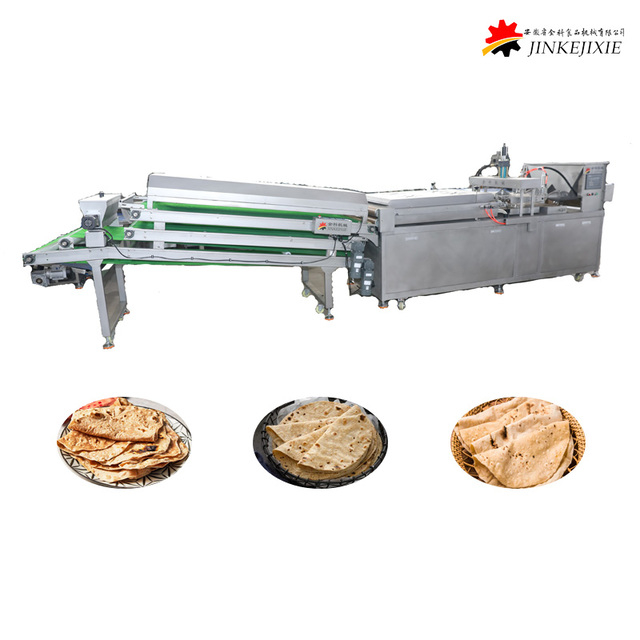
Can your factory produce tortillas consistently at scale? An automatic Tortilla Production Line connects mixing, dividing, rounding, pressing, baking, and cooling. Discover how each station works and improves production efficiency, product quality, and output.
What Happens at Each Station of a Tortilla Production Line?
A complete tortilla production line transforms raw ingredients into finished products through several connected stages. Each station changes the dough or tortilla in a specific way. Understanding this sequence helps manufacturers evaluate equipment and improve production efficiency.
Dough Mixing: Combining Flour, Water, and Other Ingredients
Dough mixing is the first major processing stage. An industrial tortilla dough mixer combines flour, water, oil, salt, and other recipe ingredients. The objective is to produce a uniform dough with suitable moisture and elasticity.
Ingredient proportions affect the entire production process. Too much water can make dough sticky and difficult to divide. Too little water may produce stiff dough. Both conditions can affect portioning accuracy and pressing performance.
Mixing time and speed also require attention. Insufficient mixing creates uneven ingredient distribution. Excessive mixing may change dough elasticity. Operators should establish suitable settings through recipe trials and production testing.
Tip: Record ingredient weights, water temperature, and mixing time for every batch. These records help operators identify changes in dough consistency.
Dough Dividing and Rounding: Creating Uniform Dough Balls
After mixing, the dough moves to the dividing station. A dough divider cuts the bulk dough into individual portions. Each portion must meet the required weight before entering the next stage.
A consistent dough weight helps control finished tortilla dimensions. Larger portions generally produce thicker or larger sheets. Smaller portions may create thin products that do not meet customer specifications.
The dough rounder then forms each portion into a smooth ball. Uniform rounding supports even pressure distribution during pressing. It also helps reduce irregular edges and uneven thickness.
Tip: Check dough portion weights regularly during production. Small variations can become visible differences in finished tortilla size.
Dough Resting and Proofing: Preparing Dough for Forming
After rounding, dough balls enter a resting or proofing stage. This process allows the gluten structure to relax. Relaxed dough is generally easier to flatten and less likely to shrink after pressing.
Resting conditions depend on the recipe. Temperature, humidity, and resting duration all influence dough behavior. Different flour types may also require different processing conditions.
An automatic transfer system can move dough between stations. A controlled resting chamber provides a more stable environment. It also helps coordinate the output of the divider and the following press.
Note: Resting requirements vary by formulation. Manufacturers should confirm suitable conditions through actual dough trials.
Hot Pressing: Forming Uniform Tortilla Sheets
Hot pressing transforms individual dough balls into flat circular sheets. An industrial tortilla pressing machine applies controlled pressure between heated plates. This process determines the initial tortilla diameter and thickness.
Pressing pressure and plate temperature influence the final shape. Incorrect settings may cause uneven thickness, irregular edges, or excessive sticking. Consistent positioning also helps produce uniform sheets.
The pressing system should match the required tortilla specifications. Different products may need different plate dimensions and pressing settings. Adjustable thickness and temperature controls make product changeovers easier.
For example, the JKBP-650 Automatic Tortilla Production Line uses hydraulic or pneumatic pressing. Its listed thickness adjustment range is 0.5–3.0 mm. Actual settings should depend on the recipe and finished product requirements.
Tip: Test several combinations of pressure, temperature, and pressing time. Evaluate diameter, thickness, surface condition, and flexibility before confirming production settings.
Baking: Controlling Heat for Consistent Tortilla Quality
After pressing, tortilla sheets enter the baking oven. This stage develops the required structure, color, and texture. A continuous baking system allows products to move through controlled heating zones.
A tortilla baking oven system may use gas or electric heating. Multi-zone temperature control helps operators adjust heat distribution. Each zone can serve a different part of the baking process.
Baking time depends on conveyor speed and oven length. Excessive heat may cause dark spots or dry edges. Insufficient baking may leave the product underprocessed. Both conditions can affect flexibility and finished quality.
Operators should monitor product appearance and internal moisture. They should also check whether tortillas bake evenly across the conveyor width. Consistent heat distribution is important during long production runs.
Tip: Establish baking settings through trial production. Do not rely on oven temperature alone when evaluating tortilla quality.
Cooling Conveyor: Stabilizing Tortillas After Baking
Cooling is an essential stage before stacking and packaging. Freshly baked tortillas retain considerable heat and moisture. A cooling conveyor gradually reduces their temperature before further handling.
A multi-tier cooling conveyor increases the available cooling path. It allows tortillas to travel through several conveyor levels. This arrangement can save floor space while providing sufficient cooling time.
Conveyor speed and airflow affect cooling performance. If the conveyor moves too quickly, tortillas may remain too warm. Poor airflow can also create uneven cooling across the product surface.
Proper cooling helps maintain tortilla flexibility and shape. It also reduces the risk of condensation inside sealed packaging. The target temperature should be determined through product testing and packaging requirements.
Note: One JKBP-820 configuration lists a cooling target below 30°C. This is a model-specific reference, not a universal requirement for every tortilla product.
Counting and Stacking: Preparing Finished Tortillas for Packaging
After cooling, tortillas move to the counting and stacking station. An automatic counter detects individual products and groups them into specified quantities. The stacking unit then aligns each group for packaging.
Accurate counting is important for retail and foodservice orders. Incorrect quantities can create packaging problems and customer complaints. Consistent alignment also helps downstream packaging equipment operate smoothly.
Stacking settings should match customer requirements. Some manufacturers need small retail packs. Others supply larger foodservice quantities. Adjustable counting and stacking functions support different packaging formats.
The final stage may connect to flow wrapping or other packaging equipment. This creates a continuous process from dough preparation to finished packs.
Tip: Test counting accuracy at the target production speed. Confirm stack stability before integrating the packaging machine.
How Do the Production Stations Work Together?
Individual machines cannot guarantee efficient production by themselves. A complete automatic tortilla production process requires coordinated material transfer and operating parameters. Each station must receive products at a suitable rate.
Synchronizing Conveyor Speeds Between Processing Stations
Conveyors connect different machines throughout the production line. They transfer dough portions, pressed sheets, baked tortillas, and cooled products. Their speeds must match the capacity of connected equipment.
If an upstream machine produces too quickly, products may accumulate. If it operates too slowly, downstream equipment may remain idle. Both situations reduce actual production efficiency.
A coordinated control system helps operators adjust transfer speeds. Buffer sections can also absorb small differences between processing stages. This creates a more stable production flow.
Coordinating Temperature, Pressure, and Processing Time
Temperature and pressure influence tortilla quality at different stages. Mixing conditions affect dough consistency. Pressing settings determine sheet formation. Baking and cooling influence the final product structure.
These parameters should not be adjusted independently. A change in dough formulation may require new pressing settings. Different tortilla sizes may also need different baking times.
Operators should establish a production recipe for each product specification. The recipe should include relevant machine settings and inspection requirements. This makes production changes easier to control.
Using PLC Controls to Monitor the Production Workflow
PLC systems coordinate machine operations and production signals. A touchscreen HMI allows operators to monitor key settings. These may include conveyor speed, temperature, output, and operating status.
Automatic alarms help identify abnormal conditions. Some systems can stop equipment when a fault occurs. This reduces the risk of continued operation under unsuitable conditions.
Production data also supports process improvement. Operators can compare output and operating parameters across shifts. They can then identify recurring problems and adjust production settings.
Tip: Ask suppliers which parameters the PLC records. Confirm whether production data can be exported for quality management.
What Factors Affect Tortilla Quality During Production?
Finished tortilla quality depends on several connected variables. Manufacturers should monitor the entire process rather than focus on one machine. Four factors deserve particular attention.
Dough Hydration and Ingredient Consistency
Flour properties influence water absorption and dough handling. Different flour batches may produce different dough characteristics. Water temperature and ingredient ratios can also affect consistency.
A uniform mixing process reduces variations between batches. Operators should follow controlled ingredient measurements. They should also document recipe changes and raw material differences.
If dough becomes too sticky or stiff, downstream performance may change. Dividing accuracy and pressing quality may decline. Early correction helps prevent larger production losses.
Tortilla Diameter, Thickness, and Weight Accuracy
Dough weight determines how much material enters each tortilla. Pressing settings then influence its final diameter and thickness. These factors should match the product specification.
Manufacturers should inspect samples throughout production. Check diameter, thickness, weight, and edge condition. This helps identify problems before they affect large quantities.
Different product sizes may require separate production settings. Changeover procedures should include portioning and pressing adjustments. This supports consistent results across different product orders.
Baking Uniformity and Moisture Control
Uneven heating can create visible color differences. Some tortillas may become too dry. Others may remain insufficiently baked.
Operators should monitor oven zones and conveyor speed. They should inspect products across the conveyor width. Regular checks help identify heating problems early.
Moisture also affects finished texture. Excessive moisture may create handling or packaging problems. Low moisture can reduce flexibility and increase cracking during folding.
Cooling Conditions Before Packaging
Cooling conditions affect the final handling stage. Tortillas need enough time to release heat. They must also reach a suitable temperature before packaging.
Insufficient cooling can cause moisture condensation. This may affect package appearance and product quality. Uneven cooling can also make stacking less stable.
Manufacturers should evaluate cooling time and airflow together. They should also check product temperature at the conveyor outlet. Packaging trials can confirm suitable operating conditions.
How Do You Configure a Tortilla Production Line for Different Capacities?
Choosing a suitable production line requires more than comparing maximum output figures. Manufacturers should consider product dimensions, daily demand, available space, and packaging requirements. These factors determine the most practical equipment configuration.
Matching Production Capacity with Product Specifications
Tortilla diameter affects the amount of dough used per piece. Larger products generally require more dough. They may also need different pressing and baking settings.
Production capacity should therefore be evaluated by product size. For example, the JKBP-650 lists 6-inch output of 6,000–8,000 pieces per hour. Its listed 8-inch and 10-inch output is 3,000–4,000 pieces per hour.
The JKBP-820 lists different capacities for 6-inch, 8-inch, 10-inch, and 12-inch tortillas. These figures show why buyers should compare output at their actual target size.
Equipment Model
Tortilla Size
Listed Production Capacity
JKBP-650
6 inch
6,000–8,000 pcs/h
JKBP-650
8–10 inch
3,000–4,000 pcs/h
JKBP-820
6 inch
15,500–16,000 pcs/h
JKBP-820
8 inch
7,000–8,000 pcs/h
JKBP-820
10–12 inch
3,500–4,000 pcs/h
Note: Figures are manufacturer-listed specifications. Actual output depends on product formulation, operating conditions, and production configuration.
Tip: Request a production test using your target tortilla diameter and recipe. This provides a more useful capacity reference than maximum output alone.
Choosing the Right Pressing and Baking Configuration
Pressing dimensions should match the required product range. Manufacturers should confirm the available diameter and thickness adjustments. They should also consider changeover time between products.
The baking oven must support the planned production speed. Heating capacity and zone arrangement should suit the product. Stable baking performance matters more than maximum conveyor speed.
For larger production requirements, the JKBP-1200 Super Tortilla Production Line lists capacities of up to 20,000 pieces per hour for 6-inch tortillas. Its listed output changes for larger sizes.
Selecting Cooling Conveyor Length and Stacking Capacity
Cooling conveyor design should match oven output. A longer cooling path may provide more cooling time. A multi-tier arrangement can increase conveyor length without requiring an equally large floor area.
Stacking capacity must also match cooling output. If the stacking unit cannot handle the conveyor discharge, products may accumulate. This can interrupt the entire production process.
Packaging capacity is another important factor. The counting, stacking, and packaging stages should operate at compatible speeds. Buyers should evaluate all three stages together.
What Should Manufacturers Check Before Installing an Automatic Tortilla Line?
Installation planning affects long-term equipment performance. Manufacturers should review factory conditions before confirming the final configuration. This reduces unexpected changes during installation and commissioning.
Factory Layout, Equipment Dimensions, and Utility Requirements
Start by measuring the available production area. Include machine dimensions, conveyor routes, operator access, and maintenance space. Leave enough room for material handling and cleaning activities.
Electrical requirements must also be confirmed. Check voltage, phase, frequency, and total connected power. Gas supply and ventilation may be necessary for certain oven configurations.
The production layout should support a logical material flow. Avoid unnecessary product transfers between stations. A clear arrangement also makes supervision and maintenance easier.
Food Contact Materials, Hygiene, and Operator Safety
Food contact materials require careful evaluation. Stainless steel construction is commonly used in food processing equipment. Buyers should confirm the actual material grade and relevant component specifications.
Cleaning access is equally important. Check conveyor surfaces, product contact areas, and removable components. A practical design helps operators maintain hygienic conditions.
Safety features should be reviewed before purchase. Emergency stops and protective covers help reduce operating risks. Operators also need suitable training and maintenance procedures.
Equipment Integration, Installation, and Production Testing
Before shipment, confirm the complete equipment configuration. Review machine dimensions, utility connections, control interfaces, and transfer points. This helps prevent integration problems at the factory.
Installation should include alignment and control system checks. Engineers should test conveyor operation and machine synchronization. Operators should also receive practical training.
Trial production is the final verification stage. Test the actual recipe and target product sizes. Inspect dough portions, tortilla dimensions, baking results, and cooling performance.
Tip: Include acceptance criteria in the equipment agreement. Define target output, product specifications, testing conditions, and required documentation.
How Can an Integrated Tortilla Production Line Improve Factory Efficiency?
An integrated system connects individual machines into one continuous workflow. It reduces unnecessary handling and supports consistent processing. These improvements can help manufacturers manage larger production volumes.
Reducing Manual Handling Between Processing Stages
Automatic conveyors transfer products between connected stations. Workers spend less time moving dough and finished tortillas manually. This can reduce repetitive handling during production.
Fewer manual transfers also simplify workflow management. Products follow a more consistent route. Operators can focus on machine monitoring and quality inspection.
However, automation still requires proper supervision. Operators must respond to alarms and abnormal conditions. Regular cleaning and maintenance remain essential.
Improving Product Consistency Across Production Batches
Integrated processing helps maintain stable operating conditions. Automatic dividing controls portion weight. Pressing systems control sheet formation. Baking and cooling equipment manage later processing stages.
Consistent settings reduce unnecessary variation. Production records also help operators compare batches. They can identify changes in quality and correct problems earlier.
Quality inspection should remain part of the process. Automated equipment does not replace product checks. Manufacturers still need defined inspection procedures and quality standards.
Supporting Scalable Production and Future Capacity Expansion
Production requirements may increase over time. New product sizes may also create different equipment needs. Manufacturers should consider these changes when planning their initial investment.
A suitable line configuration should match current demand. It should also allow practical future adjustments. Modular equipment and compatible control systems can support expansion.
For larger production projects, buyers can review the JKBP-820 Automatic Tortilla Production Line and the JKBP-1200 configuration. Compare their capacities, product ranges, and factory requirements before making a decision.
Conclusion
An efficient Tortilla Production Line connects every processing stage. It improves product consistency, output, and production efficiency.
Anhui Jinke Foodstuff Machinery Co., Ltd. offers JKBP series solutions with automated forming, baking, and cooling. These systems support different capacities and help manufacturers achieve reliable production.
FAQ
Q: What is a Tortilla Production Line?
A: It automates mixing, dividing, pressing, baking, and cooling.
Q: How does a Tortilla Production Line work?
A: It connects each station through automated conveyors.
Q: Why use an automatic tortilla production process?
A: It improves output, consistency, and labor efficiency.
Q: What affects tortilla production capacity?
A: Tortilla size, dough weight, and machine speed.
Q: How does a tortilla cooling conveyor work?
A: It reduces product temperature before stacking and packaging.
Q: What causes uneven tortilla baking?
A: Incorrect oven temperatures or conveyor speeds.