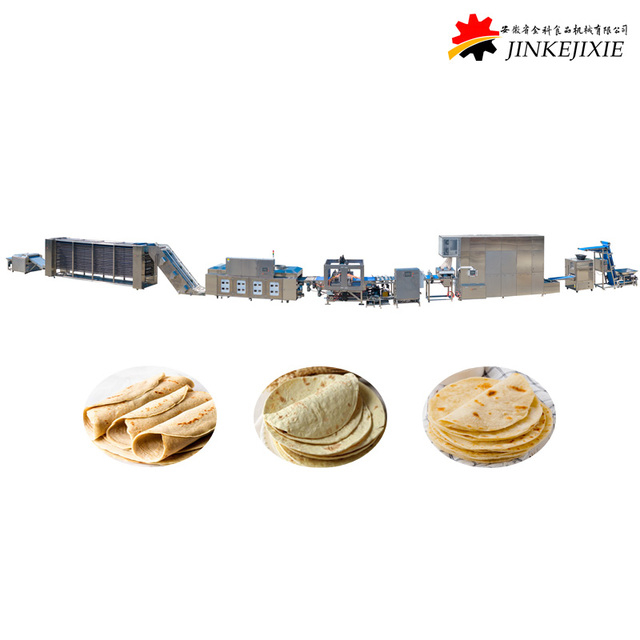
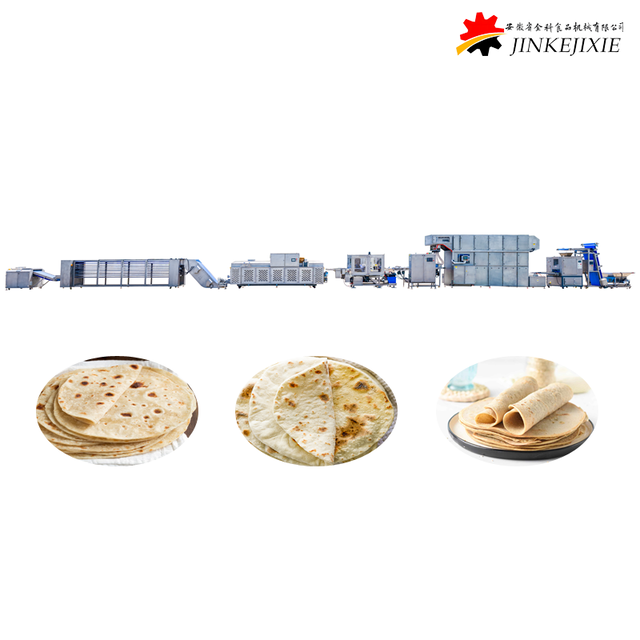
Specify tortilla counting and stacking by pack size first: define the required count per retail pack, acceptable stack height and alignment, tortilla diameter and thickness range, cooling condition, and packaging handoff before discussing a counter-stacker model.
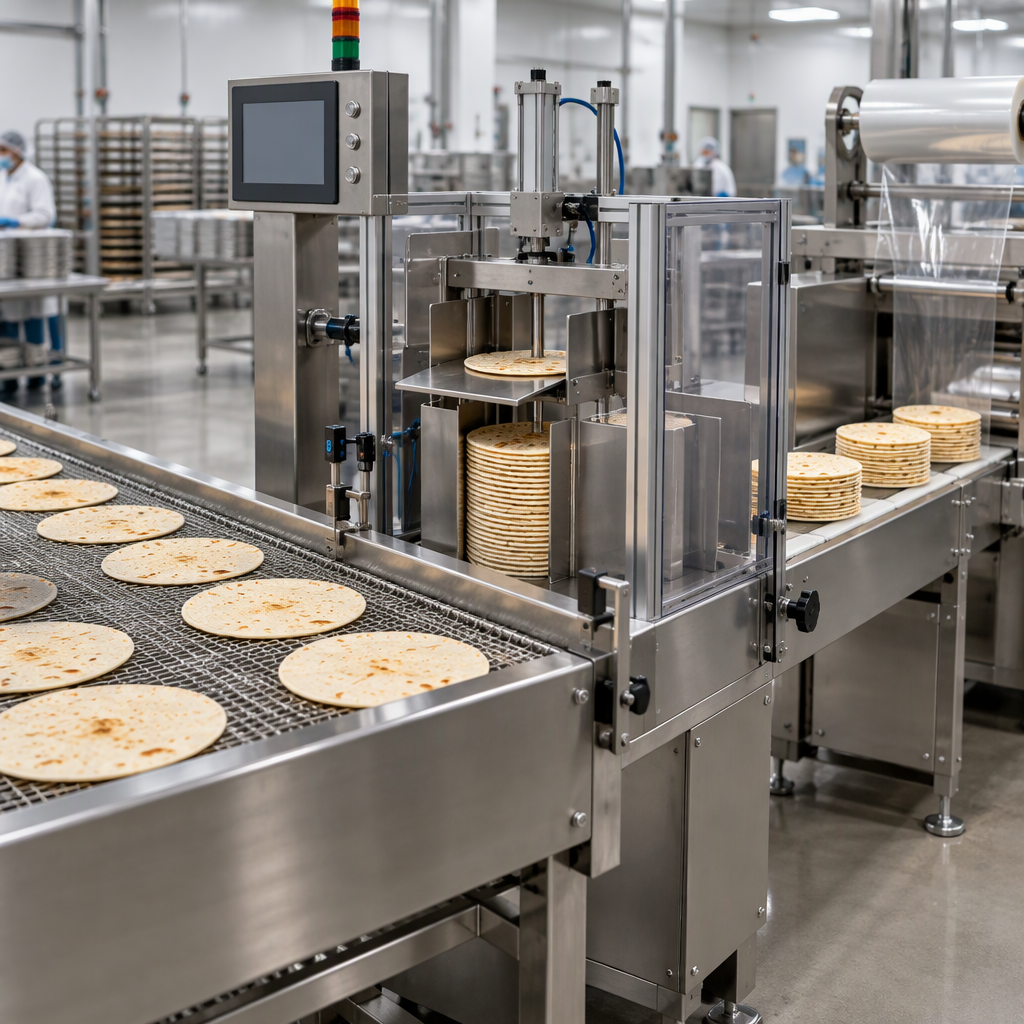
- Use the equipment discussion to cover counting, aligning, and stacking of tortillas and other soft flatbreads in a packaging line.
- Prepare real product samples from each recipe, dough condition, formed size, baked finish, and cooling state that the line must handle.
- State acceptance checks in measurable terms: pack count, stack shape, product damage, handoff stability, cleanability, and repeatability across batches.
Start with the pack count, not the stacker model
A counter-stacker specification should begin with the pack count and product condition because the published product category is for counting, aligning, and stacking soft flatbreads before packaging, not for proving a universal speed or accuracy for every tortilla.
| Buyer input | What to define | Why it matters |
|---|---|---|
| Pack count | Number of tortillas per SKU, including trial packs, family packs, and food-service packs. | The counter-stacker task is to count and stack before packaging, so count is the first acceptance variable. |
| Stack geometry | Target stack height, alignment tolerance, and whether the stack must stay flat, nested, or slightly compressed. | Packaging fit depends on the stack shape, not only the number of pieces. |
| Product window | Diameter, thickness, flexibility, surface oil or moisture, temperature after cooling, and tendency to curl or tear. | Different formulas and baked structures can feed and separate differently during counting. |
| Line interface | Infeed direction, outfeed height, packer timing, lane layout, and available space. | The broader tortilla-line context includes related processing, cooling, and stacking categories, so handoff points should be specified together. |
Convert each pack size into a counted stack recipe
Treat every SKU as a stack recipe: pack count, stack height, product size range, discharge orientation, and packaging timing should be written down before supplier selection.
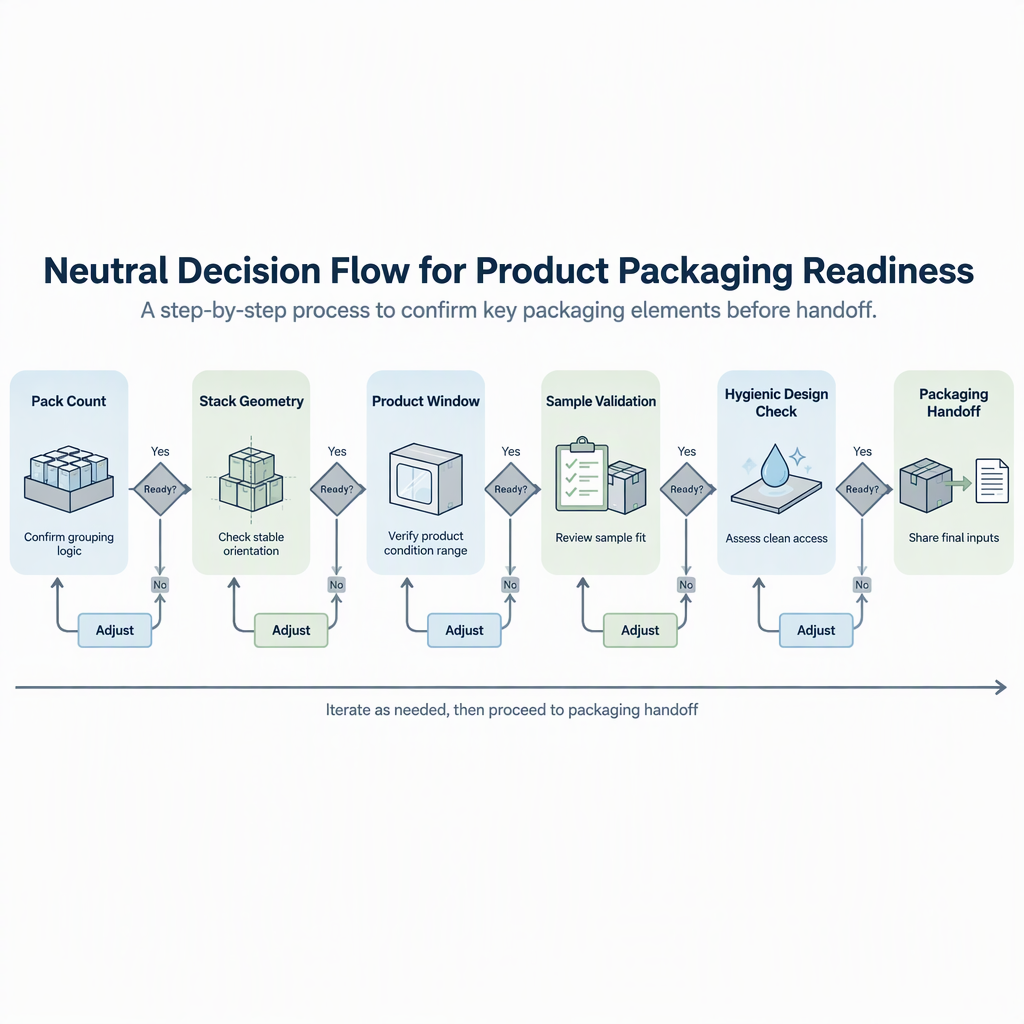
| Pack-size question | Specification to request | Buyer check |
|---|---|---|
| How many tortillas are in one pack? | Exact count for each SKU and whether mixed counts will run in the same shift. | Ask how count settings are selected, locked, and verified during trials. |
| How tall can the stack be? | Maximum and minimum finished stack height for the packaging machine or bagger. | Run cooled product samples; do not assume height from nominal thickness alone. |
| How will lanes be arranged? | Required infeed and outfeed lane count, orientation, spacing, and accumulation behavior. | The first-party product category supports a packaging-line use case, but lane design still needs project-specific confirmation. |
| What happens at SKU changeover? | Settings, tooling, guides, or operator actions required when pack count or diameter changes. | Request a demonstration with the smallest, largest, thinnest, and most fragile products. |
Do not specify only “tortilla stacking counting” speed. A high headline rate is not useful if the stack is too tall for the wrapper, too warm after cooling, unstable at transfer, or difficult to clean after recipe changes.
Define the tortilla product window before acceptance tests
The product window should describe the actual tortillas that will be counted: formula family, dough behavior, formed size, baked structure, temperature after cooling, and surface condition.
| Product factor | Effect to discuss | Sample to provide |
|---|---|---|
| Formula and dough | Moisture, fat level, elasticity, and stickiness can change how pieces separate and settle. | Samples from normal production, not only laboratory pieces. |
| Forming and baking | Diameter variation, edge shape, puffing, blistering, browning, and breakage affect stack regularity. | Smallest and largest acceptable diameters, plus edge-defect examples. |
| Cooling | Warm or flexible tortillas may settle differently from fully cooled products. | Because the line context includes cooling and stacking categories, the cooling handoff should be part of the trial. |
| Use condition | Retail bags, frozen packs, food-service stacks, or immediate downstream packaging may require different stack stability. | Final packaging materials and any required stack orientation. |
Map the handoff from forming, baking, cooling, and packaging
Counting and stacking should be specified as part of the complete tortilla line, especially where baked product leaves cooling and enters packaging.
- List upstream processes: recipe family, dough handling, forming method, baking finish, and expected output pattern.
- Define cooling exit conditions: product temperature range used in your plant, belt speed, spacing, and whether pieces overlap before counting.
- Define the counter-stacker task as counting, aligning, and stacking the tortillas or other soft flatbreads for packaging.
- Map packaging handoff: stack discharge height, direction, pitch, stop-start behavior, and acceptable accumulation time before wrapping or bagging.
- For inspection, cleaning, or clearing after trials, switch off and disconnect the applicable power source before manual access, follow the model manual’s permitted access points, and do not bypass guards.
Run sample validation for pack count and batch consistency
Use real production samples to confirm that the selected stack recipe works across normal batch variation, not only during a short demonstration.
- Test the counter-stacker function with the flatbread types and pack counts the equipment is expected to count, align, and stack.
- Include first, middle, and late-shift product if temperature, moisture, or surface condition changes during production.
- Record count per finished pack, visible damage, stack height, stack lean, missed pieces, double feeds, and packaging transfer stability.
- Check whether rejected or miscounted stacks can be identified without mixing into accepted product.
- Repeat the trial after normal SKU changes so batch-to-batch consistency is part of the purchasing decision.
The product category supports the use case of a flatbread counter stacker for packaging lines; acceptance criteria such as exact count tolerance, speed, and changeover time should be confirmed through project documentation and sample trials.
Check hygienic design and cleanable integration points
For U.S. regulatory context, 21 CFR § 117.40 addresses cleanable food-equipment design, suitable materials and workmanship, corrosion-resistant and nontoxic food-contact surfaces, smooth seams, cleanable conveying systems, and maintained instruments and controls.
- Ask how food-contact areas, belts, guides, and transfer points are made cleanable and maintainable.
- Check whether food-contact surfaces are appropriate for food use, corrosion resistance, and routine sanitation in your plant.
- Review seams, fasteners, conveying surfaces, and collection points where crumbs, oil, or moisture could accumulate.
- Confirm how instruments and controls used for counting or line coordination are maintained so they remain suitable for operation.
- Before manual cleaning, inspection, or clearing inside guarded areas, switch off and disconnect the applicable power source, apply your facility’s lockout procedure where required, and follow only the access steps permitted by the equipment manual.
GovInfo identifies 21 CFR § 117.40 within the 2025 annual edition of Title 21 and lists that page as the most recent version available on GovInfo, dated April 1, 2025. For purchasing language, treat this as U.S. regulatory context and confirm the rules that apply in the installation country, customer audit program, and plant sanitation standard.
Avoid shortcuts that make pack-size projects fail
The safest specification is not the shortest one; avoid buying from a headline claim without checking product samples, line handoff, sanitation, and acceptance criteria.
A product page can establish that a counter-stacker category is intended for counting, aligning, and stacking soft flatbreads for packaging, but it should not be treated as proof of exact accuracy, output speed, return on investment, compliance, or performance on every recipe.
- Do not approve a stacker from a single ideal sample; use the normal variation from production dough, forming, baking, and cooling.
- Do not let the packaging machine requirements remain vague; stack height and discharge stability must match the packer.
- Do not separate selection from cleanability; food-equipment design and maintenance affect contamination-control expectations.
- Do not assume one setting covers all pack sizes; document settings for each count, diameter, and product condition.
- Do not request disassembly or guard bypasses during demonstrations; manual access must follow safe isolation and the equipment manual.
Prepare the RFQ checklist for line integration
An RFQ should connect the counter-stacker to the complete tortilla production flow, including upstream process conditions, cooling, hygienic requirements, and downstream packaging.
- SKU table: product name, diameter, nominal thickness, pack count, target stack height, package type, and expected changeover sequence.
- Product samples: fresh and cooled samples from each recipe, including the most flexible, sticky, oily, dry, curled, or fragile products.
- Functional scope: counting, aligning, stacking, and discharge requirements for tortillas, chapati, naan, pita, or other soft flatbreads if those products are in scope.
- Interface drawing: infeed height, belt width, flow direction, lane spacing, discharge height, packer connection, and available floor space.
- Hygienic design review: cleanable surfaces, food-contact materials, conveying areas, seams, and control maintenance expectations.
- Acceptance test: trial duration, sample quantity, allowable count errors, stack damage criteria, changeover checks, sanitation access review, and documentation required before shipment.
Conclusion
For tortilla counting and stacking, the best RFQ starts with pack-size requirements and real product behavior, then tests the counter-stacker function against packaging handoff, cleanability, and batch consistency.
Prepare a SKU-by-SKU stack recipe, send representative samples, require a documented trial, and make the final decision on measurable pack count, stack quality, safe access, and hygienic integration rather than on headline claims alone.
FAQs
These questions help buyers turn pack-size requirements into practical counter-stacker specifications.
What information should I send before asking for a tortilla stacker quotation?
Send each SKU’s diameter, thickness range, pack count, target stack height, product temperature after cooling, package type, line direction, and sample availability.
Should I specify stack height or only tortilla count?
Specify both. Count controls the pack quantity, while stack height and shape determine whether the stack transfers cleanly into the packaging machine.
Why do recipe and dough differences matter?
Different formulas can change flexibility, stickiness, surface oil, and breakage risk, so one pack-count setting may not represent every product your plant runs.
Where should counting and stacking sit in the line?
It normally belongs after baking and cooling decisions are defined and before final packaging handoff, because the broader line includes related processing, cooling, and stacking steps.
Can I rely on advertised speed to choose equipment?
No. Use advertised information only as a starting point, then confirm pack count, damage rate, stack stability, changeover, and cleanability with your own products.
What hygiene questions should be included in the RFQ?
Ask about cleanable conveying areas, suitable food-contact surfaces, smooth seams, corrosion resistance, maintenance of instruments and controls, and safe access for sanitation.
How many samples are enough for validation?
Use enough samples to represent normal production variation: different batches, product sizes, temperatures after cooling, and the most difficult pack sizes you expect to run.
What should be documented after a successful trial?
Document the tested SKUs, pack counts, product conditions, settings, observed stack quality, packaging handoff result, cleaning-access review, and any limits that require operator control.