What zone balance means in a tortilla line
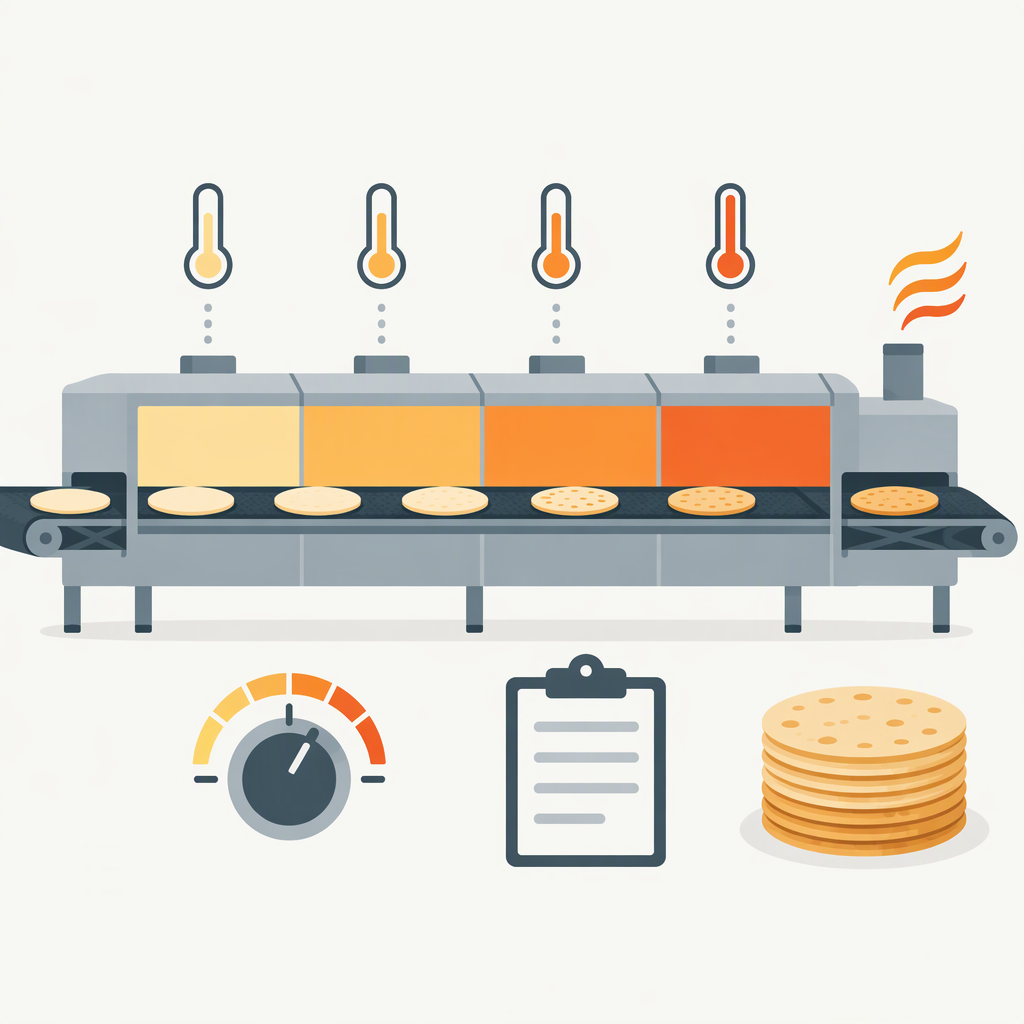
Zone balance means treating the oven as a sequence of heating conditions that work with forming, baking, cooling and stacking, rather than treating the oven as one temperature number.
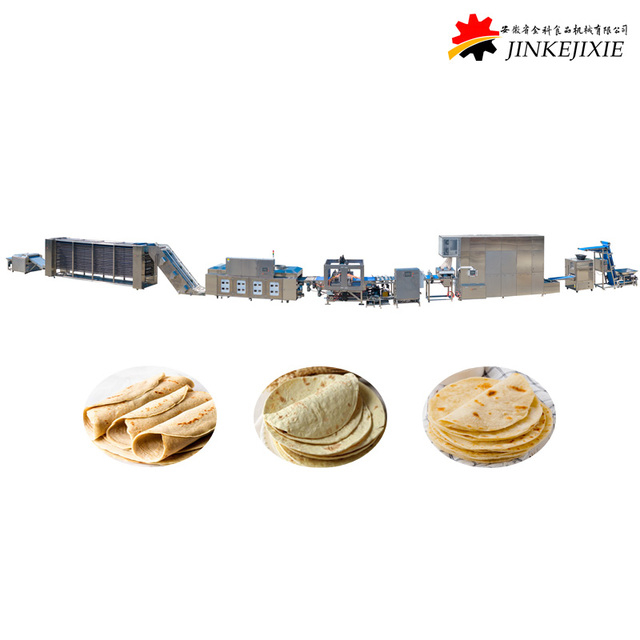
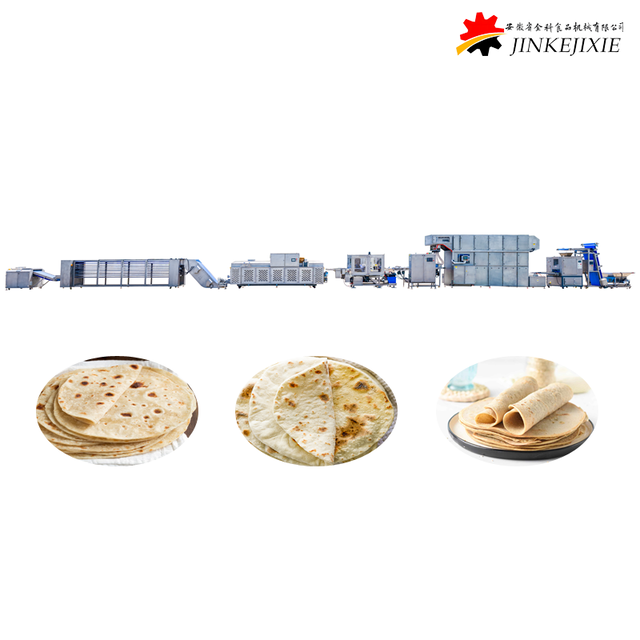
The supplier website presents tortilla and flatbread production lines and related modules including baker, cooler and stacker, and describes customized industrial production lines for tortilla and other flatbread products.
A working-principle page describes an automated tortilla flow through dough mixing, dividing, pressing, baking, cooling and stacking, with tortillas baked in a tunnel oven with temperature zones.
For a factory, the buyer decision is therefore a line-integration question: what product must enter the oven, what color must leave it, how the tortilla should behave after cooling, and what data the supplier needs before recommending an oven or full line configuration.
How Oven Zones Influence Bake Color
Bake color is influenced by heat exposure because Maillard browning is a nonenzymatic reaction involving amino acids and reducing sugars during high-temperature cooking.
Use color as a process signal, not as the only release criterion. A darker surface may indicate stronger browning, but it does not prove that flexibility, moisture distribution or downstream handling are correct.
For food-science background, the PMC review of food processing and Maillard reaction products describes Maillard reactions as contributing brown color, flavor and aroma compounds during high-temperature cooking.
Because a tortilla line can move product through a tunnel oven with temperature zones, trial teams should observe whether early, middle or final oven conditions are driving pale centers, over-dark spotting, edge dryness or delayed browning.
Why Flexibility Can Fail Even When Color Looks Right
A tortilla can appear correctly browned and still fail the buyer’s quality target if it tears, cracks, crumbles, breaks or loses flexibility during storage or handling.
The USDA Agricultural Research Service publication summary describes tortilla quality in terms that include resisting tearing, cracking, crumbling and breaking, and it notes that flexibility over shelf life matters.
The same research summary connects flour properties and moisture content with desirable tortilla quality in the reported study, so a bake-zone trial should not treat oven temperature as the only variable.
For purchasing teams, this means the acceptance sample should be evaluated after the normal cooling and handling point, not only at the oven discharge. The trial should define whether the product must fold, roll, stack, pack or hold flexibility for a stated downstream requirement.
Run a Controlled Trial Before Locking Zone Settings
A controlled oven-zone trial should record the parameters being changed, product output, temperature and speed, because one first-party JKBP-650 page describes production data tracking for parameters, output, temperature and speed.
- Define the target product first: diameter, thickness, dough weight, formula family, target color range, cooling point and flexibility test used by the plant.
- Hold flour, moisture-related formulation choices and dough preparation as stable as possible during a bake trial because flour properties and moisture are associated with tortilla quality in the USDA summary.
- Change one oven-zone variable at a time when practical, then record the product result before making the next adjustment.
- Record temperature, speed, output and trial parameters where the selected line or control system supports that tracking.
- Check the tortilla after cooling and stacking conditions that reflect the intended production line, not only immediately at the oven exit.
Decision Table: Symptoms, Checks and Zone-Balance Responses
Use symptom tables to guide trial questions, not to impose universal oven settings across different tortillas, formulas or tunnel-oven designs.
| Trial symptom | Check before changing zones | Zone-balance response to discuss |
|---|---|---|
| Pale color even after normal line travel | Confirm formula, dough thickness and whether browning conditions are actually being reached. | Review whether heating exposure is too mild in the zones responsible for color development. |
| Dark spotting with acceptable average color | Check dough-sheet consistency, surface contact, localized heat exposure and product spacing. | Ask whether the affected zone is creating uneven surface heating instead of balanced color. |
| Good color but cracking, tearing or poor foldability | Evaluate flexibility after the normal cooling point and review flour and moisture-related formula factors. | Do not solve only by increasing heat; review whether bake finish and cooling are drying the product. |
| Good oven discharge but poor downstream handling | Inspect the handoff from baking to cooling and stacking. | Balance oven changes with line-handoff conditions so the tortilla reaches packing in the intended state. |
Separate Recipe, Dough and Forming Variables From Oven Variables
Before blaming oven zones, separate ingredient, moisture, dough and forming variables because flour properties and moisture content can affect tortilla quality.
- Use the same flour lot or document the change before comparing two oven trials.
- Record formula and moisture-related targets because the USDA summary links moisture content and flour properties with desirable tortilla quality in the studied context.
- Keep dough ball weight, press settings, diameter and thickness consistent during a comparison run.
- If the project involves a complete line, confirm how dough preparation, dividing, rounding, rolling, pressing or laminating connect to the baker, cooler and stacker modules listed by the supplier site.
- Define the quality test in advance: visual color, fold test, tearing, cracking, stacking behavior and post-cooling condition.
Check the Cooling and Stacking Handoff
Cooling and stacking belong in the same trial discussion as baking because the described automated tortilla flow connects baking, cooling and stacking as successive stages.
The JKBP-650 first-party page frames baking and cooling as connected stages in the production process, so buyers should discuss the handoff rather than treating the oven as an isolated machine.
For safety and hygiene planning, ask the supplier how normal cleaning access, sanitation routines and line clearances are handled for the selected configuration. If any manual access to powered equipment is required for cleaning, clearing or inspection, switch off and disconnect the applicable power source first, then follow only the access steps permitted by the model manual.
In application trials, record whether tortillas arrive at stacking too hot, too dry, too tacky or too fragile. These observations help distinguish a zone-balance issue from a cooling or product-handling issue.
Limits: What Zone Control Cannot Solve Alone
Multi-zone oven control can support structured trials, but it cannot by itself guarantee color, flexibility or shelf-life behavior across every recipe, flour, diameter, thickness and line speed.
A first-party JKBP-650 page describes a multi-zone oven with PID temperature control and production data tracking, which is useful for discussing controllability on that model page.
Tortilla flexibility and breakage behavior also relate to product quality factors such as flour properties and moisture in the USDA summary, so buyers should keep formulation and dough handling in the trial plan.
The most useful supplier discussion is not “what is the universal setting?” but “what trial method will prove the setting for this product and line layout?” That framing protects the factory from over-specifying heat while under-specifying the product.
RFQ checklist for tortilla oven zone discussions
Before requesting a tortilla oven or full line quote, prepare product, process and handoff data because the supplier site presents customized industrial production lines for tortilla and other flatbread products.
- Product type: flour tortilla, corn-style tortilla or another flatbread, plus target diameter, thickness and weight.
- Quality targets: top and bottom color, foldability, tearing or cracking limits, stacking condition and packaging handoff.
- Formula context: flour type, moisture-related targets and any ingredients that may affect flexibility or breakage behavior.
- Line context: required output, available floor space, upstream forming method, downstream cooling, stacking and packing requirements.
- Control and data needs: whether the project requires tracked parameters such as temperature, speed, output and trial settings.
- Sanitation and access: cleaning expectations, local hygiene procedures and safe isolation requirements before manual access to powered equipment.
- Trial plan: sample size, evaluation timing, who approves color and flexibility, and what changes can be made between trial runs.
Conclusion
Balance tortilla oven zones by running a product-specific trial that records controllable oven data while protecting the formula, dough, forming, cooling and stacking variables from uncontrolled changes.
Browning explains why heat exposure matters for color, but it does not replace product testing.
Flexibility, tearing, cracking and breakage remain quality outcomes that must be checked with the actual tortilla and process conditions.
Where a selected line supports temperature, speed, output and parameter tracking, use that information to make the RFQ discussion more specific and less dependent on guesswork.
FAQs
These questions help tortilla factories prepare for oven-zone trials and supplier discussions without relying on one-size-fits-all settings.
What does flexibility mean for tortilla buyers and quality teams?
Flexibility means the tortilla can meet its intended handling requirement without tearing, cracking, crumbling or breaking, and the USDA summary notes that flexibility over shelf life is a tortilla quality concern.
Should we raise all oven zones if tortillas are pale?
Not automatically. Browning is related to high-temperature cooking chemistry, but a factory should first confirm thickness, formula, line speed and whether the pale area points to a specific stage of the oven.
Can correct bake color prove the tortilla will fold well?
No. Color and flexibility are different quality observations; flour properties, moisture and shelf-life flexibility can matter even when visual color is acceptable.
What trial data should equipment buyers record?
Record the changed parameters, output, temperature and speed where the selected line supports that tracking, then connect those values to color and flexibility observations.
Where should cooling be evaluated?
Evaluate cooling as part of the line handoff after baking and before stacking, because the described tortilla process connects baking, cooling and stacking in sequence.
Do tortilla baking oven zones have universal temperature settings?
No universal setting should be assumed. The useful buying question is which trial plan matches the product formula, geometry, moisture target, oven design, speed and downstream handling.
What should we ask a supplier before specifying an oven?
Ask how the proposed line configuration connects dough preparation, forming, baker, cooler and stacker modules for the target flatbread, then provide the product and quality data needed for configuration discussion.