Can one tortilla machine handle both corn masa and wheat dough? Not always. Their different properties require specific processing methods. This guide compares each Corn Tortilla Machine and explains how to match equipment to your recipe, product size, and production needs.
What Are the Differences Between Corn Tortilla Machines and Flour Tortilla Machines?
Corn and flour tortilla machines serve different dough requirements. Their equipment configurations depend on ingredient properties and forming methods. Understanding these differences helps manufacturers avoid unsuitable investments.
Raw Materials: Corn Masa vs Wheat Flour Dough
A corn tortilla machine processes corn masa. Traditional masa comes from nixtamalized corn. Manufacturers cook corn using an alkaline solution before washing and grinding it.
Prepared masa flour offers another production option. Operators add water and mix the flour into workable dough. Its consistency must support stable feeding and forming.
Flour tortillas use wheat flour, water, fat, salt, and other ingredients. Mixing develops gluten, which gives the dough elasticity. This property affects its handling and pressing behavior.
Dough Preparation: Masa Mixing vs Flour Dough Development
Masa preparation focuses on moisture distribution and dough consistency. A masa mixer combines prepared corn flour and water. Uniform mixing helps prevent dry areas and uneven feeding.
Flour dough requires controlled mixing and gluten development. Mixing time affects elasticity and extensibility. Ingredient ratios also influence the final dough structure.
These preparation methods require different operating considerations. Manufacturers should test their actual formulations before selecting equipment. Consistent dough preparation supports reliable downstream processing.
Dough Handling: Portioning vs Dividing and Rounding
Corn masa can be fed directly into suitable forming equipment. A controlled feeding system maintains a steady material supply. Portioning equipment then creates consistent dough quantities.
Wheat dough commonly passes through a divider and rounder. The divider controls individual dough weights. The rounder forms smooth portions for subsequent resting and pressing.
These handling stages are not always interchangeable. Masa and wheat dough respond differently during feeding. Equipment should match the dough's moisture and elasticity.
Forming Methods: Corn Tortilla Pressing vs Flour Tortilla Pressing
Corn tortilla forming commonly uses pressing. The machine converts masa portions into flat circular sheets. Mold dimensions and portion weight determine the finished shape.
Flour tortilla machines may use hot pressing or progressive sheeting. Hot pressing forms individual dough portions. Sheeting gradually reduces dough thickness before cutting.
Both methods require accurate thickness control. Incorrect settings may create uneven edges or dimensions. Buyers should confirm the forming method before ordering equipment.
Heating and Baking: Different Processing Requirements
Corn and flour tortillas require suitable baking conditions. Temperature and cooking time influence their surface appearance. They also affect moisture and finished texture.
Corn tortillas need controlled cooking to develop suitable flexibility. Flour tortillas require conditions that support their intended texture. Excessive heating can cause dryness or unwanted browning.
There is no single baking setting for every recipe. Dough thickness and moisture influence heating requirements. Production trials help establish suitable operating parameters.
Automation and Production Capacity
Both machine types can include automatic feeding and forming. Their configurations may also include baking, cooling, and stacking. Automation reduces repetitive manual operations.
However, dough properties influence feeding stability and machine speed. A machine may achieve different outputs across recipes. Product diameter and thickness also affect production capacity.
Buyers should compare actual hourly output. They should use their target recipe and product dimensions. Advertised maximum capacity alone is insufficient.
Tip: Request separate production trials for corn masa and wheat dough. Compare product quality and actual hourly output.
How Does an Industrial Corn Tortilla Machine Process Masa Dough?
A corn tortilla machine converts prepared masa into finished tortillas. Its configuration depends on the factory's raw material source. Processing whole corn requires more preparation equipment than using prepared masa flour.
Masa Preparation and Hydration
Traditional corn tortilla production begins with nixtamalization. Corn is cooked in an alkaline solution. The process changes the grain's structure and prepares it for further processing.
After cooking, manufacturers wash and grind the corn. Grinding produces masa with suitable consistency. Its moisture content influences subsequent forming performance.
Factories using prepared masa flour follow a shorter process. Operators mix the flour with water. They adjust hydration until the dough reaches suitable handling conditions.
Corn Masa Feeding and Portioning
Prepared masa enters the forming section through a feeding system. Consistent feeding helps maintain stable production. Poor feeding may cause interruptions or uneven portions.
A portioning unit controls the dough quantity. Each portion contributes to the finished tortilla's dimensions. Consistent weights help reduce product variation.
Manufacturers should monitor dough moisture and portion weight. These factors influence feeding stability. They also affect the final diameter and thickness.
Tortilla Forming and Baking
The forming system presses or sheets masa into circular discs. Mold dimensions determine the forming area. Portion weight also influences the finished diameter.
After forming, tortillas move toward the baking section. The oven applies controlled heat. Baking conditions influence color, texture, and moisture retention.
Some systems use conveyors to transfer products automatically. This reduces manual handling between stations. The forming and baking speeds must remain synchronized.
Cooling and Finished Product Handling
Freshly baked tortillas require controlled cooling. Cooling conveyors gradually reduce product temperature. Their design depends on production capacity and available factory space.
Insufficient cooling can affect product handling. Warm tortillas may release moisture during stacking. This can create condensation during packaging.
Automatic stackers collect cooled tortillas into set quantities. They help maintain organized product stacks. Their capacity should match the upstream production rate.
How Does a Flour Tortilla Machine Process Wheat Dough?
Flour tortilla production requires careful wheat dough development. Its gluten structure affects dividing, resting, and forming. Equipment must support these stages consistently.
Flour Mixing and Gluten Development
An industrial mixer combines wheat flour and other ingredients. These commonly include water, fat, and salt. Mixing distributes ingredients throughout the dough.
Gluten development influences dough elasticity. Insufficient mixing may produce inconsistent dough. Excessive mixing may also affect handling properties.
Manufacturers should establish suitable mixing conditions. Ingredient ratios and flour properties matter. Consistent dough development improves downstream forming.
Dough Dividing, Rounding, and Resting
A dough divider separates bulk dough into portions. Accurate portion weights support consistent product dimensions. Automatic dividing also reduces repetitive manual work.
A rounder forms smooth dough balls. This helps prepare portions for pressing. Uniform shapes improve handling during the next stage.
Resting allows gluten to relax. The dough becomes easier to extend and form. Resting time depends on the recipe and production conditions.
Pressing or Sheeting and Baking
Flour dough can be formed through hot pressing. Some production systems use progressive sheeting instead. The selected method depends on product specifications and machine configuration.
Pressing controls the dough's final thickness. Sheeting uses rollers to reduce thickness gradually. Both methods require consistent dough feeding.
After forming, tortillas enter the baking oven. Temperature and conveyor speed influence cooking results. Operators should adjust settings through product testing.
Cooling and Stacking
Baked flour tortillas move through cooling conveyors. Cooling helps stabilize their structure before stacking. It also prepares them for downstream packaging.
Moisture retention affects product flexibility. Excessive drying may make tortillas brittle. Insufficient cooling may create handling problems.
Automatic stackers collect finished tortillas. Their stacking quantity can match packaging requirements. Buyers should confirm the connection between cooling and stacking equipment.
What Equipment Does Each Tortilla Machine Require?
The main equipment differences begin with raw material preparation. Corn production may need a masa processing section. Flour production requires equipment for wheat dough development.
Corn Tortilla Manufacturing Equipment
A complete corn processing setup may include a corn cooker. This equipment supports nixtamalization when factories process whole corn. Washing and grinding equipment may also be required.
A masa mixer prepares dough for forming. Feeding and portioning equipment supply controlled quantities. Suitable presses or forming systems create tortilla discs.
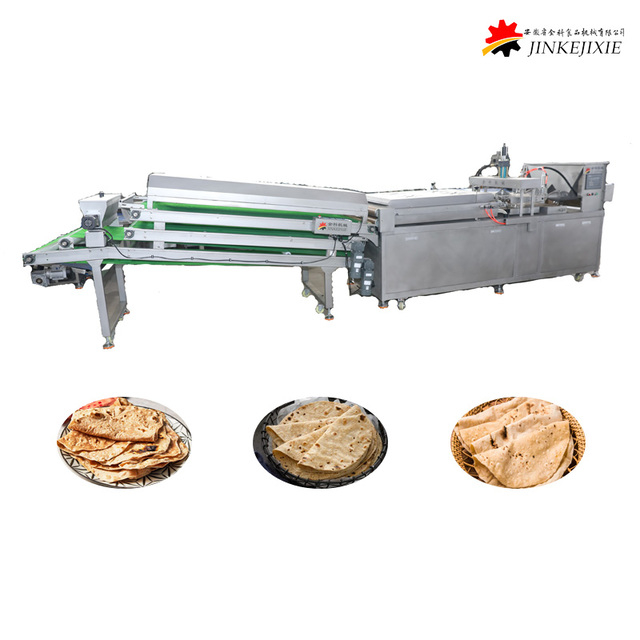
The downstream section includes baking and cooling equipment. Automatic stacking may also be included. Factories purchasing prepared masa flour may need fewer upstream machines. For manufacturers exploring automated solutions, the JKBP-650 Automatic Tortilla Production Line provides an equipment option worth evaluating. Its configuration can be reviewed against specific dough handling and production requirements.
Flour Tortilla Production Equipment
Flour production usually begins with an industrial dough mixer. It combines flour, water, fat, and salt. The resulting dough moves toward portioning equipment.
A divider controls dough weight. A rounder creates smooth dough balls. A resting conveyor prepares them for pressing or sheeting.
The forming section connects to the baking oven. Cooling conveyors handle baked tortillas. Automatic stackers prepare products for packaging.
Key Equipment Differences at a Glance
The following table summarizes common equipment configurations. Actual requirements depend on the recipe and factory setup.
Equipment
Corn Tortilla Machine
Flour Tortilla Machine
Raw material
Corn masa or masa flour
Wheat flour
Preparation
Nixtamalization or hydration
Mixing and gluten development
Mixing
Masa mixer
Industrial dough mixer
Dough handling
Feeding and portioning
Dividing and rounding
Resting
Recipe-dependent
Commonly required
Forming
Pressing or suitable sheeting
Hot pressing or sheeting
Baking
Tortilla cooker or oven
Tortilla baking oven
Cooling
Cooling conveyor
Cooling conveyor
Stacking
Automatic stacker
Automatic stacker
Note: Prepared masa flour can simplify corn processing. Whole-corn production requires additional preparation equipment.
Can One Tortilla Machine Handle Both Corn and Flour Recipes?
Some manufacturers offer multipurpose tortilla machines. These machines target different flatbread products. However, recipe compatibility requires careful verification.
When Multipurpose Tortilla Machines Are Suitable
Multipurpose machines can suit factories producing several flatbread types. Their configurations may include adjustable forming and heating systems. These features support different product specifications.
Some commercial machines advertise corn tortillas, flour tortillas, pita, lavash, and chapati. One reference machine from Foodyoo lists these applications. Its advertised versatility provides a useful comparison for buyers.
However, different recipes may require different settings. Machine compatibility should never be assumed. Actual production tests remain necessary.
What Must Change Between Different Recipes?
Corn masa and wheat dough have different handling properties. Their moisture levels and elasticity influence feeding. Portion weights may also vary.
Changing recipes may require adjustments to feeding and forming. Operators may need to change pressing conditions. Baking temperatures and conveyor speeds may also require adjustment.
Cleaning is another important consideration. Recipe changes can leave different residues. Equipment should provide practical access for cleaning and inspection.
How to Verify Cross-Recipe Compatibility
Ask suppliers to test both actual recipes. Provide the intended masa and wheat dough formulations. Request finished samples from the proposed machine.
Check diameter, thickness, weight, and surface appearance. Evaluate baking quality and product flexibility. Record actual output during each trial.
The supplier should also confirm the machine configuration. Ask whether additional molds or components are required. Get these details before placing an order.
Note: A tortilla chip extrusion line is different from a soft tortilla machine. Doritos and Bugles equipment uses snack processing methods. It should not be treated as standard masa or wheat dough forming equipment.
What Factors Should Manufacturers Consider When Selecting a Tortilla Machine?
The best machine matches the factory's actual production requirements. Buyers should evaluate ingredients, product specifications, and capacity. They should also consider future operating needs.
Match the Machine to the Dough Formulation
Start by identifying the main raw material. Confirm whether production uses corn masa or wheat dough. This determines the required preparation and handling systems.
Next, evaluate dough moisture and consistency. Check elasticity and feeding behavior. These properties influence forming equipment selection.
For multipurpose production, test every intended recipe. Do not rely only on general product descriptions. Confirm performance under actual operating conditions.
Compare Finished Product Dimensions and Specifications
Define the target tortilla diameter first. Then confirm thickness and dough weight. These specifications influence forming equipment and mold dimensions.
Surface quality is another consideration. Buyers should inspect edges and overall appearance. Consistent forming helps reduce rejected products.
Different sizes may require separate molds. Ask suppliers about changeover procedures. Confirm the available adjustment range before purchasing.
Evaluate Production Capacity and Automation
Production capacity should match the factory's demand. Compare actual pieces per hour. Consider product size and recipe differences.
Automatic feeding can reduce manual handling. PLC controls help coordinate machine operations. Cooling and stacking systems support continuous production.
Buyers should request production test records. Confirm output using the target recipe. Include changeovers and routine downtime in capacity planning. Manufacturers comparing automated production options can also review the JKBP-820 Automatic Tortilla Production Line. Its configuration should be evaluated against the required tortilla specifications and actual production targets.
Consider Factory Layout and Future Production Needs
Equipment dimensions influence factory layout. Buyers should plan floor space and access routes. Maintenance clearance is also important.
Check electrical supply and other utilities. Heating systems may require additional provisions. Ventilation and cleaning access should be considered.
Future expansion also deserves attention. Modular configurations may support additional capacity. Choose equipment that fits realistic production plans. For larger production requirements, manufacturers can also explore the JKBP-1200 Automatic Tortilla Production Line. Buyers should review its published capacity and configuration before confirming suitability.
What Should Buyers Verify Before Purchasing Corn or Flour Tortilla Equipment?
A successful purchase requires more than comparing quotations. Buyers should verify actual machine performance. They should also review safety and technical support.
Request Production Trials Using Actual Recipes
Prepare representative corn masa or wheat dough samples. Ask the supplier to run the proposed configuration. Observe the complete forming and baking process.
Record finished product dimensions and weight. Check thickness and surface quality. Measure actual output during the trial.
Keep approved samples for future comparison. They provide a useful quality reference. Include agreed testing conditions in the purchase requirements.
Check Technical Specifications and Food Safety
Request detailed machine specifications and drawings. Confirm dimensions and electrical requirements. Check the materials used on food-contact surfaces.
Review heating controls and protective devices. Emergency stops and machine guards are important. Cleaning access should also be practical.
Ask for operating and maintenance instructions. Confirm the cleaning procedures for different recipes. These details support safer daily production.
Confirm Installation and After-Sales Support
Installation requires suitable factory conditions. Confirm machine dimensions and utility connections. Plan equipment positioning before delivery.
Operator training should cover production and cleaning. It should also explain routine inspection. Clear instructions help reduce operating errors.
Check warranty coverage and spare parts availability. Confirm technical support arrangements. Reliable service helps protect long-term production performance.
Tip: Include recipe trials, approved samples, and acceptance criteria in your equipment purchase agreement.
Conclusion
Corn and flour tortillas require different processing methods. The right machine depends on recipe, product size, and production capacity.
Anhui Jinke Foodstuff Machinery Co., Ltd. offers automated JKBP tortilla production lines. They integrate dough handling, forming, baking, cooling, and stacking. These solutions help manufacturers improve production consistency and efficiency.
FAQ
Q: What is a Corn Tortilla Machine?
A: It processes masa into formed and baked corn tortillas.
Q: Can one machine make corn and flour tortillas?
A: Some multipurpose machines support both recipes after testing.
Q: Why does a Corn Tortilla Machine need different settings?
A: Masa and wheat dough have different moisture and elasticity.
Q: How do you choose tortilla machine capacity?
A: Match hourly output, tortilla size, and recipe requirements.
Q: What affects tortilla production quality?
A: Dough consistency, forming thickness, baking, and cooling.