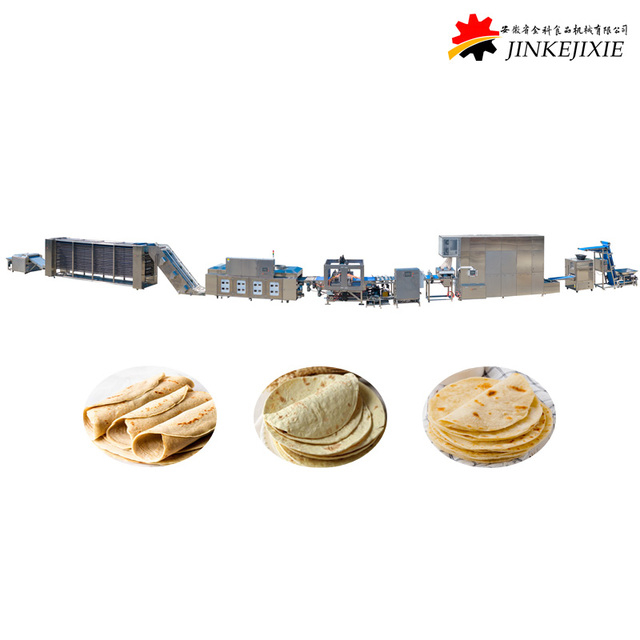
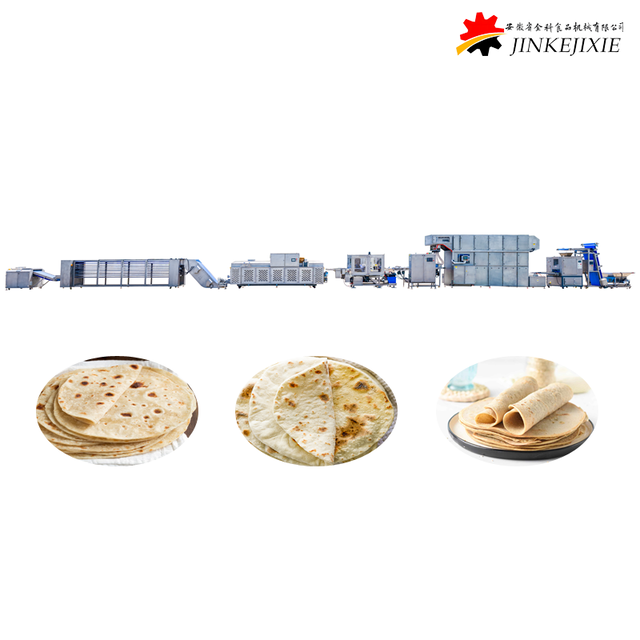
Control tortilla thickness and diameter by treating the run as one connected system: define the finished-product target, measure dough behavior, form and bake trial samples, verify after cooling, and change only one controllable factor at a time across dough preparation, forming, baking, cooling, and downstream handling.
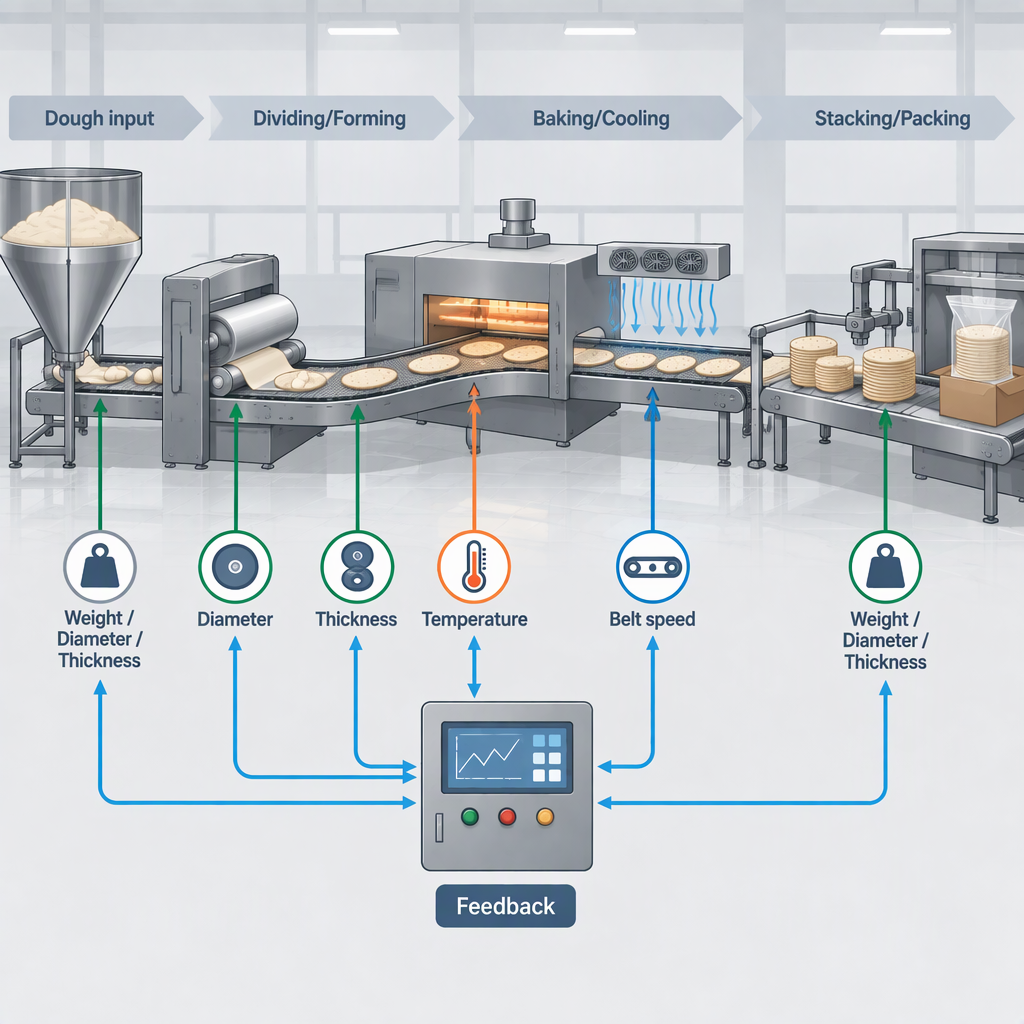
Build a control model for thickness and diameter
A useful control model links dough preparation, dividing, rounding, rolling or pressing, baking, cooling, and stacking instead of treating thickness and diameter as isolated forming settings.
For application selection, start with the finished tortilla your buyer must pack and use: nominal diameter, acceptable thickness range, product weight, recipe family, and whether the product is wheat tortilla, corn tortilla, wrap, chapati-style flatbread, or another pressed or sheeted item. Then map each dimension to a station that can influence it.
The line scope should include dough preparation, dough dividing, dough rounding, rolling, pressing, baking, cooling, and stacking because dimensional control can be lost before, during, or after forming.
For hot-press wheat tortillas, government research summaries connect tortilla quality and diameter with flour, dough, gluten properties, and dough rheology, so the practical control model should include both ingredient behavior and machine settings.
Measure dough behavior before changing machine settings
Measure dough condition before changing roller gaps, press settings, oven conditions, or line speed because dough resistance and mixing behavior can affect tortilla diameter in hot-press wheat tortilla production.
Run a thickness-and-diameter trial before final selection
A reliable trial measures dough, pre-bake shape, post-bake size, and cooled product dimensions under the same run conditions you expect to use in production.
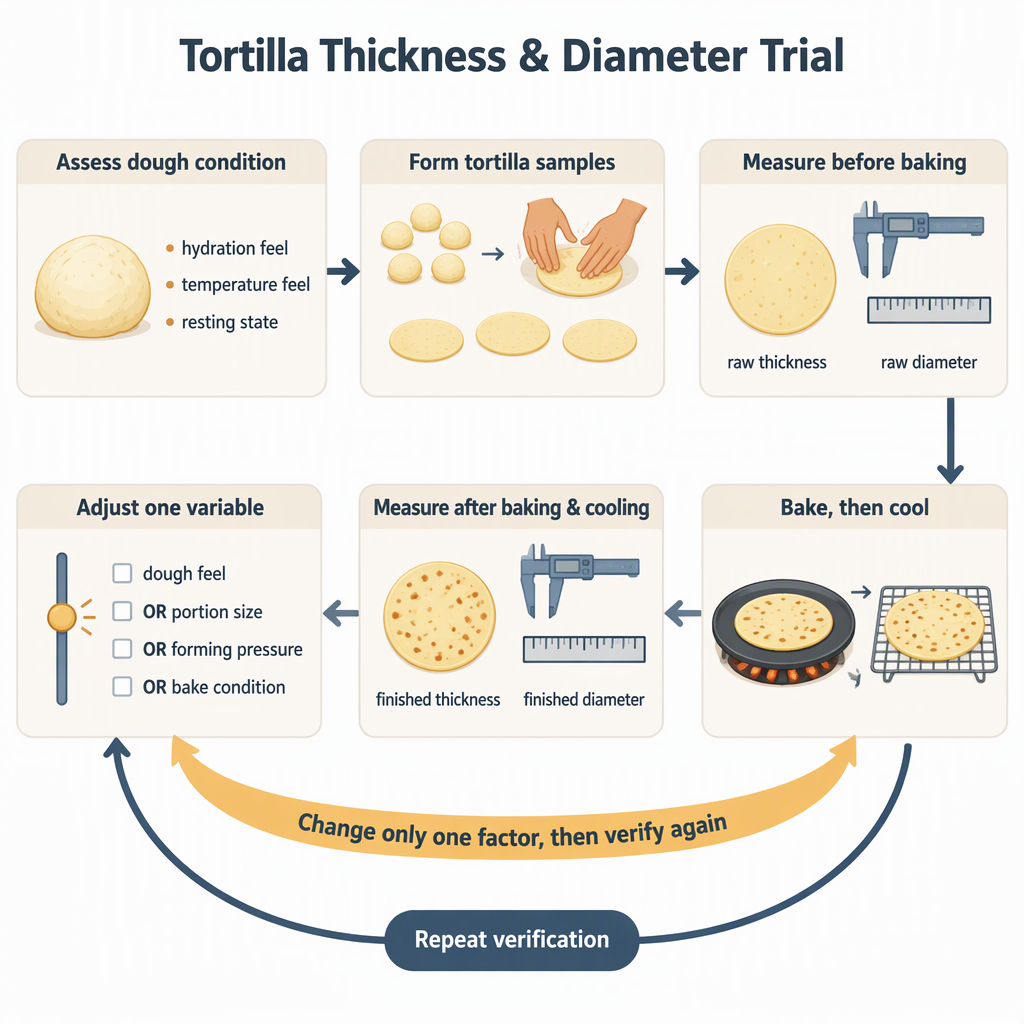
- Define one recipe and dough-preparation condition for the trial, then record the dough properties your team can repeat, such as mixing time, rest time, temperature, dough piece weight, and handling feel.
- Run a short, steady section of the line through dividing, rounding, rolling or pressing, baking, cooling, and stacking without changing multiple stations at once.
- Measure diameter and thickness at a consistent point before baking when the process allows it, then measure again after baking and cooling to separate forming variation from thermal or cooling-related change.
- Sample from the beginning, middle, and later part of the run so you can see whether the dimension drift appears after warm-up, after dough residence time changes, or after cooling and stacking load change.
- Change one variable at a time, such as dough condition, dough piece weight, forming gap, press condition, oven profile, or cooling time, then repeat the same measurement pattern.
If a measurement requires manual access near powered equipment, switch off and disconnect the applicable power source before manual access, and use only access points and procedures permitted by the machine manual.
Diagnose diameter drift across the production run
When diameter drifts but thickness appears stable, check dough piece consistency, forming repeatability, baking effect, cooling shrink behavior, and downstream handling before changing the target size.
| Observed pattern | Likely check | Buyer action |
|---|---|---|
| Diameter changes gradually through the run | Dough residence, dough temperature, resting time, baking condition, and cooling capacity | Ask the supplier how the proposed line maintains stable flow from dough preparation through cooling. |
| Diameter varies from piece to piece | Dough dividing, rounding, rolling, pressing, and transfer stability | Run samples with recorded dough piece weights and compare pre-bake and post-cooling diameter. |
| Diameter is acceptable after forming but not after cooling | Baking and cooling as part of the continuous system | Verify final pack-ready dimensions instead of approving only the forming-stage result. |
Diagnose thickness variation without over-adjusting
When thickness varies, separate dough-related variation from forming variation before you narrow a roller gap, change press action, or reject the forming concept.
| Thickness issue | Check first | Do not over-adjust |
|---|---|---|
| Pieces resist spreading or spring back differently | Dough mixing, resistance to extension, rest condition, and lot-to-lot flour behavior | Do not assume the same forming setting will suit every dough condition. |
| Thickness changes across lanes or positions | Dough feed, rolling or pressing contact, transfer alignment, and measurement position | Do not judge the whole line from a single center-point measurement. |
| Thickness meets target before bake but changes later | Baking temperature control, cooling capacity, and stacking condition | Do not finalize forming settings until the cooled product is measured. |
Verify dimensions after baking and cooling
Final tortilla thickness and diameter should be verified after baking and cooling because a continuous tortilla line depends on forming accuracy, baking temperature, cooling capacity, and packaging speed working together.
- Measure the product at the point where it will be stacked, counted, or packed, not only at the press or roller exit.
- Record oven and cooling conditions during the same samples used for dimensional checks.
- Check whether cooling capacity is adequate for the line speed you want to run.
- Confirm that stacking or transfer does not distort hot or flexible products before packing.
- Keep sanitation and access requirements in the selection discussion so cleaning routines do not force unstable production restarts.
Turn trial results into equipment-selection inputs
Give suppliers your recipe, dough behavior, target dimensions, trial data, sanitation needs, and line-integration requirements so the specification is based on your actual product rather than a generic tortilla setting.
- Product: tortilla type, nominal diameter, target thickness, product weight, packaging format, and whether dimensions are judged before or after cooling.
- Dough: flour or masa type, water addition practice, mixing and resting routine, dough temperature, and any measured resistance or handling variation.
- Forming: preferred rolling, pressing, or combined forming route, sample measurement method, and known drift pattern.
- Thermal process: baking condition to be tested, final moisture or texture target if your quality team controls it, and cooling requirement before packing.
- Integration: upstream dough preparation, downstream stacking, packaging speed, cleaning access, and floor-layout constraints.
Avoid universal settings and unsupported tolerance claims
There is no evidence-based universal roller gap, press force, bake setting, cooling time, or tolerance band that fits every tortilla recipe and production run.
Conclusion
To control tortilla thickness and diameter across a production run, buyers should specify the finished product, run a measured trial, diagnose variation by station, and turn the results into equipment-selection requirements.
- Measure dough behavior before assuming a forming setting is wrong.
- Verify size after baking and cooling, not only after forming.
- Ask suppliers for a trial method tied to your actual recipe, layout, cleaning routine, and downstream packaging needs.
FAQs
These questions help factories convert tortilla thickness and diameter control into practical selection and trial decisions.
What is the first control point for tortilla diameter?
Start with dough behavior and dough piece consistency, then check forming, baking, and cooling. For hot-press wheat tortillas, dough rheology is directly connected with diameter prediction in the cited USDA ARS summary.
Should thickness be measured before or after baking?
Measure at both points when possible. Pre-bake measurement helps isolate forming behavior, while post-cooling measurement shows the product that will be stacked, packed, and delivered.
Can one press setting control every recipe?
No. Recipe, mixing, rest, and dough resistance can change spreading behavior, so a setting should be confirmed with the factory’s own dough and finished-product target.
Why does diameter drift later in a run?
Diameter drift can come from dough residence changes, forming repeatability, baking condition, cooling capacity, or downstream handling, so the check should follow the product through the complete line.
What sample data should be saved during a trial?
Save sample time, dough piece weight, dough condition, forming setting, pre-bake dimensions, post-cooling dimensions, baking condition, cooling condition, and the measurement location.
How should buyers compare supplier proposals?
Compare the proposed trial method, measurement point, line-integration plan, cleaning access, and downstream packaging fit rather than comparing only a nominal press or roller setting.
Does sanitation affect dimension control?
It can affect practical run stability because cleaning access, restarts, and line reconnection influence how consistently the production system returns to the tested condition.