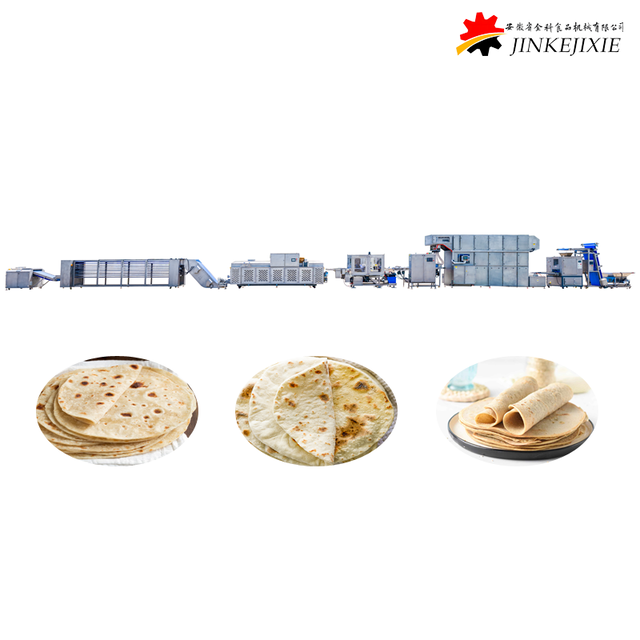
Jinke production line samples - High-quality pancake, pastry tortilla, pie, taco, and burrito products
You are here: Home / Blogs / How to Set Tortilla Dough Mixing for Consistency Between Batches

How to Set Tortilla Dough Mixing for Consistency Between Batches

Views: 0     Author: Site Editor     Publish Time: 2026-11-18      Origin: Site

Inquire

facebook sharing button
twitter sharing button
line sharing button
wechat sharing button
linkedin sharing button
pinterest sharing button
whatsapp sharing button
kakao sharing button
snapchat sharing button
sharethis sharing button

Set tortilla dough mixing by controlling flour absorption, water addition basis, mixing time, energy input, dough development, and batch records—not by copying a universal time or hydration number. Use lab dough tests to define a starting window, then lock the production setpoint only after trial batches run cleanly through forming, baking, cooling, and packaging.

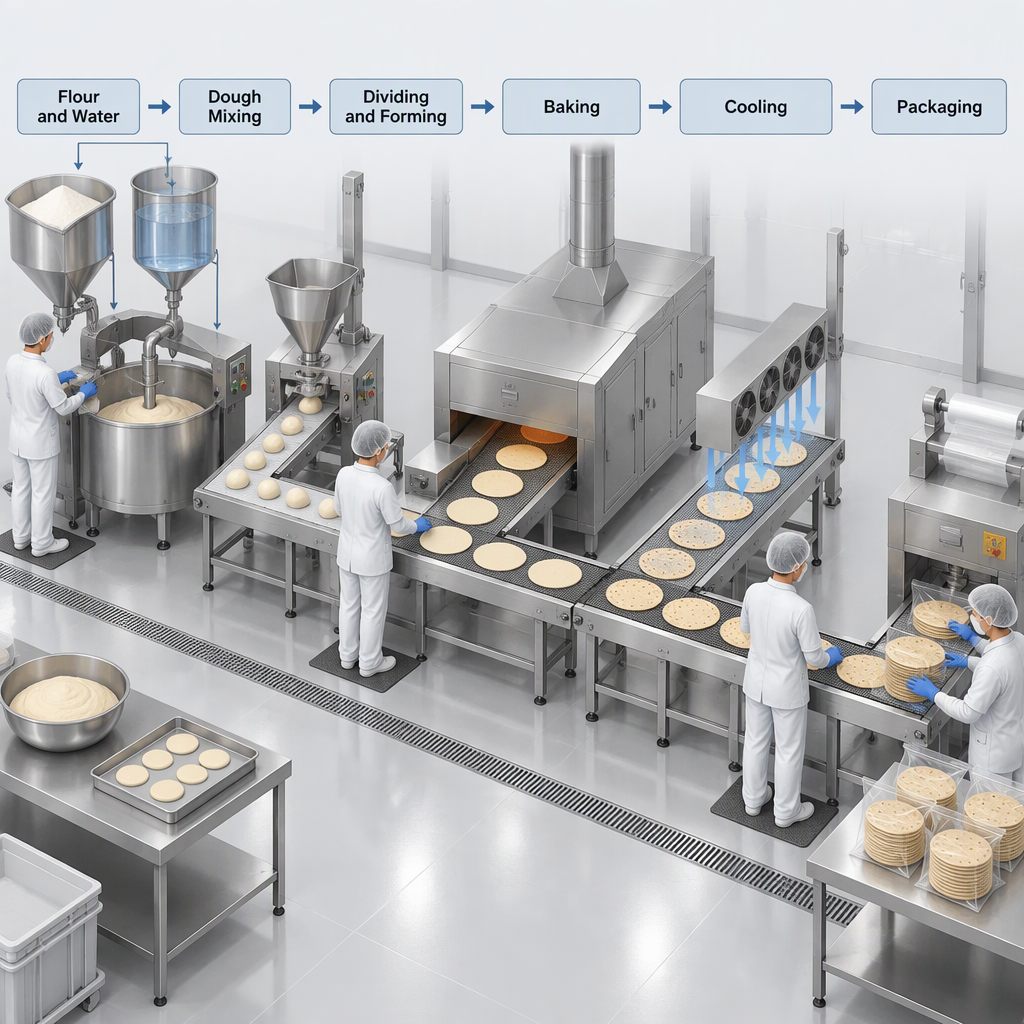
Industrial tortilla dough workflow linking mixing, forming, baking and cooling

Start with the dough variables that actually move batch consistency

The first controls should be flour lot identity, flour moisture or absorption basis, water addition, ingredient order, mixing time, mixing intensity, dough development, and how the mixed dough behaves before forming.

  • Name the flour test or dough test used when discussing absorption, development time, stability, or mixing tolerance, because recognized dough methods measure related properties but do not all produce interchangeable values.
  • Record the water addition basis, including whether flour moisture has been considered, because consistency testing can calculate absorption against a target dough consistency.
  • Treat mixer speed, batch size, and mixing time as an energy-input package rather than isolated settings, because high-speed mixing rheology evaluates resistance to mixing and dough quality under mechanical energy input.
  • Track development time, stability, and mixing tolerance as practical indicators when flour behavior changes from one lot or recipe to another.

Translate lab absorption data into production mixing settings

Use lab absorption and rheology data to choose a starting water range and mixing window, then adjust in production trials until the dough divides, presses, bakes, and cools consistently.

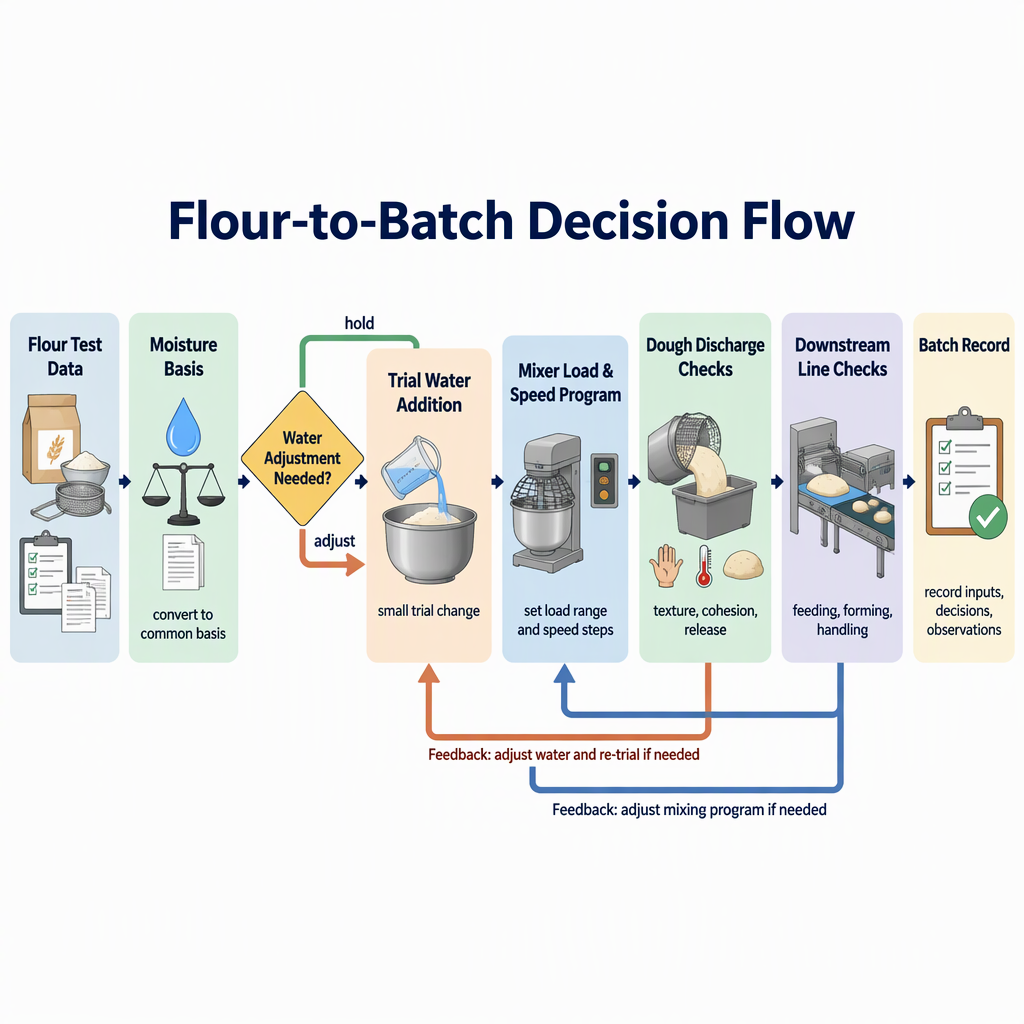
Decision flow from flour test data to production tortilla dough mixing setpoints
  1. Start with the lab method report: absorption, development time, stability, and mixing tolerance give a structured baseline for how the flour behaves during mixing.
  2. Convert the lab water basis into a plant trial sheet that records flour moisture, target consistency, actual water addition, and dough feel at discharge.
  3. Run production trials at the intended batch size and mixer loading so that mechanical energy input is represented by the actual mixer, not only by a bench test.
  4. Check the trial dough through the connected tortilla line stages, because dough preparation, forming accuracy, resting time, baking temperature, cooling capacity, and packaging speed must work as a continuous system.

For terminology and test selection, the Cereals & Grains Association physical dough test methods list Farinograph, Mixograph, Consistograph, Mixolab, Extensigraph, Alveograph, and doughLAB methods for evaluating flour and dough behavior.

Build a batch-trial record before locking the setpoint

A reliable setpoint needs a batch-trial record that connects raw material data, mixer settings, dough observations, and downstream tortilla results.

Record field Why it matters Buyer action
Flour lot, test method, absorption, development time, and stability These values describe how the flour behaves during mixing and whether comparison data were produced by the same method. Require the same fields on trial sheets and supplier samples.
Moisture basis, water addition, and target consistency Water addition depends on the basis used to reach the desired dough consistency. Separate formula water from correction water in the record.
Mixer load, mixing time, speed program, and discharge condition Mechanical energy input changes the resistance and development observed during mixing. Record the actual production settings used, not only the formula.
Dough behavior under process heat or later thermal steps Protein development, water absorption, starch gelatinization, enzyme activity, and retrogradation can be part of broader dough behavior evaluation. Check whether mixing adjustments also change baking and cooling performance.
  • Before anyone reaches into a mixer bowl, scraper area, or dough discharge zone for manual inspection, switch off the machine, disconnect the applicable power source, and follow the model manual’s permitted access procedure only.
  • Keep one record format for all trials so changes in absorption, development, stability, and mixing tolerance can be compared without changing the measurement language.
  • Add downstream observations such as divider behavior, pressing uniformity, baking response, cooling condition, and packaging flow because the mixed dough must support the full line.

Respect recipe and flour limits before copying settings

One tortilla dough mixing setting should not be copied across different flours, masa systems, or clean-label formulas without new trials, because ingredient treatment can change water absorption, rheology, and tortilla characteristics within its tested scope.

When a setting may transfer

A previous setting is a useful starting point when the flour type, test method, absorption basis, product target, and line sequence remain comparable.

When a setting needs new trials

New trials are needed when formula changes alter protein behavior, water absorption, starch behavior, or thermal response during the process.

Check mixing against the whole tortilla line, not the mixer alone

Tortilla dough mixing is acceptable only when the mixed dough supports the forming, resting, baking, cooling, and packaging sequence required by the line.

  1. Verify dough preparation first: the dough should discharge in a condition that can be divided or fed without damaging the intended product shape.
  2. Confirm forming accuracy: pressing or forming problems can signal that the dough is too tight, too slack, underdeveloped, or overmixed for that process window.
  3. Check baking and cooling together: a dough that forms well can still create problems if baking temperature, cooling capacity, and packaging speed are not matched to the product.
  4. Document the accepted window as a line setting, not only as a mixer setting, because tortilla production stages operate as one continuous system.

Prepare these RFQ inputs for a mixing-to-cooling line discussion

Before requesting a tortilla line proposal, prepare product, formula, dough, forming, baking, cooling, sanitation, and line-interface data so the supplier can discuss the application without guessing.

  • Define the product family: flour tortilla, corn tortilla, flatbread, or another pastry-style product category relevant to industrial flatbread or tortilla equipment.
  • Share the required process sequence, including dough preparation, forming accuracy, resting time, baking temperature, cooling capacity, and packaging speed.
  • Provide flour or dough test data with the named method, especially when absorption or development values are used to justify the requested mixing window.
  • Provide formula water, flour moisture basis, target consistency, and any plant correction rules used during production.
  • Explain sanitation and line access expectations as buyer requirements to be reviewed against the supplier’s current equipment documentation and the factory’s own food-safety program.

Conclusion

The safest way to set tortilla dough mixing is to define the test method, run controlled production trials, and approve a documented operating window that supports the full tortilla line.

  • Use recognized flour and dough measurements to make mixing decisions traceable.
  • Treat time, speed, load, and dough resistance as connected parts of mixing energy.
  • Approve the final setting only after the dough performs through forming, baking, cooling, and packaging.
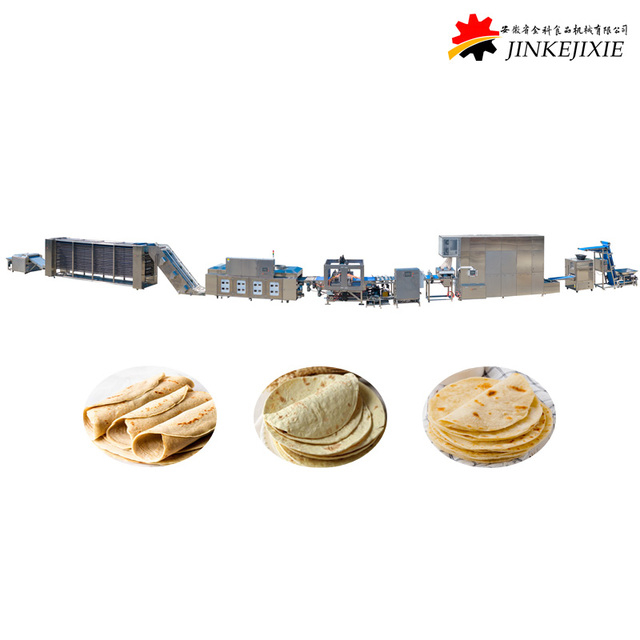
Factories comparing equipment should separate general dough science from supplier scope: first-party product information can describe available flatbread and tortilla equipment categories, but batch consistency still depends on the buyer’s flour, formula, test data, trial records, and operating discipline.

FAQs about tortilla dough mixing consistency

Most follow-up questions concern test methods, transferable settings, trial records, and how mixing connects to the rest of the tortilla line.

Why does the chosen test method need to be named when comparing absorption values?

Because Farinograph-related procedures and reporting bases may not yield identical values, the method used should be specified when comparing absorption or farinogram data.

Can one tortilla dough mixing time work for every plant?

No. Mixing time should be developed with the actual mixer load, speed program, formula, and dough resistance rather than copied as a universal value.

Which lab data are most useful before a production trial?

Absorption, development time, stability, mixing tolerance, and related rheology results are useful because they describe how flour and dough behave during mixing.

How should a factory handle a new flour lot?

Compare the new lot using the same named test method and then confirm water addition and mixing behavior in a controlled production trial.

Can clean-label or corn-based formulas use the same setting as wheat flour tortillas?

They should be trialed separately, because ingredient treatment and flour type can change water absorption, rheology, and tortilla characteristics within the tested formulation system.

Why include baking and cooling in a mixing discussion?

The mixed dough must work with forming accuracy, resting time, baking temperature, cooling capacity, and packaging speed as part of one continuous tortilla production system.

What should be sent to an equipment supplier before an RFQ meeting?

Send the product category, formula basis, dough test data, desired process sequence, batch size assumptions, sanitation expectations, and any current trial records relevant to industrial flatbread or tortilla equipment.

JOIN OUR MAILING LIST

Get the latest updates on new products and upcoming sales.

  +86-18256028630
   Building C81, JiaHai Industry Park, No3768, XinBengBu Road, Hefei City,Anhui Province,China

PRODUCTS

SOLUTION

QUICK LINKS

Copyright © 2026 AnHui JinKe Foodstuff Machinery Co.,Ltd. All Rights Reserved. Sitemap. Privacy Policy.