Start with a trial window, not a universal setpoint
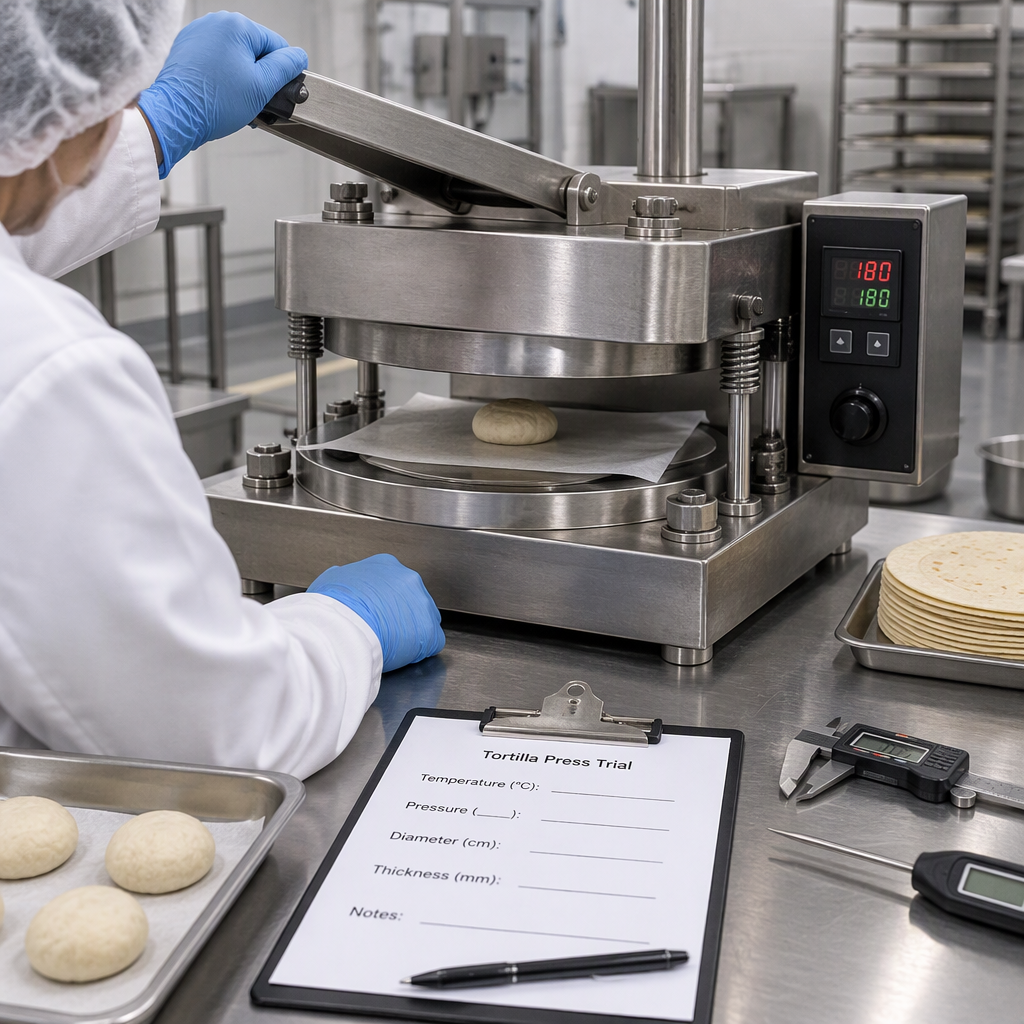
The right starting point is a controlled trial window based on your recipe, dough condition, target size and downstream process, because flour tortillas may be formed by hot pressing or die cutting and hot pressing uses heated hydraulic stamping rather than a single setting that fits every product.
- Define the product target first: tortilla diameter, thickness, weight range, surface appearance and whether the process is hot-pressed or die-cut.
- Separate flour and formulation families in the trial plan, because corn-flour tortilla properties can depend on flour type, additives, starch behavior and processing conditions.
- Decide which measurements are process controls, which are quality checks and which may become food-safety records in your facility’s plan.
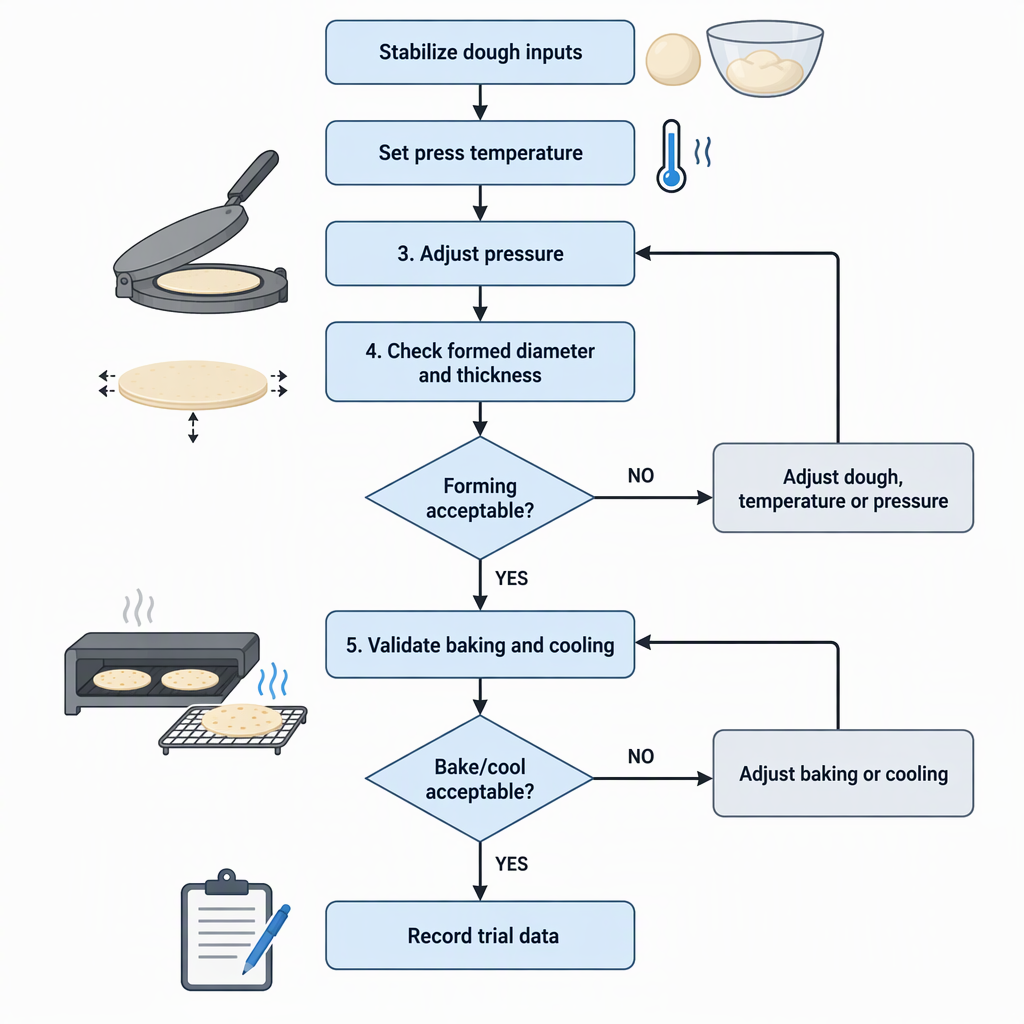
- Run small, documented changes to press temperature and pressure instead of changing dough rest, press heat, pressure and bake settings at the same time.
For powered equipment access during cleaning, jam removal or inspection, switch off and disconnect the relevant electrical or hydraulic power source before manual access, then use only the access points and procedures permitted by the specific machine manual.
Lock the dough inputs before adjusting the press
Fix the dough variables before judging press settings, because ingredient system, flour behavior and processing conditions can change tortilla texture and forming response.
- Record flour-tortilla process assumptions such as dough temperature, resting or proofing conditions, bake target and cooling approach before you compare press trials.
- Keep corn-flour type, additive system and hydration approach consistent within a trial series, because corn-flour tortilla research links tortilla properties to flour type, additives and starch gelatinization behavior.
- Measure dough piece weight and dough-ball condition before pressing so a diameter or thickness change is not mistakenly attributed only to pressure.
- Separate formula development trials from equipment-selection trials; when the formula is still changing, press temperature and pressure results are less useful for RFQ comparison.
For corn-based products, the open-access study The Properties and Tortilla Making of Corn Flour from Enzymatic Wet-Milling is useful background on how flour source and starch behavior can affect tortilla texture, but its findings should be applied only within a comparable corn-flour context.
Set press temperature by product response
Set tortilla press temperature by observing dough release, surface setting, diameter, thickness and bake response, because hot pressing uses heated plates but published process context does not provide one universal plate temperature for every tortilla formula.
| Trial observation | Temperature decision | Buyer check |
|---|---|---|
| Tortilla releases cleanly and holds the target shape through baking | Keep the temperature point and test pressure or dwell changes separately | Confirm the result across normal dough temperature variation |
| Surface sets too aggressively before target diameter is reached | Reduce heat within the equipment’s permitted range or review dough extensibility before increasing pressure | Check whether the issue is formula, rest time or press heat |
| Corn-based product becomes unexpectedly firm after forming and baking | Review formulation and starch behavior before treating temperature as the only cause | Compare only with trials using the same corn-flour system |
If a temperature value is part of a facility’s food-safety control, set it through the site’s hazard analysis and validation process rather than treating a supplier trial note as a critical limit.
Set pressure by thickness, diameter and dough recovery
Set pressure by measuring the formed tortilla, not by copying a generic hydraulic number: the pressure setting should help reach target thickness and diameter without tearing, edge defects or excessive spring-back.
| Observed result | Likely trial action | Do not overlook |
|---|---|---|
| Diameter is small and thickness is high | Increase pressure gradually within the machine’s rated range, or review dough rest if the dough resists spreading | Dough weight and dough temperature |
| Diameter is reached but edges tear or thin spots appear | Back off pressure or adjust the dough condition before changing heat | Formula extensibility and press dwell |
| Texture shifts after bake in corn-based trials | Compare pressure changes only after flour and additive variables are fixed | Starch behavior and ingredient system |
- Take measurements immediately after pressing and again after baking to see whether formed dimensions survive the full process.
- Change pressure in small steps while keeping press temperature, dough weight and dwell time stable.
- Record the setting, measurement method, operator, time and acceptance decision if the value supports a process control.
Validate the setting through baking and cooling
A press setting is not approved when the tortilla leaves the press; it must still pass baking, cooling and packaging checks because forming is only one step in the tortilla process.
| Stage | What to verify | Why it affects approval |
|---|---|---|
| Pressing | Diameter, thickness, shape, surface and release | Shows whether temperature and pressure can form the product consistently |
| Baking | Color, flexibility, texture and dimensional stability after heat | Shows whether the formed tortilla behaves correctly in the downstream thermal step |
| Cooling before packaging | Product temperature, handling condition and line timing before pack-out | The supplier’s cooling article discusses the risk of packaging warm tortillas and the role of cooling conveyors in line design |
When a trial reaches the packaging stage, include cooling capacity and conveyor timing in the equipment discussion instead of treating the press as an isolated machine.
Document safety, sanitation and trial records
Treat press trials as documented process studies: food-safety plans and critical limits are process- and facility-specific, and hazard analysis considers ingredients, process steps and equipment.
The FDA’s HACCP Principles & Application Guidelines explain that critical limits may be based on factors such as temperature, time, physical dimensions, humidity, moisture level and water activity; use your facility’s adopted food-safety system to decide which tortilla-trial values require formal control.
- Record the recipe version, ingredient lot logic, dough temperature, press temperature, pressure indication, dwell time, formed dimensions, bake result and cooling result.
- Define who can approve a trial setting and which instruments must be calibrated or checked before the setting is used for production decisions.
- Before cleaning, clearing dough or reaching into any guarded area, switch off and disconnect the relevant power source, then follow the specific equipment manual and site lockout procedure.
- Do not convert a successful trial note into a food-safety critical limit without facility-specific hazard analysis and validation.
Prepare RFQ data before choosing equipment
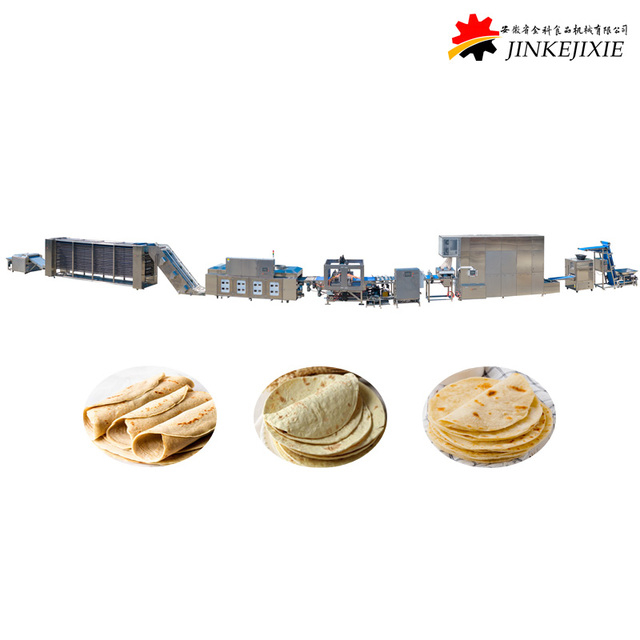
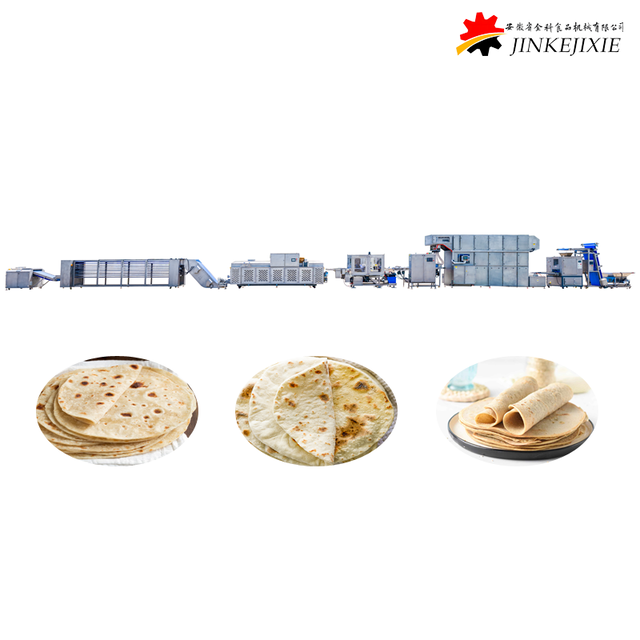
Before sending an RFQ, prepare trial data that connects the tortilla recipe, forming target, baking, cooling and line integration; the supplier’s product-center content lists tortilla and flatbread production-line modules including dough pressing, baking, cooling and stacking.
- Product format: flour, corn or other flatbread type; hot-press or die-cut process; target diameter, thickness and piece weight.
- Trial window: acceptable press-temperature range, pressure indication range, dwell time and visible product response at each point.
- Control needs: which measurements are quality records, which are safety records and which need calibration or verification.
- Line connection: baking time, cooling route, stacking condition and packaging temperature target.
- Equipment scope: whether the buyer needs a stand-alone forming solution or a connected line with pressing, baking, cooling and stacking modules.
Some listed tortilla production-line entries on the supplier’s product-center page state production-data tracking for parameters, output, temperature and speed; ask the supplier to confirm which exact model and control package applies to your trial record needs.
Conclusion
Approve tortilla press temperature and pressure only after the setting has formed the product, survived baking and cooling, and produced records that are useful for equipment selection.
- Do not buy equipment around a copied setpoint; buy around a verified product trial window.
- Keep flour, hydration, additives and dough handling stable before comparing press settings.
- Treat safety-related limits and sanitation access as facility-specific controls, not informal trial notes.
FAQs about tortilla press temperature and pressure
These short answers help buyers keep tortilla press trials focused on useful, defensible process data.
Are hot-press and die-cut tortillas adjusted the same way?
No. Flour tortillas can be produced by hot pressing or die cutting, and hot pressing uses heated hydraulic stamping, so the forming variables and trial logic are not identical.
Can one published temperature or pressure setting work for every tortilla recipe?
No. Recipe type, flour behavior, additives, starch properties and processing conditions can change tortilla texture and forming response, so a copied setting should not replace trials.
Should a press trial stop once the tortilla leaves the press correctly?
No. The formed tortilla still has to pass baking, cooling and packaging-readiness checks, including cooling before packaging where the line design requires it.
What pressure value should be written in the RFQ?
Write the pressure indication used in your trial, the machine context and the resulting tortilla dimensions; do not request a universal hydraulic value without matching it to formula, press design and product target.
When does press temperature become a food-safety record?
It becomes a food-safety record when your facility’s hazard analysis and control plan identify that temperature as a control or critical limit for the specific process.
Should corn and flour tortillas share one trial plan?
They can share the same documentation structure, but they should not share conclusions unless the ingredient system and processing behavior are comparable.
What data helps a supplier configure a production line?
Provide product dimensions, formula family, trial temperature and pressure window, output target, baking and cooling requirements, and whether the project needs pressing, baking, cooling and stacking modules.