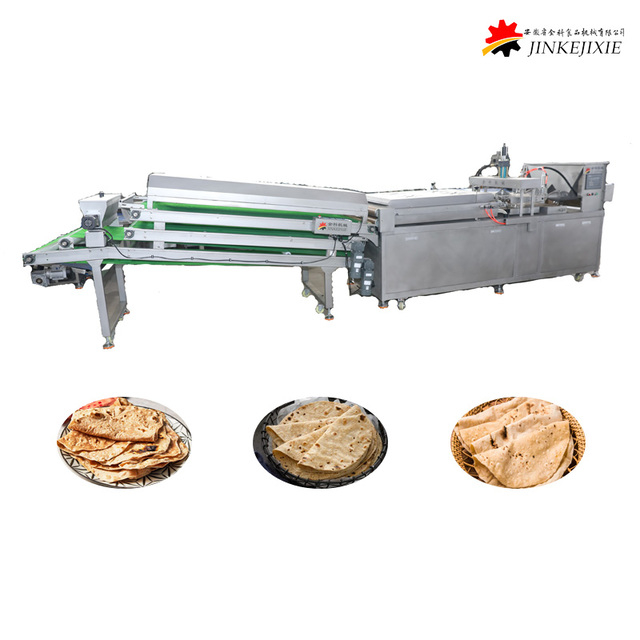
Choosing the wrong tortilla press can affect product quality and production efficiency. Should you choose hydraulic or mechanical pressing? This guide explains both systems, Tortilla Production Line integration, and how to size molds for consistent tortilla dimensions.
What Are the Differences Between Hydraulic and Mechanical Tortilla Presses?
Hydraulic and mechanical presses both apply force to dough. However, their drive systems and movement control differ. These differences affect machine operation and maintenance.
Hydraulic Pressing: How Does It Generate Pressure?
A hydraulic tortilla press uses fluid power to generate pressing force. Its main components include a pump, hydraulic fluid, cylinders, and pistons. The pump supplies pressurized fluid to the cylinder.
The piston moves the pressing plate toward the dough. Hydraulic pressure and cylinder area determine the available force. Operators can adjust operating pressure within the machine's rated limits.
This design can provide controlled pressing force. It suits applications requiring adjustable pressing conditions. However, actual performance depends on cylinder design, hydraulic stability, and machine control.
Mechanical Pressing: How Does Its Drive System Work?
A mechanical tortilla press uses a motor and transmission system. Depending on its design, it may use gears, crank mechanisms, cams, or other linkages. These components convert motor rotation into pressing movement.
The mechanical system controls the movement of the pressing plate. Its geometry and drive settings influence the pressing cycle. Accurate alignment helps maintain consistent movement.
Mechanical presses can support repeatable production cycles. Their suitability depends on the drive design and required forming force. Buyers should examine the actual transmission structure before selecting a machine.
Pressure Control and Tortilla Thickness Consistency
Both systems need suitable pressing force. However, applying more force does not always improve tortilla quality. Excessive pressure may damage dough or create unwanted edge deformation.
Hydraulic systems regulate force through hydraulic controls. Mechanical systems rely on their drive mechanism and machine adjustments. Their control methods depend on the specific design.
Finished thickness also depends on dough weight and formulation. Mold dimensions and pressing time influence the result. Manufacturers should test these factors together rather than adjusting pressure alone.
Production Speed and Continuous Operation
Pressing speed affects hourly production capacity. However, the pressing cycle is only one part of the process. Loading, positioning, pressing, and unloading also require time.
Automatic feeding can reduce manual handling. Multi-station arrangements may support higher output. Their performance depends on synchronization and product specifications.
Buyers should compare actual finished pieces per hour. They should also consider product diameter and thickness. Rated machine speed does not always represent sustained factory output.
Maintenance Requirements and Operating Costs
Hydraulic presses require regular inspection of fluid systems. Operators should check oil condition, seals, hoses, pumps, and cylinders. Leaks or unstable pressure can affect production.
Mechanical presses require attention to gears and moving parts. Bearings, linkages, belts, and drive components may need inspection. Proper lubrication and alignment help reduce wear.
Both systems require preventive maintenance. Buyers should compare spare part availability and service access. Maintenance costs depend on machine design and operating conditions.
Which Pressing System Suits Different Production Scales?
Hydraulic presses may suit applications requiring adjustable pressing force. They can support different forming conditions when correctly configured. Their performance depends on the hydraulic system and control design.
Mechanical presses may suit production requiring repeatable mechanical cycles. Their cycle speed and force characteristics depend on transmission design. They may be suitable for stable, standardized production.
Neither technology is automatically better for every factory. Buyers should compare force requirements, cycle time, automation, maintenance, and product quality. Actual machine trials provide a more reliable basis for selection.
Tip: Request a pressing test using your actual dough recipe. Compare thickness, diameter, cycle time, and finished product quality.
How Do You Size an Industrial Tortilla Press Mold?
Mold sizing starts with the finished tortilla specifications. Buyers should define diameter, thickness, and dough weight first. They can then evaluate the mold and pressing plate dimensions.
Start with the Finished Tortilla Diameter
Commercial tortillas commonly use 6-inch, 8-inch, 10-inch, and 12-inch diameters. Each size requires suitable forming dimensions. The selected mold must match the target product.
However, mold diameter and finished tortilla diameter are not always identical. Dough spreading can change the final dimensions. Pressing design and recipe properties also influence the result.
Manufacturers should test the actual dough before finalizing the mold. Measure several finished tortillas after pressing. Record the average diameter and variation.
Calculate Dough Weight and Required Thickness
Dough weight influences the final tortilla dimensions. A larger portion generally produces a larger or thicker sheet. The exact result depends on dough properties and mold dimensions.
Moisture and elasticity also affect spreading. Sticky dough may spread differently from firm dough. Recipe changes can therefore require new pressing settings.
A practical approach is to test several portion weights. Keep the mold diameter and pressing conditions controlled. Record the resulting thickness and finished diameter.
For example, a factory targeting an 8-inch tortilla should test several dough weights. It should compare the resulting thickness and edge shape. The final portion weight should meet the product specification.
Match Mold Diameter with Pressing Plate Dimensions
The mold must fit the effective working area. The pressing plate should provide suitable clearance around the mold. Its dimensions must also match the machine structure.
Poor alignment can create uneven pressure. This may produce different thicknesses across the tortilla. Incorrect positioning can also affect finished shape.
Buyers should request the manufacturer's mold drawings. Confirm the usable pressing area and mounting method. Do not assume every press accepts interchangeable molds.
Check Mold Material, Surface Finish, and Heating Compatibility
Food-contact surfaces need suitable materials. Stainless steel is commonly used in food processing equipment. The exact grade and finish should meet the machine's specifications.
Surface finish affects dough release and cleaning. Rough or damaged surfaces may collect residue. Regular inspection helps maintain hygiene and forming consistency.
Some tortilla presses use heated plates. In these systems, temperature distribution becomes important. Buyers should confirm heating compatibility and temperature control before ordering molds.
Verify Mold Performance Through Production Trials
A mold should pass actual production testing. Buyers should check finished diameter and thickness. They should also inspect edges and surface appearance.
Testing should cover different dough portions. Operators should record pressure and pressing time. This helps identify a stable operating range.
The trial should also measure repeatability. Check products from different production cycles. Approve the mold only after it meets the required specifications.
Tip: Ask the supplier for a mold drawing before production. Confirm diameter, plate clearance, material, and mounting dimensions.
What Factors Affect Tortilla Pressing Performance?
Mold dimensions alone cannot guarantee consistent products. Dough characteristics and machine settings also influence forming results. Manufacturers should monitor these variables during production.
Pressing Force and Dough Characteristics
Dough hydration affects how it spreads under pressure. Higher moisture may change dough softness and adhesion. Lower moisture may increase resistance during pressing.
Portion weight also influences the required force. Different recipes may need different pressing conditions. Operators should establish suitable settings through controlled trials.
Excessive force can damage product structure. Insufficient force may leave uneven thickness. The correct setting depends on dough behavior and mold design.
Pressing Time and Production Cycle
Pressing time affects dough deformation. A very short cycle may produce incomplete forming. Excessive pressing time may reduce production efficiency.
The correct cycle depends on dough properties and machine design. Heated presses may also require temperature coordination. Operators should test pressing time alongside pressure and temperature.
Production capacity depends on the complete cycle. Feeding and unloading must remain synchronized. Stable timing helps maintain consistent output.
Mold Temperature and Heat Distribution
Heated pressing plates may influence dough handling. Temperature affects surface contact and forming conditions. It must remain within the machine's operating range.
Uneven heating can produce inconsistent results. Some areas may form differently from others. Temperature checks should cover the working surface.
Not every tortilla press uses heated molds. Buyers should confirm the equipment design. Heating requirements should not be assumed from the product name.
Mold Alignment and Finished Product Accuracy
Mold alignment affects pressure distribution. Incorrect positioning may create uneven thickness. It can also cause irregular tortilla edges.
Operators should inspect mounting points regularly. They should check plate movement and mold condition. Worn components may affect forming accuracy.
Routine inspection helps maintain product consistency. Record any changes in diameter or thickness. Correct alignment problems before they increase rejection rates.
How Does an Industrial Tortilla Press Fit into a Complete Tortilla Production Line?
A press works as one part of a larger system. Its output must match upstream dough preparation and downstream baking. Buyers should evaluate the complete Tortilla Production Line.
Dough Mixing and Portioning Before Pressing
The process begins with dough preparation. A mixer combines flour, water, oil, salt, and other ingredients. Mixing conditions influence dough consistency.
A divider creates portions of controlled weight. Automatic feeding transfers them toward the press. Stable portioning supports consistent finished dimensions.
The press must match the feeding system. Poor synchronization can cause product accumulation. Buyers should check the full transfer arrangement.
Pressing, Forming, and Baking Integration
After pressing, formed tortillas move toward the oven. Conveyor speed must match pressing output. Incorrect synchronization may create gaps or overlapping products.
The baking oven controls heating and cooking time. Product thickness affects the required settings. Stable feeding helps maintain uniform baking.
Buyers should compare press output and oven capacity. The slowest station can limit the entire line. Balanced equipment selection improves production flow.
Cooling, Stacking, and Downstream Automation
Baked tortillas need controlled cooling. Cooling conveyors reduce product temperature before stacking. This helps prepare products for packaging.
Automatic stackers collect tortillas into specified quantities. Their capacity must match the cooling system. Otherwise, finished products may accumulate.
PLC controls can coordinate machine operations. They may monitor speed, temperature, output, and alarms. Buyers should confirm the available functions for each configuration.
How Should Manufacturers Compare Industrial Tortilla Press Specifications?
A reliable equipment comparison requires more than checking machine prices. Buyers should review pressing force, working area, mold range, and output. They should also confirm the actual operating conditions.
Compare Pressing Force and Working Area
Pressing force indicates the machine's available forming capacity. Buyers should check rated force and operating limits. They should also confirm how force is controlled.
Working area determines the usable forming space. It must accommodate the selected mold. Plate dimensions and mold clearance should match the machine design.
For hydraulic systems, cylinder area and hydraulic pressure influence force. Mechanical systems depend on drive geometry and transmission design. Ask suppliers for technical drawings and rated specifications.
Evaluate Mold Size Range and Product Flexibility
Different tortilla sizes may require different molds. Buyers should confirm the supported diameter range. They should also check changeover procedures.
Thickness adjustment is another important specification. It affects product flexibility and forming control. The adjustment range must suit the target recipe.
Ask whether molds are interchangeable. Confirm replacement costs and lead times. These details influence future production planning.
Check Production Capacity and Automation Features
Rated output should match the required product size. Larger tortillas may affect cycle time. Dough weight and forming conditions also influence output.
Automation can reduce manual handling. PLC controls may coordinate pressing and conveyor movement. Touchscreens can help operators manage settings.
Buyers should request actual production test results. Confirm the output under defined conditions. Include downtime and changeovers in capacity planning.
What Should Buyers Check Before Purchasing a Tortilla Press?
A suitable press must match the product and factory. Buyers should verify specifications before placing an order. They should also evaluate safety and long-term service support.
Confirm Product Specifications and Mold Compatibility
Prepare a clear product specification sheet. Include tortilla diameter, thickness, and target weight. Provide the dough recipe and expected output.
Ask the supplier to confirm mold compatibility. Request drawings and working area details. Confirm whether additional molds require separate tooling.
A sample trial can reveal practical limitations. Check product dimensions and repeatability. Keep the approved sample as a quality reference.
Evaluate Food Safety and Operator Protection
Food-contact materials should meet applicable requirements. Buyers should confirm material grades and surface finishes. Cleaning access should also be practical.
Protective covers reduce access to moving parts. Emergency stops support operator safety. Electrical and mechanical safeguards should match local requirements.
Ask for operating and cleaning instructions. Confirm how operators access the pressing area. Safety checks should form part of machine acceptance.
Verify Installation, Maintenance, and Technical Support
Installation requires suitable floor space and utilities. Confirm electrical requirements and machine dimensions. Plan access for maintenance and material handling.
Operator training should cover setup and cleaning. It should also include routine inspection and troubleshooting. Clear instructions help reduce operating errors.
Check warranty terms and spare part availability. Confirm technical support arrangements before ordering. These factors influence long-term equipment reliability.
Tip: Include mold drawings, sample approval, and acceptance test conditions in the purchase agreement.
Conclusion
Choosing the right tortilla press depends on production needs and mold dimensions. Hydraulic and mechanical systems offer different operating advantages.
Anhui Jinke Foodstuff Machinery Co., Ltd. provides automated JKBP production lines. Its integrated equipment supports consistent forming, baking, cooling, and efficient tortilla manufacturing.
FAQ
Q: What is an industrial tortilla press?
A: It forms dough into uniform tortilla sheets.
Q: Hydraulic vs mechanical tortilla press: Which is better?