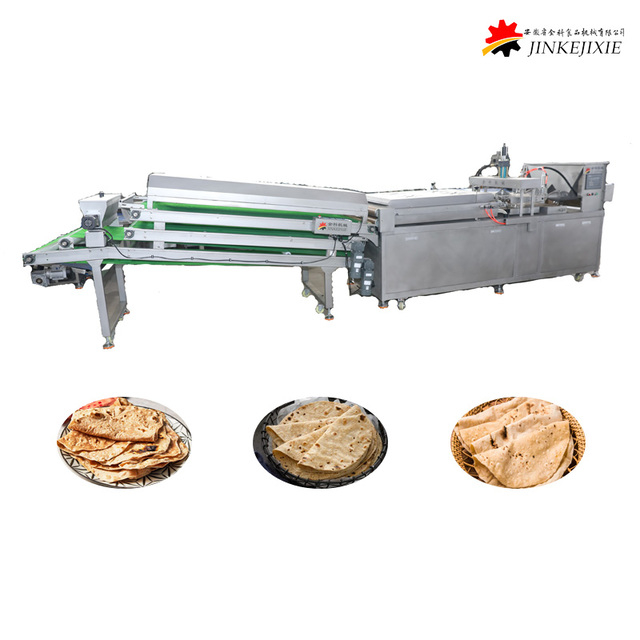
What creates the hollow pocket inside pita bread? It starts with controlled dough preparation and proper baking. A reliable Pita Bread Production Line connects mixing, resting, forming, and baking. This guide explains pocket formation, dough resting time, and oven selection. It also helps manufacturers choose suitable equipment for consistent production.
How Does Pocket Formation Work in an Industrial Pita Bread Production Line?
Pocket formation is the defining feature of traditional pita bread. It happens during baking when internal moisture turns into steam. The steam creates pressure between the dough layers.
However, successful expansion starts before the dough enters the oven. Mixing, resting, portioning, and forming all affect the result. Each stage must prepare the dough for controlled baking.
Dough Hydration and Gluten Development
Pita dough usually contains wheat flour, water, yeast, and salt. Some recipes also include oil or other ingredients. Their proportions influence dough consistency.
Hydration determines how easily the dough stretches during forming. Too little water may produce stiff dough. Excessive hydration can make feeding and handling difficult.
Gluten development provides the structure needed for expansion. Proper mixing creates an elastic dough network. It helps the dough stretch without tearing during baking.
Why Dough Resting Supports Pocket Formation
After mixing, dough needs time to relax. Resting reduces internal tension within the gluten structure. This helps the dough become easier to shape.
Insufficient resting may cause dough shrinkage. The dough can contract after pressing or sheeting. This may create inconsistent dimensions before baking.
Controlled resting supports more uniform forming. It helps dough pieces maintain their intended shape. Consistent dough behavior also improves production stability.
Dough Thickness and Diameter Before Baking
Dough weight influences the finished pita diameter. Larger portions generally produce larger flatbreads. However, thickness and dough characteristics also affect the result.
Pressing or sheeting controls the dough's final dimensions. Uneven thickness can create differences in heat transfer. Some areas may expand faster than others.
Manufacturers should check diameter and thickness regularly. Forming adjustments should match the intended product specifications. Consistent dimensions help improve baking uniformity.
How High-Temperature Baking Creates the Pocket
Pita pocket formation mainly occurs during baking. Rapid heating causes moisture inside the dough to evaporate. Steam pressure builds between the outer dough layers.
As the internal pressure increases, the layers separate. The dough expands and develops a hollow center. This creates the characteristic pita pocket.
The final result depends on several conditions. Dough structure, thickness, moisture, and oven performance interact. Poor control may prevent complete pocket development.
Why Baking Uniformity Matters for Pocket Quality
Uniform heating supports consistent expansion across the baking surface. Each dough piece needs suitable heat exposure. Uneven temperatures can produce inconsistent results.
Insufficient heating may prevent full expansion. Excessive heating can cause unwanted browning or dryness. Conveyor speed also influences the baking process.
Manufacturers should monitor heating zones and product movement. Temperature readings alone cannot confirm finished quality. Sample testing helps identify suitable operating conditions.
How Cooling Helps Preserve the Finished Pocket
After baking, pita bread needs controlled cooling. The process reduces product temperature before stacking. It also helps stabilize the finished structure.
Poor cooling conditions may affect product flexibility. Excessive moisture can create condensation during packaging. Uneven handling may also deform finished pita bread.
A suitable cooling conveyor supports continuous production. It transfers products toward automatic stacking equipment. Cooling capacity should match the oven's actual output. Manufacturers can explore different pita bread production machines to find suitable forming, baking, and cooling configurations for their production requirements.
Note: Pocket formation depends on the complete process. Oven temperature alone cannot guarantee consistent hollow centers.
How Long Should Pita Dough Rest Before Forming?
Pita dough resting time depends on its formulation and processing conditions. There is no single setting for every recipe. Manufacturers should consider flour properties, hydration, and dough temperature.
Factors That Influence Pita Dough Resting Time
Flour quality affects gluten development and dough elasticity. Different flour strengths may require different handling conditions. Recipe adjustments can also change resting requirements.
Hydration influences dough softness and extensibility. Yeast activity affects fermentation during production. Dough temperature also changes how quickly these processes occur.
Manufacturers should evaluate these factors together. They should observe dough behavior before forming. Production trials help establish suitable resting conditions.
Resting Time vs Proofing Time
Resting and proofing serve different purposes. Resting allows gluten to relax after mixing or dividing. It improves dough extensibility during subsequent forming.
Proofing mainly supports yeast fermentation. Yeast produces carbon dioxide during this stage. The dough develops gas and changes in volume.
Some industrial processes include both stages. Their timing and conditions may differ. Manufacturers should avoid treating resting and proofing as identical operations.
How to Control Resting Conditions in Production
Dough temperature is an important control factor. It influences gluten behavior and yeast activity. Consistent temperature supports repeatable processing.
Humidity also matters during longer resting periods. Excessive surface drying can affect dough handling. Suitable covering or controlled environments help protect the dough.
Automatic proofers and resting conveyors support organized production. They provide space for controlled dough holding. Operators can adjust the process according to recipe requirements.
Note: Resting and proofing requirements vary by recipe. Confirm the actual process before selecting a proofer.
Which Oven Is Best for Industrial Pita Bread Production?
Oven selection directly affects pocket formation and production capacity. Manufacturers should consider heating methods, temperature distribution, and baking time. The oven must also match upstream forming equipment.
Tunnel Oven vs Other Industrial Baking Configurations
A tunnel oven supports continuous baking. Products move through a heated chamber on a conveyor. This arrangement suits automated production workflows.
Other industrial ovens may use different heating arrangements. Their suitability depends on batch size and production requirements. Working width and loading methods also matter.
A continuous system can simplify equipment integration. It connects forming, baking, and cooling operations. However, the oven must match the intended product.
Gas Heating vs Electric Heating
Gas ovens use combustion systems to generate heat. They may suit factories with suitable gas infrastructure. Their operating costs depend on local energy prices.
Electric ovens use electrical heating elements. They offer controllable heating arrangements. Their suitability depends on available electrical capacity.
Both systems require suitable temperature control. Buyers should compare energy use and maintenance requirements. Local utilities also influence the final decision.
Temperature Distribution and Baking Time
Temperature distribution affects the entire pita surface. Uneven heating can cause inconsistent expansion. Multiple heating zones may help control the process.
Baking time depends partly on conveyor speed. Faster movement reduces heat exposure. Slower movement increases the baking duration.
Operators should test different settings carefully. They should check pocket formation and surface color. Finished flexibility and moisture also require inspection.
Oven Width and Production Capacity
Oven width determines available product space. Wider conveyors may accommodate more products per pass. Product spacing also affects the achievable output.
The oven should match the forming section. Otherwise, products may accumulate before baking. An undersized oven can restrict total production.
Cooling and stacking capacity also require consideration. Every downstream station should handle the expected output. Balanced equipment speeds support stable operation.
Tip: Request oven trials using your actual pita dough. Check pocket formation, surface color, and finished flexibility.
What Equipment Does a Complete Pita Bread Production Line Include?
An industrial Pita Bread Production Line connects several processing stations. Each machine prepares the product for the next stage. Their coordination influences product consistency and factory efficiency.
Dough Mixer and Ingredient Preparation
The production process starts with ingredient preparation. Flour, water, yeast, and salt enter the mixing system. Their proportions determine the dough's basic properties.
An industrial mixer distributes ingredients throughout the dough. Consistent mixing supports uniform hydration. It also helps develop suitable gluten structure.
Manufacturers should select mixers based on batch requirements. Mixing capacity must support downstream production. Recipe changes should also be considered.
Dough Divider, Rounder, and Proofer
The dough divider separates bulk dough into portions. Accurate portioning helps control finished product weight. It also supports consistent tortilla dimensions.
A rounder forms smooth dough balls. Uniform portions are easier to handle. They also support more stable forming conditions.
A proofer or resting conveyor provides controlled holding space. It allows dough to develop or relax as required. The selected configuration depends on the production recipe.
Pressing and Forming Equipment
Pressing equipment converts dough portions into flat sheets. Some production lines use sheeting systems instead. Both approaches require suitable thickness control.
Forming settings influence diameter and product shape. Incorrect settings may create uneven edges. They can also affect subsequent pocket development.
Manufacturers should confirm the available adjustment range. Mold dimensions and product weight must match. Actual dough trials help verify forming performance.
Baking, Cooling, Stacking, and Packaging
The oven receives formed pita dough pieces. Controlled heating supports pocket formation. Conveyor speed determines product exposure time.
After baking, products enter the cooling section. Cooling conveyors stabilize temperature and product structure. Their capacity should match oven output.
Automatic stackers collect finished pita bread. Packaging equipment then prepares products for delivery. Coordinated line speeds help prevent production bottlenecks. For integrated production, the automatic Arabic pita bread production line combines dough preparation, dividing, rounding, proofing, pressing, baking, cooling, and stacking.
What Causes Poor Pocket Formation in Pita Bread?
Incomplete pockets can result from several process problems. Manufacturers should investigate the entire production workflow. Changing oven settings alone may not solve the issue.
Uneven Dough Thickness
Uneven thickness creates different heating conditions. Thin areas may cook faster than thicker areas. This can produce inconsistent expansion.
Portion weight and forming pressure influence thickness. Mold alignment also affects product dimensions. Regular inspection helps identify forming problems.
Operators should check samples before baking. They should measure thickness across different areas. Adjustments should follow actual product measurements.
Insufficient Dough Resting
Insufficient resting may leave excessive dough tension. This can cause shrinkage after forming. It may also affect product dimensions.
Dough that resists stretching needs further evaluation. Operators should review mixing and resting conditions. They should also check dough temperature.
Suitable resting improves dough extensibility. However, longer resting is not always better. The correct conditions depend on the formulation.
Incorrect Oven Temperature or Baking Time
Low temperatures may limit rapid expansion. Steam pressure may not develop sufficiently. This can result in incomplete pockets.
Excessive heat may cause rapid surface browning. The outside may cook before the product develops evenly. Incorrect conveyor speed can create similar problems.
Manufacturers should review temperature and baking duration together. They should inspect products from different oven positions. Adjustments should follow repeated production trials.
Inconsistent Moisture and Dough Formulation
Changes in hydration affect dough behavior. Low moisture may produce stiff dough. Excessive moisture can make feeding difficult.
Flour properties also influence processing results. Different batches may require recipe adjustments. Ingredient weighing should remain consistent.
Manufacturers should document approved formulations. They should monitor moisture and dough consistency. Stable ingredients help reduce production variation.
How Should Manufacturers Select a Pita Bread Production Line?
Choosing suitable equipment requires a complete production assessment. Buyers should consider product specifications and factory requirements. They should also evaluate future production plans.
Match Equipment to Pita Bread Dimensions
Start by defining the finished product diameter. Confirm thickness and target dough weight. These specifications influence forming equipment selection.
Product appearance also deserves attention. Buyers should define acceptable pocket development. They should check edge quality and surface color.
Provide these details before requesting quotations. Suppliers can then evaluate suitable configurations. This reduces the risk of incorrect equipment selection.
Calculate Required Production Capacity
Determine the required hourly output first. Consider expected demand and working hours. Include reasonable allowances for cleaning and changeovers.
The mixer must supply enough dough. Dividing and forming equipment must maintain the required speed. The oven must process the same production volume.
Cooling and stacking also need sufficient capacity. A slow downstream station can restrict output. Balanced equipment selection improves overall efficiency.
Evaluate Automation and Production Control
Automatic feeding reduces repetitive manual operations. PLC systems coordinate key machine functions. Touchscreen controls help operators manage settings.
Conveyor synchronization supports continuous processing. Temperature controls help maintain baking conditions. Alarms can also assist routine monitoring.
Buyers should review the actual control system. Confirm which parameters operators can adjust. Ask suppliers about available automation functions.
Consider Factory Layout and Future Expansion
Equipment dimensions influence factory planning. Buyers should check floor space and access routes. Maintenance clearance is equally important.
Utility requirements must be confirmed before installation. These may include electricity, gas, and ventilation. Cleaning access should also be considered.
Future capacity requirements deserve attention. Modular configurations may support expansion. However, expansion plans should remain realistic.
What Should Buyers Verify Before Purchasing Pita Bread Machinery?
Equipment quotations do not tell the complete story. Buyers should verify product performance and machine specifications. They should also review installation and service arrangements.
Request Sample Production Using Actual Recipes
Provide the supplier with your intended dough formulation. Ask for a complete production demonstration. The trial should include forming and baking.
Check pocket formation and product dimensions. Inspect thickness, surface appearance, and flexibility. Record actual hourly production output.
Keep approved samples for future comparison. They provide a practical quality reference. Include testing conditions in the purchase agreement.
Check Oven Specifications and Forming Adjustments
Review the oven's heating configuration. Confirm temperature controls and conveyor speed. Check working width and product spacing.
Ask about available forming adjustments. Confirm the supported diameter and thickness ranges. Mold compatibility should also be documented.
Request technical drawings and machine specifications. These documents support factory layout planning. They also help evaluate installation requirements.
Confirm Installation and After-Sales Support
Installation requires careful equipment coordination. Confirm machine positioning and utility connections. Plan access for maintenance and cleaning.
Operator training should cover daily operations. It should also include routine inspection procedures. Clear instructions reduce avoidable operating errors.
Check warranty terms and spare parts availability. Confirm technical support arrangements before ordering. Reliable service helps maintain long-term production stability.
Tip: Include approved samples and production acceptance criteria in your equipment purchase agreement.
Conclusion
Consistent pita pockets depend on proper dough resting, uniform forming, and controlled oven conditions. The right equipment balances product quality and production capacity.
Anhui Jinke Foodstuff Machinery Co., Ltd. provides automatic pita bread production lines covering mixing, dividing, rounding, proofing, pressing, baking, cooling, and stacking. Its integrated solutions support efficient manufacturing and consistent product quality.
FAQ
Q: How does a Pita Bread Production Line form pockets?