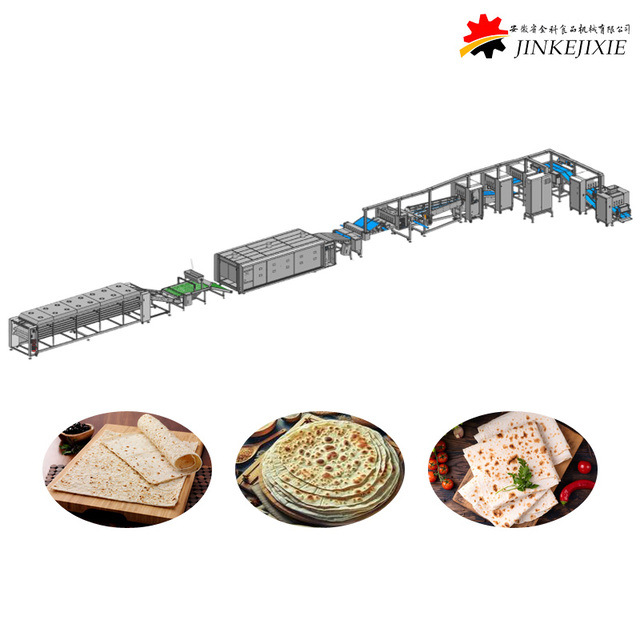
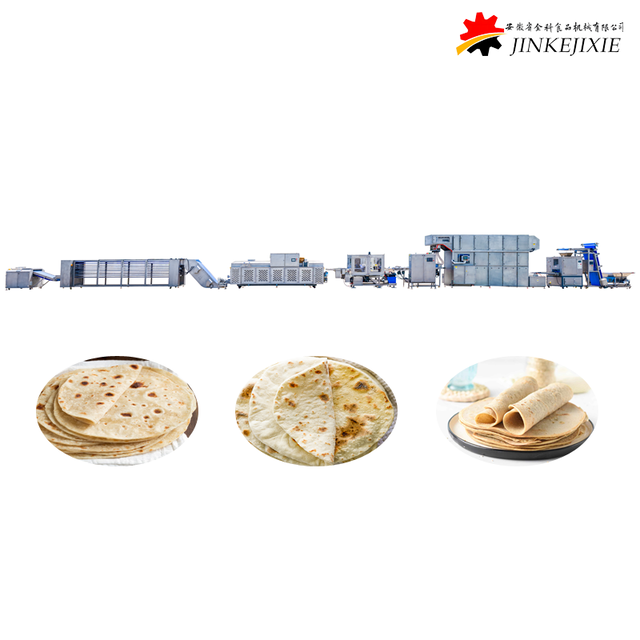
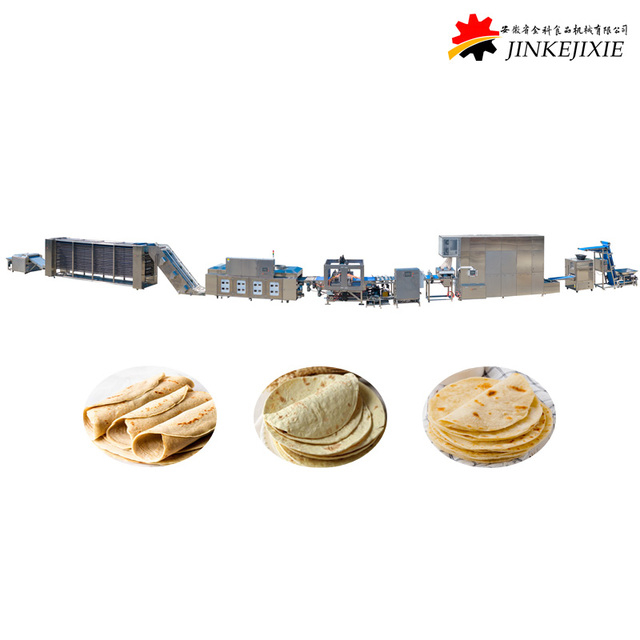
The signature characteristic of authentic lavash is its paper-thin, soft, and highly flexible texture. This delicate structure is a true hallmark of culinary craftsmanship. For centuries, artisans achieved this perfect profile through meticulous hand-rolling. Recreating this exact thinness consistently at a commercial scale, however, remains a formidable challenge for modern bakeries. Manual rolling is inherently labor-intensive and painfully slow. It is also notoriously susceptible to human error. Inconsistent dough thickness inevitably leads to uneven baking, structural weak points, and significant ingredient waste.
To overcome these operational hurdles, forward-thinking facilities are turning to the automatic lavash flatbread line. By removing the guesswork from flatbread manufacturing, modern automated equipment provides engineered precision. Manual labor simply cannot match this level of consistency. This comprehensive guide explores exactly how to control and maintain optimal dough parameters. We will cover everything from foundational dough preparation to mechanical roller calibration and advanced sensor technology.
Key Takeaways
Dough Consistency is the Foundation: Proper hydration and adequate resting times are non-negotiable. Even the most sophisticated machinery cannot compensate for poorly mixed or improperly rested dough.
Gradual Multi-Roller Sheeting: Thickness must be reduced incrementally through a series of calibrated rollers to prevent the dough from tearing and to preserve its delicate gluten structure.
Precision Calibration: Both manual micrometers and automatic adjustments to roller gaps dictate the final millimeter-exact thickness of the baked flatbread.
Smart Technology Integration: Modern production lines utilize Programmable Logic Controller systems and optical sensors to monitor and correct dough thickness in real-time.
Systematic Troubleshooting: Most common thickness inconsistencies, such as dough springback or roller adhesion, can be quickly resolved by tweaking conveyor speeds, dusting flour volumes, or inline resting times.
Why Thickness Matters in a Lavash Production Line
In high-volume commercial manufacturing, bakery managers obsess over dough thickness. Why? Because the caliper of the dough sheet acts as the central metric dictating economic efficiency, output quality, and the overall success of the production cycle.
Impact on Baking Time and Quality
Picture the environment inside a continuous commercial tunnel oven. Baking parameters such as ambient temperature and conveyor speed are rigidly fixed. When dough enters this intense thermal environment with uneven thickness, heat transfer becomes wildly disproportionate. Thinner sections rapidly dehydrate. This leads to brittle, burnt edges that shatter during packaging. Conversely, thicker patches remain undercooked. You get a raw doughy center posing both quality and food safety risks. Maintaining a strictly uniform thickness ensures an even bake. It allows the dough to develop that highly sought-after authentic blistered appearance.
Shelf Life, Flexibility, and Yield
The primary functional appeal of lavash lies in its utility as a versatile wrap. Precise thinness allows the bread to be folded and rolled tightly around fillings without cracking. Sheet the flatbread too thickly, and it becomes rigid. It will stale rapidly, drastically reducing commercial shelf life. Furthermore, strict thickness control directly maximizes ingredient yield. By maintaining a uniform minimal thickness profile, bakeries extract a higher volume of individual flatbreads from a single batch of dough. This directly pads profit margins and minimizes organic waste.
The Role of Dough Preparation in Flatbread Manufacturing
It is a common misconception that thickness control begins at the mechanical rollers. Actually, it starts inside the industrial mixing bowl. The rheological properties of the dough—specifically its flow, elasticity, and extensibility—dictate exactly how it will behave under heavy mechanical pressure.
Hydration and Gluten Development
The fundamental ratio of water to flour directly governs dough elasticity. A batch with low hydration feels excessively stiff. This creates immense mechanical resistance against the sheeters. It makes it incredibly difficult for an Armenian lavash machine to press the dough to the required millimeter specifications without overloading the motors. Conversely, overly hydrated dough lacks structural integrity. It turns into a sticky mess. This tacky dough aggressively adheres to the pressing cylinders. The result is surface tearing, gaping holes, and uneven patches. Hitting the exact hydration sweet spot is the critical first step for seamless machine processing.
Dough Resting and Proofing
During the mixing and dividing phases, the gluten network becomes tense. Forcing this stressed dough through heavy rollers triggers a frustrating phenomenon known as springback. The flattened dough violently shrinks horizontally and thickens vertically the moment it exits the rollers. To mitigate this, automated systems integrate enclosed inline resting conveyors. These specialized zones allow the gluten strands time to relax and mature. Properly rested dough accepts mechanical pressing smoothly. It retains its intended dimensions without shrinking before hitting the oven.
Understanding the Sheeting and Pressing Mechanisms
Flattening a thick block of raw dough into a continuous paper-thin sheet requires a carefully orchestrated sequence of engineered steps. Modern equipment replaces the traditional baker rolling pin with highly calibrated motorized cylinders. These are designed to handle massive volumes continuously.
The Multi-Roller System
Forcing bulk dough down to a final thickness of 1.0mm to 2.5mm in a single aggressive pass would completely rupture its cellular structure. Therefore, industrial systems employ a strategy of gradual reduction. The production line typically features three to four sequential sets of rollers. We call these sheeters and calibrators. The primary sheeter gently degasses and roughly flattens the bulk mass. Subsequent secondary rollers incrementally reduce the thickness step-by-step. This gentle phased approach prevents the gluten matrix from tearing under sudden mechanical stress. The final product remains strong yet pliable.
Cross-Rolling and Stretching
Standard cylindrical rollers stretch the dough longitudinally along the conveyor belt. Advanced machinery often incorporates a cross-roller station. These specialized units operate at a sweeping angle or utilize directional pressure to stretch the dough sheet horizontally. This dual-directional stretching is vital. It relieves unidirectional tension within the dough. It also guarantees a perfectly even thickness across the entire width of the belt. The outer edges of the lavash become just as consistent as the dead center.
Step-by-Step: Calibrating Rollers on Your Production Line
For machine operators, proper mechanical calibration is the most direct method for controlling the final product. Setting up the machine requires a keen eye for detail, precision adjustments, and a deep understanding of mechanical reduction ratios.
Setting the Initial Gap
Before initiating a production run, operators must establish the mechanical distance between the upper and lower cylinders at every single station. On traditional machines, this involves manually turning precision handwheels equipped with analog micrometers. Modern lines use digital servo-motor inputs. A standard calibration sequence follows a strict reduction path. The primary sheeter might be set to a 15mm gap to form the initial band. The secondary sheeter brings this down to 6mm. The first calibrator reduces it to 3mm, and the final finishing roller presses it to the target 1.5mm. Ensuring these gaps are perfectly parallel is crucial. A lopsided gap will cause the dough sheet to curve off the belt.
Synchronizing Conveyor Speeds
Adjusting the roller gaps only solves half of the thickness equation. The linear speed of the conveyor belts transporting the dough must perfectly match the rotational output speed of the rollers. Picture the dough moving along the line. If the receiving belt pulls faster than the dispensing rollers, the sheet undergoes violent stretching. It thins out unevenly or tears completely. On the other hand, if the belt moves too sluggishly, the dough bunches up behind the rollers, creating thick ripples. Operators must fine-tune Variable Frequency Drives to synchronize these transition zones flawlessly.
Industry Trends: The Future of Automated Flatbread Manufacturing
The commercial baking sector is currently undergoing a massive shift toward Industry 4.0 standards. Driven by surging global consumer demand for authentic clean-label and ultra-thin flatbreads, bakeries are moving away from purely mechanical setups. The latest industry trend is the integration of predictive analytics and smart sensors. Modern facilities are now utilizing data-driven manufacturing. Machines analyze ambient humidity, temperature, and dough rheology in real-time to predict how the dough will behave. This proactive approach allows bakeries to achieve unprecedented consistency. It dramatically reduces organic waste and ensures that industrial-scale flatbreads maintain an artisanal handcrafted quality. Furthermore, sustainability is taking center stage. New generation flatbread lines are optimizing energy consumption in tunnel ovens by ensuring exact dough thickness, which minimizes baking time and reduces carbon footprints.
Advanced PLC and Sensor Controls for Automatic Thickness Adjustment
Transitioning from manual oversight to full digital automation removes the inherent risk of human error from the calibration process. High-tech digital features ensure that thickness remains absolute even during grueling multi-hour production shifts.
Real-Time Thickness Monitoring
State-of-the-art equipment is frequently outfitted with sophisticated laser sensors or high-resolution optical cameras. These are mounted directly above the conveyor belts, usually right after the final calibrator. As the continuous dough sheet glides down the line, these sensors scan its surface. They measure the thickness down to fractions of a millimeter. This real-time data stream detects microscopic deviations long before they become visible to the human eye. Operators are alerted instantly.
Automated Speed and Pressure Adjustments
The sensory data does not just trigger alarms. It feeds directly into the machine central brain—the Programmable Logic Controller. Through an intuitive touch-screen interface on a Lavash Production Line, operators input their target thickness. If the optical sensors detect the dough swelling to 2.0mm instead of the desired 1.5mm, the system initiates a closed-loop feedback protocol. It automatically commands the servo-driven rollers to tighten their gap by a fraction of a millimeter. Alternatively, it tweaks the belt speeds. This self-correcting mechanism maintains exact specifications without ever halting production.
Troubleshooting Uneven Lavash Thickness on an Automatic Line
Even with top-tier technology and strict preparation protocols, environmental fluctuations like sudden changes in facility temperature can cause thickness inconsistencies. Skilled operators must know how to diagnose and rectify these common pain points swiftly.
Dealing with Dough Shrinkage
One of the most frequent visual cues of trouble is when the dough sheet appears perfectly thin as it exits the final roller but noticeably shrinks in diameter and thickens as it travels toward the oven. This is the classic symptom of stressed gluten. To combat this, operators should immediately slow down the inline resting conveyor to increase relaxation time. If the issue persists, the production manager may need to slightly increase the recipe hydration level or reduce the overall line speed. This lessens the mechanical trauma applied during sheeting.
Sticky Dough and Roller Adhesion
Another operational nightmare occurs when the dough adheres to the calibrating cylinders. This causes the sheet to wrap around the roller, tearing gaping holes and leaving thick gummy patches on the belt. This adhesion is usually the result of high ambient humidity or an improperly set flour duster. Operators should immediately check the automatic dusting stations. Ensure a light, continuous, and perfectly even veil of flour is deposited onto the dough band just before it enters the nip of the rollers. Additionally, inspecting the Teflon scrapers that clean the cylinders during operation is vital to prevent residue buildup.
Choosing the Right Equipment for Consistent Results
For commercial bakery owners evaluating new capital equipment or upgrading existing lines, selecting the right machinery is the single most critical decision. The engineering quality of the equipment directly dictates the long-term consistency of the final product.
Key Features to Look For
When assessing automated lines, prioritize robust construction and precision engineering. A heavy-duty frame constructed from food-grade SUS304 stainless steel is essential to absorb mechanical vibrations. These vibrations can otherwise cause micro-fluctuations in the roller gaps. Look for food-grade non-stick synthetic coatings on all pressing cylinders to minimize the reliance on dusting flour. Insist on independent servomotor controls for each roller station and conveyor belt, paired with a user-friendly Siemens or Mitsubishi touch interface that allows for rapid recipe changeovers.
Equipment Selection Guide
To help match machinery to your specific production goals, review the standard parameters of top-tier flatbread manufacturing systems:
Equipment Type
Core Application
Thickness Range
Output Capacity
Key Engineering Advantage
Automatic Flatbread Line
High-volume commercial bakeries
1.0mm - 3.0mm
Up to 5,000 pcs/hr
Multi-roller progressive sheeting for delicate gluten retention
Armenian Lavash Machine
Traditional paper-thin lavash
0.8mm - 2.0mm
Up to 3,000 pcs/hr
Specialized cross-rollers to prevent dough springback
Customized Pressing & Filming Dough Equipment
Versatile wraps, tortillas, filmed pastry
1.5mm - 4.0mm
Customizable
Integrated feedback loop with automated filming protocols
Customization to Your Recipe
No two bakeries operate with the exact same dough chemistry. A premium production line must be highly adaptable to your specific requirements. Whether your facility focuses on paper-thin traditional Armenian lavash, slightly thicker wraps, or Mexican tortillas, the equipment manufacturer should offer bespoke roller configurations. Consulting closely with equipment engineers ensures that the reduction ratios, resting conveyor lengths, and sensor arrays are perfectly tailored to your unique product specifications.
Mastering lavash thickness is a delicate balancing act. It blends the science of dough chemistry with the precision of advanced mechanical engineering. By understanding the importance of gradual sheeting, meticulous calibration, and real-time sensor monitoring, bakeries can eliminate inconsistencies and drastically reduce waste. Investing in a high-quality fully automated production line not only streamlines operations but guarantees that every single flatbread rolling out of the oven meets the highest standards of authentic culinary quality.
Are you ready to scale your flatbread production while maintaining artisanal perfection? Stop letting manual inconsistencies eat into your profit margins. Evaluate your current capacity and recipe demands, then explore the industry-leading solutions at Tortilla-Machine.com. Whether you need a specialized Armenian lavash line or a fully customized automated dough processing system, their engineering experts can tailor the perfect machinery to elevate your bakery output today.
FAQ
What is the ideal thickness for traditional Armenian lavash?
Traditional Armenian lavash is renowned for being incredibly thin, typically ranging between 1.0mm to 2.5mm, depending on regional preferences and the specific bakery proprietary recipe. High-quality automated production lines are specifically engineered to be calibrated to hit these exact micro-measurements consistently across massive commercial batches.
Can an automated flatbread machine handle different types of dough?
Yes. Most modern automated flatbread lines are designed with high versatility in mind. By accessing the digital interface to adjust roller gaps, synchronize line speeds, and modify baking temperatures, operators can utilize a single production line to manufacture a wide variety of products, including tortillas, pita, yufka, and other regional flatbreads.
How often should I calibrate the rollers on my production line?
Rollers should undergo a thorough manual check and calibration during the initial setup phase of every new production run. If your machinery is equipped with an advanced control system and optical sensors, it will automatically monitor and adjust the settings during operation. Nevertheless, a brief visual inspection by the operator is highly recommended at the beginning of every shift to ensure baseline accuracy.
Why does my lavash dough tear when trying to make it thinner?
Dough tearing typically stems from two primary issues. Either the dough lacks the necessary elasticity due to poor hydration and under-mixing, or the machine is attempting to reduce the thickness far too rapidly in a single pass. To prevent this, ensure your dough is properly rested and that your automated line utilizes a gradual multi-roller reduction process to protect the delicate gluten structure.
How do ambient temperature and humidity affect lavash dough thickness on a machine?
Environmental factors drastically alter dough rheology. High humidity makes the dough sticky, causing it to adhere to rollers and stretch unevenly, resulting in thin spots. Low ambient temperatures can stiffen the gluten, increasing resistance against the sheeters and causing the dough to spring back thicker than intended. Climate-controlled production rooms and real-time machine sensor adjustments are the best ways to combat these variables.
What is the difference between pressing and sheeting in commercial flatbread production?
Pressing typically involves stamping a pre-portioned dough ball flat using heated upper and lower plates, which is common for tortillas. Sheeting, which is the standard for lavash, involves feeding a continuous bulk mass of dough through a series of rotating cylindrical rollers to progressively thin it out into a continuous band. Sheeting is vastly superior for maintaining the delicate gluten structure required for authentic paper-thin lavash.