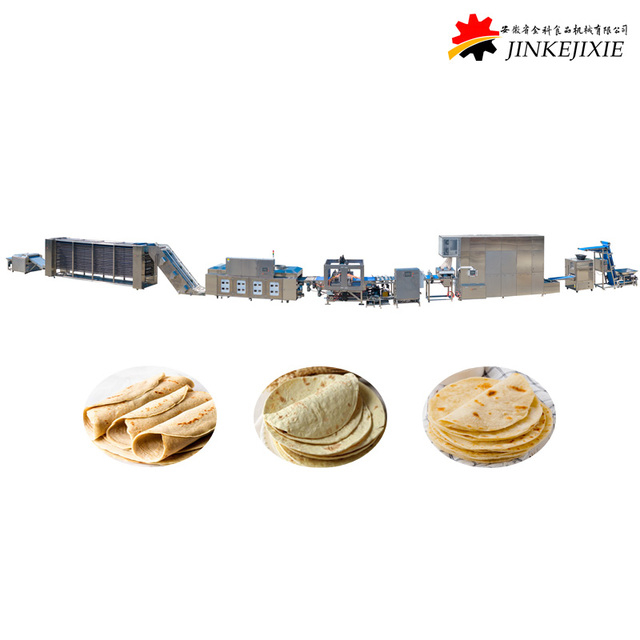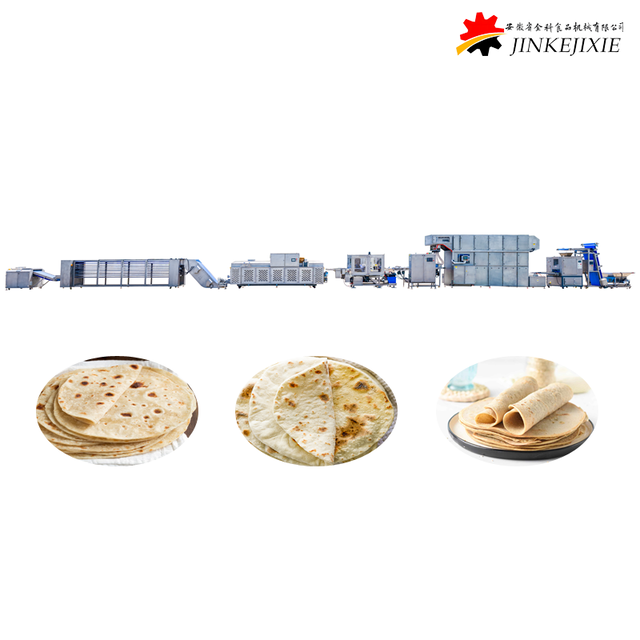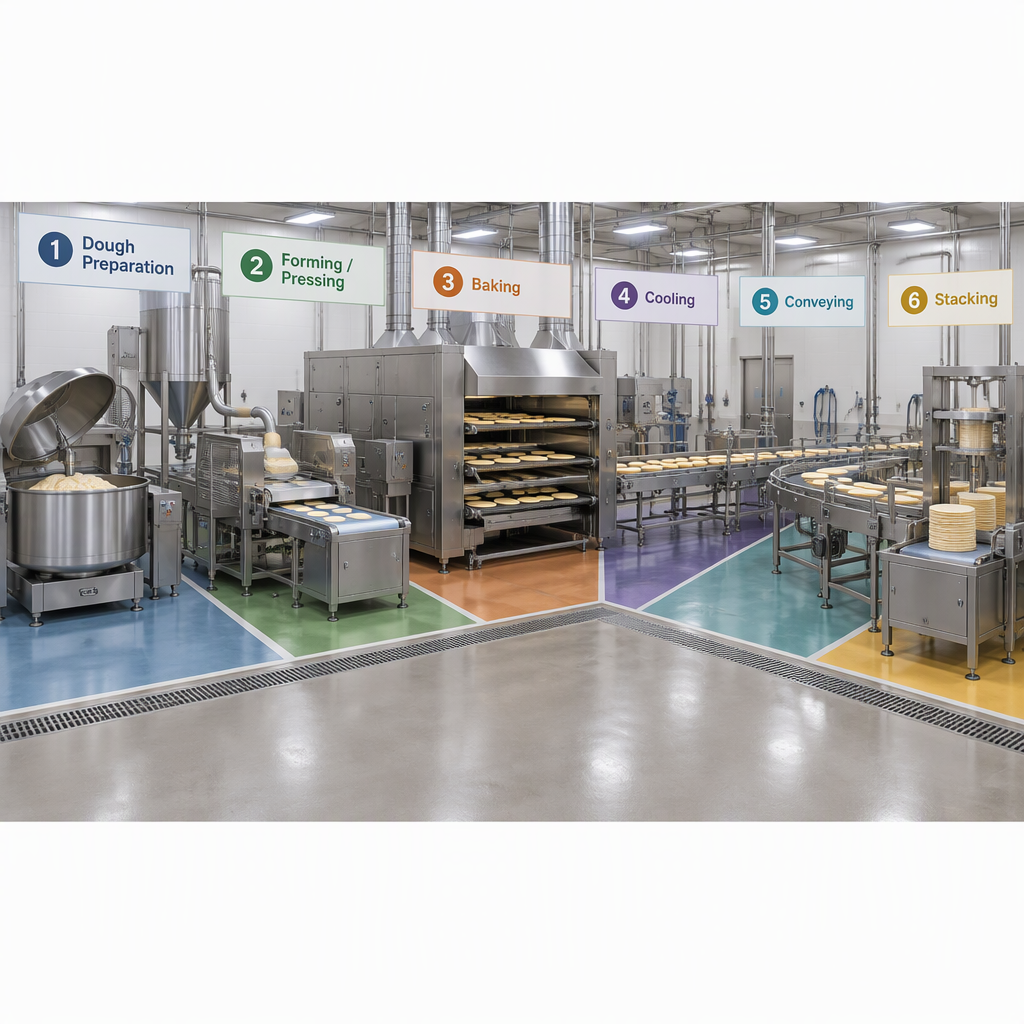
Start with the tortilla line zones that need access
Sanitation access means the buyer can reach and inspect the areas that must be cleanable: food-contact surfaces, transfer points, conveying paths, adjacent spaces and places where residue could collect.
- Map the process modules first. JinKe’s product-center page presents industrial flatbread and tortilla production line categories, including dough preparation, dividing, rounding, rolling, pressing, baking, cooling and stacking equipment.
- For each module, ask where dough, flour dust, oil, toppings or broken product can contact equipment surfaces, because equipment and utensils used in food plants must be designed and maintained to protect against contamination and allergen cross-contact.
- For wet-cleaned open-processing areas, include construction, installation and integration questions rather than looking only at the main machine frame.
- Check whether conveyors, belts and transfer points can be cleaned without leaving inaccessible seams, dead spaces or residue traps.
For any physical inspection that requires manual access inside guarded or enclosed areas, require the machine to be switched off and disconnected from the applicable electrical, pneumatic, hydraulic or battery power source before access. Do not bypass guards or interlocks; follow the model manual’s permitted access method.
Use regulations as a baseline, not as a machine certificate
Food CGMPs provide a useful baseline for sanitation planning because they address plant equipment, sanitary operations, facility sanitation and production or process controls, but they do not certify a specific tortilla machine.
For U.S. food facilities, 21 CFR § 117.40 on equipment and utensils describes cleanability, maintenance, installation for cleaning adjacent spaces, corrosion-resistant food-contact surfaces, smooth seams and cleanable conveying or manufacturing systems. Confirm the currently applicable federal text and any facility-specific obligations with the relevant authority for your operation.
The FDA CGMP overview explains the broader food CGMP context, including plant design, equipment, sanitary operations and production controls.
For global projects, treat U.S. CGMP language as a cleanability reference point unless your facility is subject to it. Your final specification should follow the laws, customer audit standards and plant sanitation program that apply to the installation site.
Check guards, covers, panels and adjacent spaces
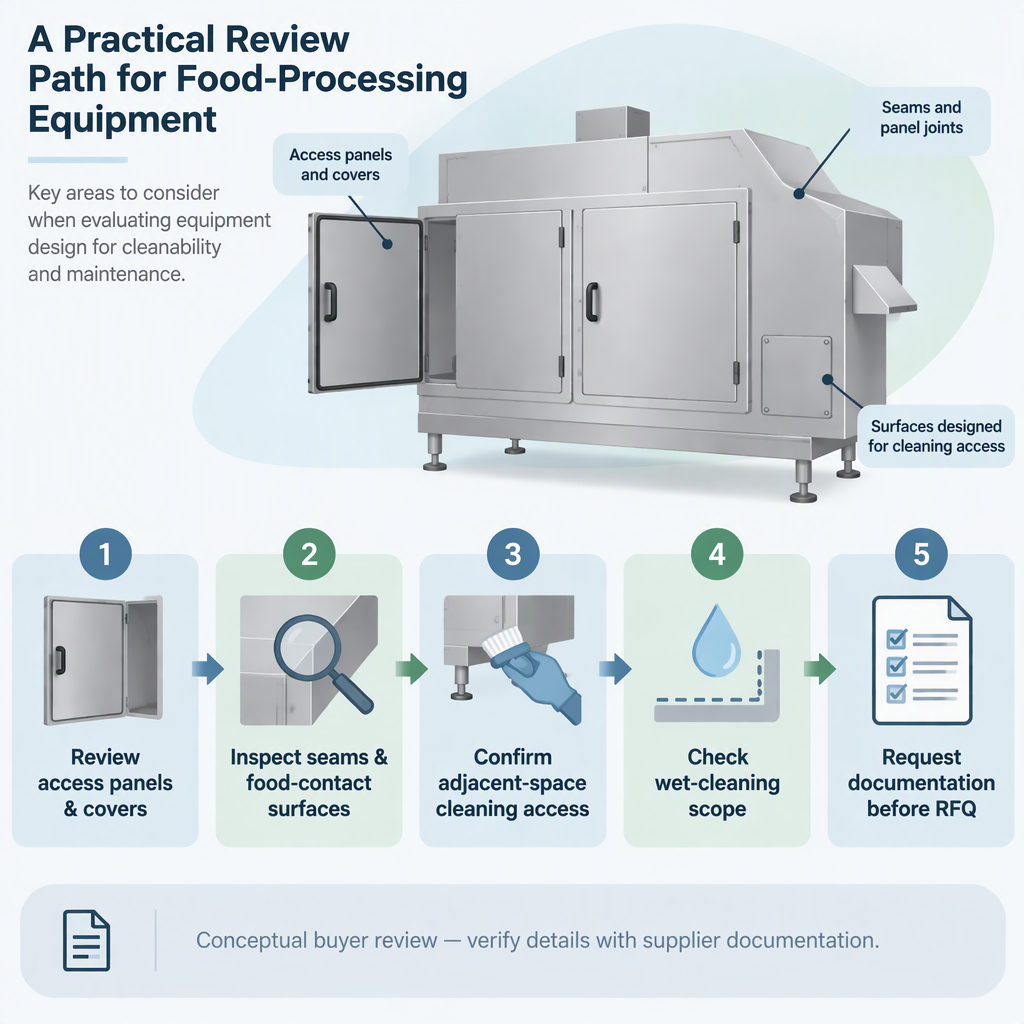
Access hardware should let trained staff inspect and clean the relevant surfaces and the spaces around the equipment without creating new contamination risks.
| Access item | Buyer question | Why it matters |
|---|---|---|
| Adjacent spaces | Can the installed line be positioned so the floor, wall side and machine underside can be cleaned? | 21 CFR § 117.40 addresses installation and maintenance so equipment and adjacent spaces can be cleaned. |
| Open-processing access | Are covers, guards and panels arranged for hygienic use in wet-cleaned open food-processing areas? | EHEDG GL 13, Third Edition June 2024, covers hygienic design criteria for equipment used in wet-cleaned open food-processing environments. |
| Conveying paths | Can belts, rollers, guides, transfers and catch points be inspected for residues? | Cleanable conveying and manufacturing systems are part of the equipment-cleanability baseline. |
| Guarded areas | What is the permitted safe-access procedure in the official manual? | Manual access should be planned before purchase so sanitation staff are not forced to improvise around guarded moving parts. |
Review surfaces, seams and material compatibility
Food-contact surfaces should be suitable for food use, corrosion resistant where necessary, smooth enough to be cleanable and joined in ways that do not create residue-holding seams.
| Item to review | Ask for | Buyer caution |
|---|---|---|
| Food-contact material | Material list for belts, rollers, hoppers, forming tools and transfers | A cleanability claim should not replace a material declaration for surfaces that touch food. |
| Seams and joints | Drawings or photos showing welds, overlaps, fasteners and product-contact corners | Smooth seams and cleanable workmanship matter because crevices can undermine sanitation access. |
| Wet-cleaning suitability | Confirmation of which areas are intended for wet cleaning and which are not | EHEDG’s public GL 13 description is scoped to wet-cleaned open food-processing equipment, so dry or non-washdown zones need their own supplier explanation. |
| Conveyor and belt paths | Access method for belt return runs, scrapers, guides and discharge transfers | Cleanable conveying systems are specifically relevant when evaluating tortilla machine sanitation. |
Do not accept “stainless steel” as the whole sanitation answer. Buyers still need to know the grade, surface finish where relevant, seam design, elastomer compatibility and which parts are food-contact versus structural.
Ask for documentation before the RFQ becomes a purchase order
The RFQ should request documents that connect hygienic design, installation and cleaning access to the actual line layout you intend to buy.
- General arrangement drawing showing clearance for cleaning adjacent spaces around the tortilla line.
- Food-contact material list for belts, forming parts, hoppers, transfers and product-contact guards.
- Access-point map for conveyors, transfer points, forming heads, oven infeed and outfeed, cooler and stacker.
- Installation and integration notes for wet-cleaned open-processing areas.
- Cleaning-access instructions that identify which panels are operator-accessible and which require maintenance personnel.
- Site responsibility matrix covering drains, compressed air, electrical isolation, water supply and sanitation crew access routes.
Keep JinKe scope separate from general hygienic-design guidance
Use JinKe’s product-center page to identify the tortilla and flatbread line categories listed there, then request model-specific sanitation, certification or validation documents for the configuration being quoted.
The page presents industrial flatbread and tortilla production line equipment and related dough, baking, cooling and stacking categories. That makes it useful for mapping sanitation-access questions across a complete line.
The same page includes broad claims such as food-grade construction or easy maintenance for some listed line copy and SS304 or food-grade stainless contact-part material for several hot products. Buyers should keep those claims scoped to the listed page and request model-specific confirmation in the quotation package.
Know the limits before treating a checklist as approval
A sanitation-access checklist helps screen equipment, but it is not a regulatory approval, third-party hygiene certificate, cleaning validation or site sanitation program.
CGMP context helps buyers ask better questions about equipment, sanitary operations and production controls, but compliance depends on the installed facility, procedures, maintenance and records.
EHEDG GL 13’s public catalogue entry identifies the guideline’s edition and scope for wet-cleaned open-processing equipment; buyers who need formal hygienic-design review should request the applicable full guideline, design dossier or third-party documentation from qualified parties.
RFQ checklist for sanitation access
A strong tortilla equipment RFQ turns sanitation access into specific questions about surfaces, spaces, covers, conveyors, utilities, manuals and installation responsibilities.
- List each required process zone: dough preparation, dividing, rounding, rolling, pressing, baking, cooling, conveying and stacking.
- Request food-contact surface materials and workmanship details for each zone.
- Ask how adjacent spaces around the installed line remain accessible for cleaning.
- Ask how conveyor belts, transfer points and manufacturing systems are cleaned and inspected.
- Ask which parts of the equipment are designed for wet cleaning in an open-processing environment.
- Require the official manual’s safe-access instructions for sanitation inspection, including switching off and disconnecting applicable power before manual access.
- Ask the supplier to identify what is included in the machine scope and what must be supplied by the plant, such as drains, platforms, utilities or room clearances.
Conclusion
For tortilla machine sanitation, the best buying decision is to make access visible before purchase: map every product-contact zone, confirm cleanable surfaces and adjacent spaces, request model-specific documents and keep general hygienic-design principles separate from supplier-specific claims.
FAQs
The questions below help procurement, food safety and engineering teams turn sanitation access into RFQ and installation decisions.
Is the guidance legal advice for a specific country or facility?
No. It is a buying and specification guide. For regulated facilities, confirm the applicable country, customer and facility requirements with qualified internal or external compliance advisers.
Is access the same as a validated cleaning procedure?
No. Access supports inspection and cleaning, but validation depends on the installed equipment, soil load, procedure, chemicals, personnel training and records.
Should every tortilla machine area be wet cleaned?
Not automatically. EHEDG GL 13 is scoped to wet-cleaned open food-processing environments, so buyers should ask the supplier which zones are intended for wet cleaning and which require another method.
Why do conveyors need special attention?
Conveying systems are part of the cleanability baseline because product residues can collect along belt paths, guides, returns and transfers.
Does the JinKe product-center page prove hygienic-design certification?
No. Use the page for the listed product categories and page-level material claims only; request model-specific certification or validation documents when those are required.
What should be settled before FAT?
Before FAT, align on access drawings, material lists, wet-cleaning scope, operator-accessible panels, utility responsibilities and the documents that will be inspected during acceptance.
What is the safest way to inspect internal access points?
Plan inspection through the supplier’s approved access method. Before any manual access, switch off the machine and disconnect the applicable power or stored-energy source, then follow the official manual and site safety procedure.