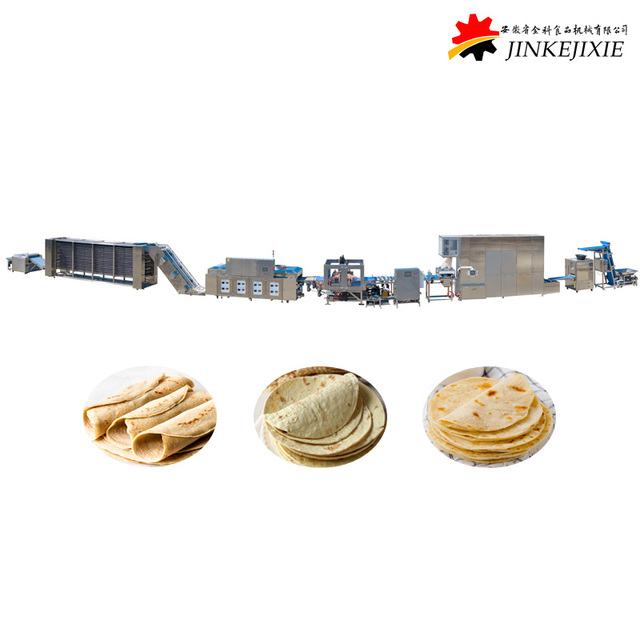
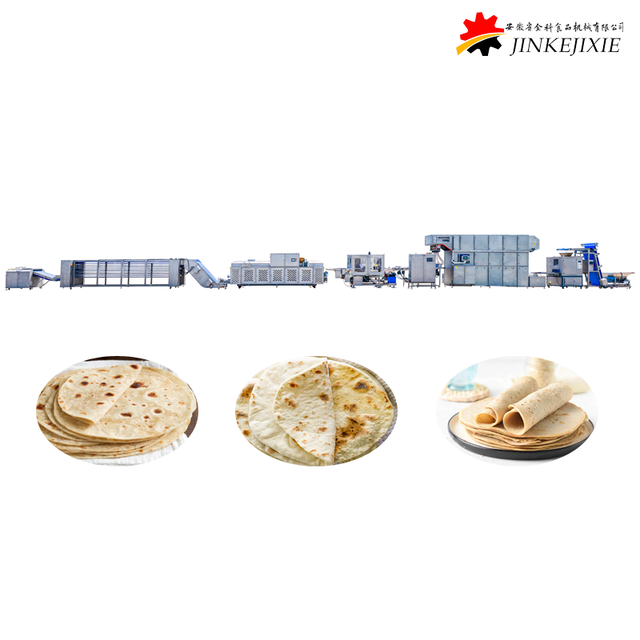
The tortilla production industry has experienced rapid growth in recent years, driven by increased consumer demand for convenient and ready-to-eat foods. Whether you’re starting a new tortilla production facility or upgrading your existing equipment, choosing the right production line is essential for ensuring efficiency, quality, and profitability. In this guide, we will explore the key factors to consider when selecting the best tortilla production line for your factory.
1. Understanding the Tortilla Production Process
Before diving into the details of selecting the best tortilla production line, it's important to have a clear understanding of the tortilla-making process. The production of tortillas involves several key stages:
Dough Mixing: Ingredients such as corn flour, water, salt, and sometimes fat are mixed together to form dough.
Pressing: The dough is then divided into portions and pressed into thin, round discs using a tortilla press.
Baking/Toasting: The pressed tortillas are then cooked on a hot surface or in a baking chamber.
Cooling: After baking, the tortillas need to be cooled quickly to prevent them from becoming soggy.
Packaging: The final step involves packaging the tortillas for distribution.
Each stage of the production process requires specific machinery, and choosing the right equipment for each part is essential for maximizing production efficiency and ensuring a high-quality final product.
2. Key Factors to Consider When Choosing a Tortilla Production Line
When selecting a tortilla production line for your factory, several factors should be taken into account to ensure that you’re choosing the best equipment for your needs.
a) Production Capacity
The first factor to consider is the production capacity of the tortilla production line. You need to determine how many tortillas your factory needs to produce per hour or day. Your production needs will depend on the size of your operation, the volume of demand for your product, and the number of shifts your factory operates.
A high-capacity production line is ideal for large-scale operations, while a smaller-capacity line might be better suited for smaller, more niche markets. It’s also essential to consider scalability—can the production line be expanded in the future if demand increases?
b) Automation vs. Manual Operation
Another important consideration is the level of automation in the production line. Automated production lines can significantly improve efficiency by reducing labor costs, minimizing human error, and increasing throughput. However, they often come with a higher initial investment.
On the other hand, semi-automated or manual production lines may be a good option if you are looking for a more cost-effective solution, especially for smaller operations. These lines typically require more human intervention but can still offer reliable results.
c) Space Requirements
Tortilla production lines can vary greatly in size depending on the complexity and capacity of the system. It’s essential to assess the available space in your factory and ensure that the production line fits within your floor plan. Be sure to allow for adequate space for machinery installation, worker movement, and product storage.
Keep in mind that larger, automated production lines will require more space, so it's essential to strike a balance between production capacity and available factory space.
d) Quality Control and Consistency
One of the most important factors in choosing a tortilla production line is the ability to maintain consistent quality. The line should produce tortillas with uniform size, texture, and taste every time. This is crucial for maintaining customer satisfaction and meeting industry standards.
Look for a production line that offers features like precise temperature control, accurate dough portioning, and uniform pressing. These features help ensure that each tortilla produced meets the desired quality standards.
e) Energy Efficiency
Energy consumption is an ongoing cost in any production facility, and tortilla production is no exception. Choose a production line that is energy-efficient to minimize utility costs. Modern tortilla production lines are often designed with energy-saving features, such as efficient heating systems and low-power motors.
While energy-efficient equipment may come with a slightly higher upfront cost, it can result in significant savings in the long run, especially if you are producing tortillas in large volumes.
f) Ease of Maintenance
Like any machinery, tortilla production lines require regular maintenance to ensure that they run smoothly and continue producing high-quality tortillas. When selecting a production line, consider the ease of maintenance. Is the equipment easy to clean? Are spare parts readily available? Does the manufacturer offer maintenance and support services?
Choosing a production line that is easy to maintain and repair can help reduce downtime and keep your production running smoothly.
g) Customization and Flexibility
Different types of tortillas, such as corn tortillas or flour tortillas, may require slightly different production processes. If your factory produces multiple types of tortillas, look for a production line that offers customization options. Some lines can be adjusted to handle different recipes, dough types, or sizes of tortillas.
Flexibility is also crucial if you want to experiment with different ingredients or flavors in the future. Choose a line that allows for easy recipe changes and ingredient additions.
h) Budget Considerations
Budget is an inevitable factor when choosing a tortilla production line. While automated systems can increase efficiency, they often come with a higher upfront cost. Weigh the cost of the production line against your expected return on investment (ROI). Consider factors like reduced labor costs, improved production speed, and enhanced quality control when determining the budget for your tortilla production line.
Look for a manufacturer that offers reliable, high-quality equipment within your budget. Consider financing options if necessary.
3. Popular Types of Tortilla Production Lines
There are several types of tortilla production lines available, each designed to meet different needs and production requirements. Here’s a quick look at some of the most popular types:
a) Fully Automated Tortilla Production Lines
Fully automated lines are ideal for large-scale operations where speed and efficiency are paramount. These systems handle everything from dough mixing to packaging, with minimal human intervention. Fully automated lines often feature:
Continuous dough mixing systems
Automated dough dividing and pressing stations
High-speed ovens for consistent baking
Automatic cooling and packaging systems
b) Semi-Automatic Tortilla Production Lines
Semi-automatic lines provide a balance between automation and manual labor. These lines require some human intervention, such as manual dough loading or monitoring the baking process, but they still offer significant labor savings and increased efficiency compared to fully manual systems.
c) Manual Tortilla Production Lines
For smaller-scale operations or businesses just starting out, manual tortilla production lines may be a cost-effective option. These lines typically involve more manual steps but can still produce high-quality tortillas. Manual lines often feature manual presses, ovens, and packaging, and may be ideal for smaller batches or niche products.
4. Choosing the Right Manufacturer
Once you’ve determined the key factors that are most important to your operation, the next step is selecting a manufacturer for your tortilla production line. Look for a company with a strong reputation in the industry, a track record of delivering high-quality equipment, and a customer service team that can assist with installation, training, and ongoing support.
Conclusion
Choosing the right tortilla production line for your factory is a decision that will have a significant impact on your operations and long-term success. By carefully considering factors such as production capacity, automation level, space requirements, quality control, energy efficiency, and budget, you can ensure that your chosen production line meets the specific needs of your factory and provides a high return on investment.
At AnHui JinKe Foodstuff Machinery Co., Ltd., we offer a wide range of tortilla production lines designed to meet the needs of businesses of all sizes. Our systems are designed for reliability, efficiency, and ease of use, and we offer expert support to ensure that your production line runs smoothly. For more information about our equipment and services, don’t hesitate to get in touch.
FAQ
Q: How much does a tortilla production line cost?
A: The cost of a tortilla production line varies depending on the type of system, production capacity, and level of automation. Fully automated lines tend to be more expensive, while semi-automatic and manual lines are more affordable.
Q: How long does it take to set up a tortilla production line?
A: The setup time for a tortilla production line can vary, but it typically takes anywhere from a few days to a couple of weeks depending on the complexity of the system and the availability of resources for installation.
Q: What types of tortillas can be produced on these lines?
A: Tortilla production lines can be customized to produce various types of tortillas, including corn tortillas, flour tortillas, and specialty products like gluten-free or flavored tortillas.
Q: Can a tortilla production line be upgraded as production needs increase?
A: Yes, many tortilla production lines are designed with scalability in mind. You can often add additional components or upgrade to higher-capacity machines as your production demands grow.