In the competitive world of food manufacturing, energy efficiency and resource optimization have become central concerns for bakeries and flatbread producers alike. For traditional foods such as parotta—the beloved layered flatbread popular across South and Southeast Asia—this evolution toward sustainability presents both challenges and opportunities.
Modern parotta production lines are no longer just about high-speed automation; they are about smart design—a combination of engineering precision, data-driven process control, and energy-conscious technologies. These innovations aim to reduce electricity consumption, minimize ingredient waste, and maintain the authentic texture that defines this flaky delicacy.
1. Rethinking Efficiency in the Parotta Industry
Traditionally, parotta making was an entirely manual process. Skilled cooks would knead the dough, rest it, oil it, and hand-stretch each layer before frying or baking. While the results were authentic, the process was slow, inconsistent, and energy-intensive.
The transition to automation—led by modern parotta production lines—transformed the industry. Machines can now produce thousands of parottas per hour, but this speed brings new concerns: how to optimize power use, manage heat distribution, and prevent raw material loss.
Smart design integrates advanced sensors, servo-driven components, and intelligent layout planning to balance these factors. The goal is simple: maximize output with minimal waste.
2. Ingredient Optimization Through Precision Mixing and Portioning
The first area where smart design brings savings is at the very start of the process—dough preparation.
Automated Ingredient Measurement
Modern systems use load-cell sensors and programmable dosing units to ensure that flour, water, oil, and salt are dispensed with near-perfect accuracy. Manual mixing can easily result in variations of 2–3%, which may seem small but can cause massive cumulative losses over time.
Automated metering eliminates this inconsistency. The result is not only better dough quality but also reduced waste from batches that fail to meet texture or elasticity standards.
Energy-Efficient Mixing Technology
Energy optimization begins here as well. Traditional mixers rely on constant-speed motors that consume the same amount of electricity regardless of load. Smart dough mixers, however, employ variable frequency drives (VFDs), which adjust motor speed according to resistance. When the dough nears completion and requires less torque, the mixer automatically reduces energy draw—sometimes cutting power use by 20–30%.
Temperature Control in Dough Conditioning
Temperature fluctuations can cause premature fermentation or stiffness in dough, leading to rejected batches. Intelligent dough conditioning systems monitor temperature and humidity within the mixing chamber. By maintaining stable conditions, they eliminate waste due to inconsistent texture and minimize the need for reprocessing.
3. Sheet Forming and Layering: Reducing Material Loss
One of the most resource-intensive stages in parotta production is sheet forming and layering—where the dough is flattened, oiled, and folded to create its signature flaky layers.
Precision Rolling and Cutting
Smart rollers equipped with pressure sensors maintain consistent thickness throughout the sheet, ensuring even cooking and preventing thin or torn edges. Cutting systems with servo-controlled blades reduce offcuts to less than 1%—a significant improvement over conventional systems that can waste up to 5% of dough during trimming.
Oil Application Systems
Parotta’s layered texture depends on proper oil distribution. However, over-application can waste expensive oil and increase fat content unnecessarily. Modern spray systems use atomizing nozzles that deliver uniform, fine oil films, minimizing excess while maintaining desired flavor and separation between layers.
Closed-Loop Control and Feedback
Smart parotta production lines often integrate vision systems or optical sensors to detect irregularities in sheet width, thickness, or folding pattern in real time. When deviations are detected, adjustments occur automatically without operator intervention. This ensures uniformity while reducing defective output and rework.
4. Energy-Efficient Baking and Frying Systems
The cooking stage consumes the largest share of total energy in any parotta production line. Fortunately, this is also where the most dramatic savings can be achieved through intelligent heat management and recovery systems.
Optimized Heat Transfer
Modern ovens and frying systems are designed with multiple heat zones and insulated chambers. By controlling temperature independently across zones, energy is directed only where needed. For example, the initial zone can apply high heat for rapid moisture evaporation, while subsequent zones maintain gentle heat for even browning—reducing total energy demand by up to 25%.
Heat Recovery and Recycling
Smart parotta lines now integrate heat exchangers that capture exhaust air from ovens and reuse it to preheat incoming air or raw materials. Some advanced models use recovered heat to maintain dough resting chamber temperatures—an innovation that converts wasted energy into productive use.
Automated Frying Control
When parottas are partially fried, oil temperature and turnover rate directly affect quality and energy use. Intelligent control systems monitor oil temperature in real time, adjusting burners automatically to prevent overheating. This not only saves fuel but also extends oil lifespan, reducing both energy consumption and waste.
5. Cooling, Layer Separation, and Packaging Efficiency
Once cooked, parottas must be cooled, separated, and packed for storage or shipment. Smart systems ensure these steps consume as little energy and material as possible.
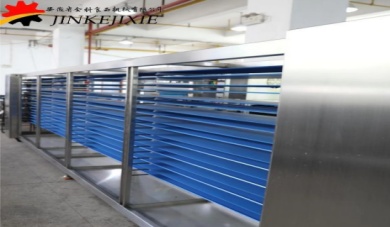
Controlled Cooling Systems
Instead of using high-power blowers continuously, variable-speed fans modulate airflow based on temperature readings from sensors placed along the conveyor. This adaptive operation significantly reduces electricity consumption, especially during lower production loads.
Non-Stick Conveyors and Gentle Handling
Mechanical damage during cooling or stacking can lead to deformed or broken parottas—essentially ingredient waste. Non-stick belts and soft transfer systems ensure that each parotta maintains its shape and layer definition.
Smart Packaging Lines
Packaging design has a surprising impact on both resource use and sustainability. Automated packaging systems reduce film waste by cutting with millimeter precision. Intelligent film tension controls also prevent tearing and reduce the need for rewrapping, lowering both material use and energy costs.
6. Integrating Automation and IoT for Smarter Production
Perhaps the most transformative shift in modern parotta production lines comes from digital integration—the use of data analytics and Internet of Things (IoT) platforms.
Real-Time Monitoring
Sensors across the line continuously track temperature, pressure, motor torque, and ingredient flow. Data is sent to a central control system where AI algorithms analyze performance trends. If the system detects an energy spike or ingredient imbalance, it can suggest corrective actions instantly or even auto-correct.
Predictive Maintenance
Energy waste often comes from poorly maintained equipment—motors with worn bearings or inefficient heating elements. IoT-enabled systems predict maintenance needs by analyzing vibration or heat data, allowing operators to replace components before they fail. This prevents downtime and ensures consistent energy efficiency.
Data-Driven Recipe Management
By linking ingredient dosing systems with production analytics, operators can fine-tune recipes based on performance. For example, if dough elasticity trends slightly high due to humidity, the system can automatically adjust water ratios—preventing texture inconsistencies and ingredient waste.
7. Smart Design in Layout and Material Flow
Beyond machines themselves, the overall layout of a parotta production line has a profound impact on resource use.
Compact, Streamlined Layouts
A well-planned line minimizes unnecessary movement of materials between stations. Reduced conveyor distances and fewer transfer points mean lower power use for motors and less handling damage to the dough.
Centralized Control Panels
Integrating all stations under a unified control interface allows operators to manage speed, temperature, and energy settings simultaneously. This holistic coordination helps balance energy load and avoid peaks during production cycles.
Modular Flexibility
Smart design also means scalability. Modular parotta lines allow producers to operate only necessary sections during off-peak demand. By shutting down idle modules, manufacturers can reduce idle power draw and ingredient preparation, ensuring no batch goes unused.
8. Sustainability and the Future of Smart Parotta Production
Energy and resource efficiency are no longer just operational goals—they’re part of a larger commitment to sustainable food manufacturing. With growing consumer awareness and stricter environmental regulations, adopting smart parotta production lines isn’t only about reducing costs; it’s about future-proofing businesses.
Emerging technologies, such as AI-assisted energy optimization and digital twins (virtual models of production lines), will further enhance control over energy and waste metrics. These innovations will allow producers to simulate recipe changes, forecast energy use, and identify inefficiencies before production even begins.
Smart factories are the next step: fully connected facilities where every component—from mixers to ovens to packaging robots—communicates through a unified network. In such environments, nothing is wasted: energy, ingredients, or time.
Conclusion: Smarter Production, Sustainable Growth
Smart design in a parotta production line is not just about automation—it’s about intelligent efficiency. From precision ingredient dosing to heat recovery systems and IoT-driven control, every component plays a role in reducing energy use and minimizing waste.
These advancements allow producers to maintain the parotta’s authentic taste and texture while operating responsibly and profitably in a sustainability-driven market.
For manufacturers looking to modernize or expand their parotta production capabilities, partnering with an experienced equipment provider is key. AnHui JinKe Foodstuff Machinery Co., Ltd. is recognized for its innovative approach to parotta and flatbread production machinery, offering smart, energy-efficient systems tailored to diverse production scales.
To learn more about how advanced parotta production line technology can help you cut waste and boost efficiency, you can visit or contact AnHui JinKe Foodstuff Machinery Co., Ltd. for detailed information and expert guidance.


