Their main advantage is simplicity. They usually require less investment and less electrical infrastructure.
However, production speed depends heavily on the operator. Thickness consistency can also change between batches.
Manual models make sense when volume remains low. They are less suitable for continuous commercial production.
Electric Dough Roller Machines
An electric dough roller machine uses a motor to drive the rollers or conveyor. It reduces operator effort and creates more stable rolling speed.
Commercial electric models are widely used for pizza, bread, pastry, and flatbread preparation. They can offer adjustable roller gaps for different dough thicknesses.
Motor power varies greatly between machine sizes. Small bakery machines require less power than industrial systems.
Buyers should compare actual throughput and dough capacity. Motor power alone does not determine production performance.
Tabletop Dough Sheeters
Tabletop dough sheeters are compact machines designed for smaller workspaces. They are often used in bakeries, pastry shops, cafés, and commercial kitchens.
They normally combine rollers and a short conveyor. Dough passes through the rollers until the required thickness is achieved.
Roller width is an important specification. It determines the maximum dough sheet width the machine can handle.
Batch capacity also matters. A compact model may work well for pastry production but become a bottleneck in a growing factory.
Commercial Dough Roller Machines
A commercial dough roller offers a middle ground between small tabletop equipment and industrial production systems.
These machines suit businesses producing larger daily batches of pizza dough, bread, pastry, tortillas, or flatbreads.
They usually provide stronger frames, wider rollers, and more repeatable adjustment. They may also support longer operating periods.
Commercial buyers should focus on practical hourly throughput. Daily production volume alone does not show whether the machine can manage peak demand.
Automatic Dough Roller Machines
An automatic dough roller machine reduces manual handling during feeding and rolling. It is useful when consistent output becomes more important than small-batch flexibility.
Automated rollers can maintain more stable dough thickness. They can also feed the next processing stage directly.
JinKe's Dough Roller Machine range is designed for commercial and industrial dough preparation. It can support continuous workflows where stable thickness is required.
Industrial Dough Roller Machines
Industrial rollers are designed for food factories, central kitchens, and high-volume bakeries.
They usually emphasize continuous operation, strong construction, repeatable settings, and integration with automated systems.
Industrial buyers should therefore think beyond one machine. The roller must fit the entire dough-processing workflow.
A suitable configuration may connect rolling with dividing, rounding, pressing, baking, cooling, or stacking equipment.
Dough Roller vs Dough Sheeter vs Dough Press
These terms are sometimes used loosely, but their functions can differ.
A dough roller gradually reduces thickness using rotating rollers. A dough sheeter normally combines rollers and conveyors for controlled sheet production.
A dough press works differently. It compresses a dough portion between pressing surfaces.
For example, JinKe's Automatic Dough Pressing and Filming Machine uses controlled pressure for flatbread forming. It is designed for products including tortilla, paratha, lavash, roti, chapati, and parotta.
Machine Type
Main Method
Best For
Manual roller
Hand-driven rolling
Small batches
Tabletop sheeter
Roller and conveyor
Bakery and pastry work
Commercial roller
Powered rolling
Medium-volume production
Automatic roller
Continuous powered rolling
Food factories
Dough press
Direct compression
Flatbread forming
Tip: Confirm whether your process needs gradual rolling, sheeting, or direct pressing before requesting quotations.
How Does a Dough Roller Machine Work?
The basic principle is simple. Prepared dough passes through rotating rollers that reduce its thickness.
Dough Feeding Into the Rollers
Dough first enters the feeding area. The operator or conveyor guides it toward the rollers.
Dough condition affects how smoothly this happens. Hydration, elasticity, temperature, and fermentation all influence feeding behavior.
Very sticky dough may attach to surfaces. Very dry dough may crack during reduction.
For stable results, dough portions should also enter the machine evenly.
Roller Gap Controls Dough Thickness
The distance between the rollers determines how much the dough is compressed.
A wider gap produces thicker dough. A smaller gap creates a thinner sheet.
Some products need several gradual reductions. Trying to reduce thick dough too quickly can affect sheet quality.
Adjustable thickness is useful for manufacturers producing several products. The same machine may handle flatbread, pizza bases, pastry, or bread sheets.
Motor and Transmission Drive the Process
Electric models use a motor to rotate the rollers. Power reaches the rollers through gears, belts, chains, or another transmission system.
Stable roller speed helps improve repeatability. However, higher motor power does not automatically mean better performance.
The required power depends on roller width, dough load, production speed, and mechanical design.
Buyers should therefore compare the complete specification rather than motor size alone.
Dough Discharge and Transfer
After rolling, the dough exits as a controlled sheet.
In small bakeries, workers may collect it manually. Industrial equipment can transfer it automatically to cutting, shaping, pressing, or forming machines.
Automated movement reduces repeated handling. It also helps maintain continuous line speed.
How Does a Dough Roller Machine Improve Dough Consistency?
Consistency is one of the main reasons factories replace manual rolling.
More Uniform Dough Thickness
Manual rolling depends heavily on operator skill. Thickness can vary across each piece and between batches.
Mechanical rollers maintain a controlled gap. This makes finished dough more uniform.
Uniform thickness can also support more predictable baking or frying. Thin areas are less likely to overcook while thick areas remain underprocessed.
Repeatable Results Across Batches
Once suitable settings are established, operators can repeat them for future batches.
This helps standardize production across different shifts. It also simplifies operator training.
For industrial buyers, repeatability supports quality control. Product diameter, texture, cooking time, and weight become easier to manage.
Reduced Dependence on Manual Rolling
Mechanical rolling reduces repetitive physical work.
Operators still manage dough preparation, settings, inspection, and cleaning. However, they spend less time manually flattening each portion.
This becomes increasingly important as production volume grows.
Better Compatibility With Automated Production
Controlled dough sheets are easier to process downstream.
They can move into cutting, pressing, shaping, baking, cooling, and stacking equipment.
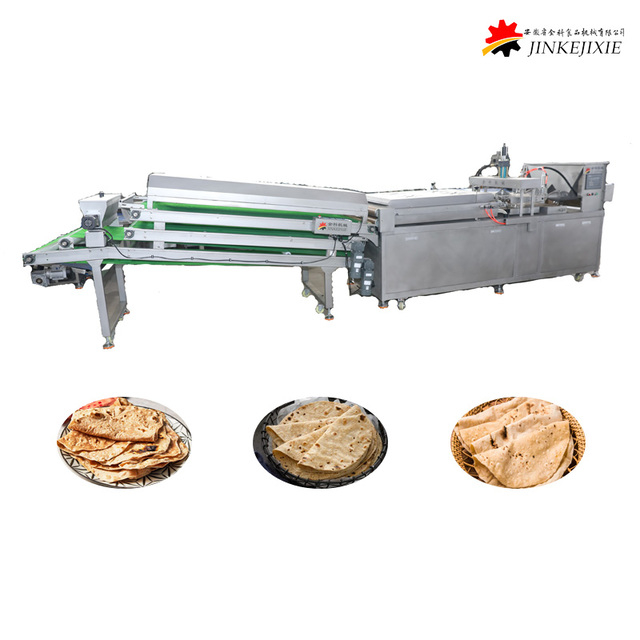
Manufacturers planning higher automation can connect dough preparation equipment with an Automatic Tortilla Production Line. This creates a more continuous workflow from dough processing to finished flatbread.
Note: Stable dough thickness is especially important when downstream equipment depends on repeatable sheet dimensions.
How to Choose the Right Dough Roller Machine
The best machine is not simply the largest model. It should match your actual product and factory requirements.
Match the Machine to Your Dough Product
Start with the final food product.
Pizza dough, croissants, tortillas, pita, bread, and pastry can require different rolling conditions.
Consider dough elasticity and hydration. Also define the required finished thickness.
A machine designed for pastry may not provide the best process for industrial tortilla production.
Define Required Production Capacity
Calculate your expected hourly production.
Do not rely only on daily output. Peak production periods often create the real capacity requirement.
Small bakeries may only need batch equipment. Medium factories may benefit from commercial electric rollers.
High-volume factories should evaluate automatic equipment or complete production lines.
Check Roller Width and Dough Size
Roller width limits the maximum working width.
A wider roller can process larger sheets. However, it also increases machine size and may increase power requirements.
Check the maximum finished diameter or sheet width first. Then choose a working width that leaves practical operating tolerance.
Evaluate Thickness Adjustment Range
Ask suppliers for the minimum and maximum thickness settings.
The machine should cover your full product range. This becomes important when one factory produces several flatbread formats.
Also ask how thickness is adjusted. Manual mechanical adjustment may be sufficient for simple production.
More automated systems may provide more repeatable parameter control.
Which Technical Specifications Matter Most?
B2B procurement should include electrical, dimensional, material, and safety checks.
Motor Power and Electrical Supply
Confirm voltage, frequency, and phase before ordering.
Power standards vary between countries and factories. A machine designed for three-phase power cannot be installed directly in every facility.
Always send your factory electrical specifications before confirming the order.
Do not select equipment based only on total motor power. Production capacity and dough load should be reviewed together.
Machine Dimensions and Factory Space
Review operating dimensions rather than packaged dimensions.
Workers need space around the machine for feeding, cleaning, adjustment, and maintenance.
Conveyor machines may also need clearance at both ends.
If the roller will join a larger line, request a complete layout drawing.
Roller and Contact Materials
Food-contact surfaces should suit regular cleaning and food production.
Industrial equipment often uses stainless steel in contact areas. Food-grade 304 stainless steel is common in automated bakery equipment.
Ask suppliers which parts actually use stainless steel. Do not assume the entire machine uses the same material.
Safety and Control Features
Industrial machines should include appropriate safety systems.
Useful features may include emergency stops, protective covers, overload protection, and fault alarms.
PLC and touchscreen systems can also simplify parameter adjustment. They are useful for factories producing several product specifications.
How to Match a Dough Roller Machine to Production Scale
Different factories need different automation levels.
Small Bakeries and Pastry Shops
A compact tabletop machine usually provides enough flexibility.
Focus on roller width, easy adjustment, cleaning access, and footprint.
Buying an industrial system too early may increase cost without improving daily productivity.
Pizzerias and Commercial Kitchens
Pizza operations often need consistent base thickness and faster preparation.
Compare a roller against a dough press. The better choice depends on desired texture and workflow.
Also check hourly demand during peak service periods.
Central Kitchens and Medium Food Plants
Higher output makes automation more valuable.
These factories should consider conveyor feeding, repeatable settings, and compatibility with forming equipment.
Planning for future expansion can prevent early machine replacement.
Large Flatbread Factories
Large factories should focus on continuous workflow rather than one machine.
Rolling must coordinate with dividing, rounding, shaping, pressing, baking, cooling, and stacking.
For example, the Multi-Function Automatic Chapati Production Line combines several processing stages for commercial flatbread production. This type of configuration is more suitable when factories require stable output and higher automation.
What Common Buying Mistakes Should You Avoid?
Choosing Only by Price
A lower machine price may look attractive initially.
However, insufficient capacity or poor dough compatibility can create higher operating costs later.
Compare output, construction, maintenance access, and supplier support.
Buying the Wrong Machine Type
Dough rollers, sheeters, presses, divider-rounders, and forming machines perform different jobs.
Using the wrong machine may change dough texture or create an unnecessary process step.
Confirm the actual dough transformation before purchasing.
Ask suppliers to explain the complete processing flow rather than only individual machine specifications.
Ignoring Voltage and Factory Requirements
Electrical incompatibility can delay installation.
Send the supplier your voltage, frequency, phase, and available electrical load.
Also provide factory dimensions and doorway sizes when buying larger equipment.
Leave enough operating space for cleaning and maintenance.
Ignoring Future Growth
A machine may meet today's output but limit next year's expansion.
Consider whether production demand will increase. Check whether the equipment can connect with future conveyors or forming systems.
For growing factories, modular integration can reduce the need to replace existing machines.
Why Consider an Industrial Dough Roller Machine From JinKe?
JinKe focuses on bakery and flatbread production machinery. Its equipment portfolio covers individual dough-processing machines and complete production systems.
Designed for Integrated Dough Preparation
JinKe equipment can support dividing, rounding, rolling, shaping, pressing, fermentation, baking, cooling, and stacking.
This allows factories to start with individual equipment or build a broader automated workflow.
Such flexibility is useful for manufacturers expanding their production step by step.
Adjustable Processing for Different Products
Dough products do not share one ideal thickness.
Adjustable rolling helps manufacturers handle different product formats and recipes.
It also supports factories producing more than one flatbread type.
Integration With Existing Production Lines
A standalone roller can become part of a larger automation project.
It may connect with dividing equipment upstream. Downstream equipment can handle forming, baking, cooling, or stacking.
This provides a clearer path for future expansion.
Technical and After-Sales Support
Industrial equipment selection often requires more than a product catalogue.
Buyers should provide product type, dough thickness, capacity, voltage, and factory dimensions before ordering.
A supplier can then recommend a more suitable machine or production configuration.
Tip: Send product diameter, dough thickness, hourly capacity, voltage, and factory layout when requesting an industrial quotation.
Conclusion
The right dough roller machine should match dough type, thickness, capacity, voltage, and factory space. A suitable model improves consistency, reduces manual work, and supports future automation. Anhui JinKe Foodstuff Machinery Co., Ltd. provides dough rolling and flatbread production equipment. Its solutions support stable processing, flexible configuration, line integration, and technical service for commercial and industrial production.
FAQ
Q: What is a dough roller machine?
A: A dough roller machine flattens dough into a controlled thickness for bread, pizza, pastry, tortillas, and other products.
Q: How does a dough roller machine work?
A: A dough roller machine passes dough through adjustable rollers, reducing thickness while improving consistency and processing speed.
Q: How do I choose the right dough roller machine?
A: Check dough type, roller width, thickness range, production capacity, voltage, factory space, and automation requirements.
Q: Dough roller or dough press: which is better?
A: Rollers suit gradual sheeting, while presses suit direct flattening. The best option depends on product shape and production flow.